Staying in Thailand’s vibrant capital
Bangkok is a truly unique city that hits you with its abundance of heat, sound and pure energy the moment you arrive.
We think it’s chaotic, exciting and endlessly fascinating.
We’ve stayed in several parts of Bangkok over two decades, from budget guesthouses near Khao San Road to modern hotels in Sukhumvit.
Each area really has its own charm and completely changes how you experience the city, which is why choosing the best area to stay in Bangkok can have such a big impact on your trip.
In this guide to the best places to stay in Bangkok, we share our favourite areas and hotel picks for every budget – from backpacker stays to elegant riverside escapes and modern hotels with rooftop pools.
Along the way, we’ll highlight some of the best hotels in Bangkok and the neighbourhoods that suit different travel styles.
Where to stay in Bangkok?
- Luxury: Mandarin Oriental Bangkok – One of Bangkok’s most luxurious hotels with a riverside pool and 11 restaurants (one of which has two Michelin stars).
- Value for money: Grande Centre Point Surawong Bangkok – Airy rooms, a rooftop pool with skyline views and extra perks like a gym and gaming room – all without the luxury price tag.
- Budget: Casa Nithra Bangkok – A lovely budget option offering comfortable (and beautiful!) double rooms plus a rooftop pool, close to Khao San Road and Old Town.
Search for the best hotels in Bangkok here.
Table of contents

Bangkok overview and orientation
Thailand’s capital, Bangkok, is located in central Thailand on the Chao Phraya River, around 30 kilometres from the coast in the northern part of the Gulf of Thailand.
The city is divided into 50 districts, of which 15 are on the west side of the river (also called the Thonburi side).
The remaining 35 are on the east side, where most of the tourist attractions are found. The majority of visitors also stay here, where you’ll find popular areas such as Sukhumvit, Silom, Siam, Old Town and Chinatown.

Everything you need to know about Thailand’s capital, including what to do, plenty of photos and our top tips
Read moreHow many nights to spend in Bangkok?
Bangkok is an enormous city with endless sights and neighbourhoods to experience, yet it doesn’t take long to get a real feel for it.
We’ve visited several times, usually staying up to four nights – plenty for a rewarding visit without feeling rushed.
If it’s your first time in Thailand’s capital, we’d recommend staying at least two or three nights. One night rarely does it justice, as travel time and traffic tend to eat into your plans.
How long to stay in Bangkok
- One night offers a taste of the city, though most of your time will go on getting around rather than sightseeing.
- Two nights let you visit key temples and explore a few modern areas at a relaxed pace.
- Three nights give room for museums, markets or a night out without feeling rushed.
- Four nights is enough to include a longer outing, such as the Chatuchak Weekend Market or even a day trip to Ayutthaya.

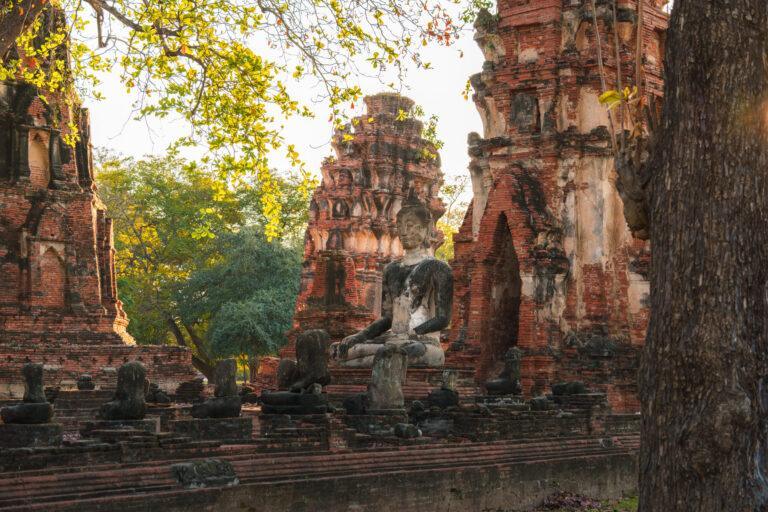
How to get to Ayutthaya from Bangkok, must-see temples and our best tips to visit the ancient capital
Read moreThe best area to stay in Bangkok
Although Bangkok is a huge metropolis, most tourists tend to stay in just a handful of areas.
Wherever you stay, it’s worth considering transport options if you plan to rely on public transport.
Below, we’ll outline the most popular areas to stay in Bangkok and what type of traveller they suit best.
Which area to stay in Bangkok
- Khao San Road: Backpacker hub with budget stays, lively nightlife and easy access to historic temples.
- Silom: Mix of business, nightlife and local life; green spaces near Lumpini Park and artsy spots near the river.
- Sukhumvit: Cosmopolitan vibe with shopping, dining, nightlife and excellent BTS access.
- Siam: An even more central shopping district, ideal for first-time visitors and anyone who loves malls and convenience.
- Chao Phraya River area: Riverside comfort with scenic views, boat transport and a quieter base for couples or families.
- Chinatown (Yaowarat): Bustling streets full of street food, local culture and affordable accommodation options.
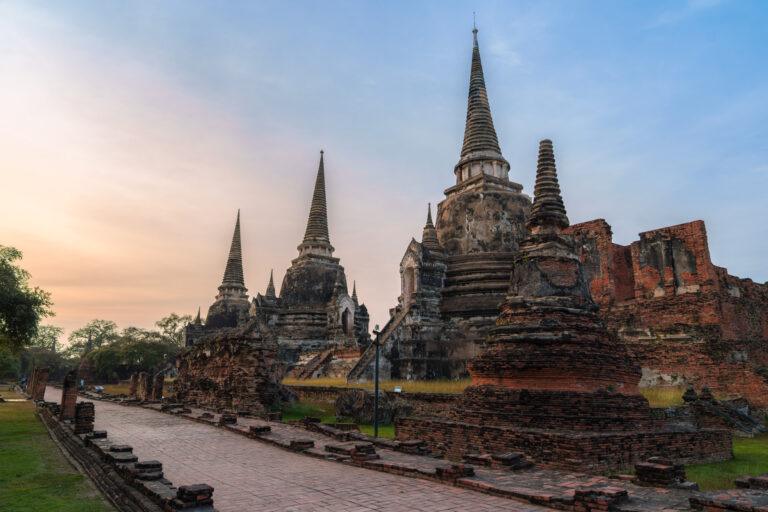
Our recommendations for the best places to stay in Ayutthaya, Thailand (from budget guesthouses to luxury hotels)
Read moreKhao San Road and the Old Town
Khao San Road is still the ultimate backpacker base, buzzing with budget hotels, street food and nightlife.
The surrounding Old Town (Rattanakosin) puts you steps from the Grand Palace, Wat Pho and other historic gems.
The Khao San Road area is perfect if sightseeing and backpacker culture are your priorities, and you don’t mind being a little farther from the Skytrain and modern shopping areas.
For backpackers, it’s easily one of the best places to stay in Bangkok, with no shortage of affordable guesthouses, late-night bars and opportunities to make new friends.
This is where we stayed during our first few trips to Bangkok with friends – a fun introduction to the city, especially if you’re travelling solo or looking for a social scene.
- Pros: Great for budget travellers, backpacker vibe, close to historic temples.
- Cons: Far from BTS/MRT, can be noisy, not ideal for long-term comfort.
The best hotels near Khao San Road:
- Value for money: Priya Boutique House – A lovingly restored Thai house near Khao San Road, where Pang’s warm hospitality makes you feel right at home.
- Budget: Casa Nithra Bangkok – Comfortable (and beautiful!) double rooms with a rooftop pool close to Khao San Road.
Find the cheapest and best hotels near Khao San Road here (adlink).


Silom
Silom is where business meets leisure – rooftop bars, night markets and street food galore.
Upper Silom near Lumpini Park is convenient, green and well-balanced, putting you close to the business district while still offering a bit of calm.
Lower Silom, closer to Charoen Krung and the river, is artsy, with small galleries, cafés and boutique hotels waiting to be discovered.
This area in Bangkok is ideal if you want a taste of the modern part of the city and creative local life. Plus, it’s well connected by BTS and MRT, so getting around is easy.
- Pros: Mix of modern and local, green spaces, nightlife options, BTS/MRT access.
- Cons: Can feel busy and noisy, less scenic than the riverside.
The best hotel in Silom:
Adlink
- Value for money: Grande Centre Point Surawong Bangkok – Airy rooms, a rooftop pool with skyline views and extra perks like a gym and gaming room – all without the luxury price tag.
Find the cheapest and best hotels in Silom here (adlink).


Sukhumvit
Sukhumvit stretches for miles, lined with luxury hotels, malls, nightlife and endless dining options.
Lower Sukhumvit (Nana/Asok) is lively and central, while Upper Sukhumvit (Thong Lor/Ekkamai) is stylish and trendy, popular with expats.
We stayed near Phrom Phong with our son (kind of between the two) during our last visit and found both the food and transport very convenient.
It’s easy to see why many of the best hotels in Bangkok are concentrated along this stretch of the city.
Further along Sukhumvit going east, it quiets down but stays connected via BTS.
- Pros: Lots of dining, nightlife, shopping, great BTS access.
- Cons: Can feel busy or touristy, parts of Lower Sukhumvit are seedy.
The best hotels in Sukhumvit:
Adlink
- Value for money: Novotel Bangkok Sukhumvit 20 – Modern city hotel with pool on the 9th floor, gym and rooftop bar in lively Sukhumvit.
- Luxury: Oriental Residence Bangkok – Apartment-style suites with kitchenettes, a fourth-floor pool, a hushed embassy-district location near Lumpini Park and easy access to public transport.
Find the cheapest and best hotels in Sukhumvit here (adlink).


Siam
Siam is the heart of modern Bangkok, home to huge shopping centres like Siam Paragon, MBK and CentralWorld.
It’s an ideal area in Bangkok for shoppers and first-time visitors who want things like malls, plenty of restaurants and transport nearby.
Siam is simply central, convenient and tourist-friendly.
- Pros: Central, huge malls, easy BTS access, family-friendly.
- Cons: Less “Thai” atmosphere, very busy, not much nightlife.
The best hotels in Siam:
- Luxury: Sindhorn Kempinski Hotel Bangkok – A serene city resort in Siam with rooms bigger than many Bangkok apartments, a 25-metre pool, spa and several restaurants surrounded by greenery.
- Luxury: Chatrium Grand Bangkok – Spacious rooms, a large pool and attentive service at a more affordable price.
Find the cheapest and best hotels in Siam here (adlink).


Chao Phraya River area
The Chao Phraya River area offers comfort and culture.
Riverside hotels come with stunning views and boat access to Wat Arun, Chinatown and other attractions.
It’s a quieter choice and one of the best places to stay in Bangkok for couples or families who want a relaxed base close to the landmarks.
- Pros: Scenic views, quiet and romantic, easy river transport.
- Cons: Can be pricier, slightly away from BTS/MRT.
The best hotels near the Chao Phraya River:
- Luxury: Mandarin Oriental Bangkok – One of Bangkok’s most luxurious hotels with a riverside pool and 11 restaurants (one of which has two Michelin stars).
- Value for money: Riva Arun – Nice mid-range hotel with a central location in Bangkok by the river and a perfect view of the epic Wat Arun.
Find the cheapest and best hotels along the Chao Phraya River here (adlink).

Chinatown (Yaowarat)
Chinatown is one of Bangkok’s most atmospheric areas, full of narrow lanes, markets and some of the city’s best street food.
It’s perfect for food lovers and travellers curious about local culture, and easily ranks among the best places to stay in Bangkok for anyone who prioritises food over nightlife or malls.
Accommodation ranges from boutique hotels to budget stays, and the area is still easy to reach from elsewhere.
- Pros: Amazing street food, rich culture, affordable stays with character.
- Cons: Narrow, busy streets, less polished than central areas.
The best hotels near Chinatown (Yaowarat):
- Value for money: The Mustang Blu – Once a 19th-century bank, this ten-suite boutique hotel is one of the most atmospheric stays in Chinatown.
- Budget: Photohostel – A comfortable, creative hub in nearby Talat Noi, made for photographers.
Find the cheapest and best hotels in Chinatown (Yaowarat) here (adlink).


The best luxury hotels in Bangkok
Bangkok is filled to the brim with luxurious hotels, each with gorgeous facilities, beautiful rooms and service as only the Thais know how.
You’ll find some of the best hotels in Bangkok offering everything from infinity pools and Michelin-star dining to panoramic city views and lavish interiors.
Here are our favourites for a truly indulgent stay.
Our favourite luxury hotels in Bangkok:
- Luxury: Mandarin Oriental Bangkok – One of Bangkok’s most luxurious hotels with a riverside pool and 11 restaurants (one of which has two Michelin stars).
- Luxury: Sindhorn Kempinski Hotel Bangkok – A serene city resort in Siam with rooms bigger than many Bangkok apartments, a 25-metre pool, spa and several restaurants surrounded by greenery.
- Luxury: Chatrium Grand Bangkok – Spacious rooms, a large pool and attentive service at a more affordable price, also in Siam.
- Luxury: Oriental Residence Bangkok – Apartment-style suites with kitchenettes, a fourth-floor pool, a hushed embassy-district location near Lumpini Park and easy access to public transport.
Search for the best luxury hotels in Bangkok here.
Mandarin Oriental Bangkok
Many of the luxury hotels in Bangkok are situated along the Chao Phraya River, and the Mandarin Oriental Bangkok is often considered one of the very best.
It may not be a boutique hotel, but its extensive facilities ensure a high level of comfort and service.
There are even 11 dining venues on-site – and one of them has two Michelin stars!
There’s also a Thai cooking school if you fancy taking a bit of the city home with you as well as a colonial-style lounge that’s famous for afternoon tea (book ahead, as it’s one of the most sought-after tables in the city).
Its historic charm, with a legacy stretching back 150 years, adds a sense of timeless elegance that few other hotels in Bangkok can match, helped along by a private pier with its own boats ferrying guests up and down the river.
See prices and availability at Mandarin Oriental Bangkok here (adlink).


Sindhorn Kempinski Hotel Bangkok
Tucked away in Siam near Lumpini Park, Sindhorn Kempinski feels calm and spacious – more like a city resort than a hotel.
Most rooms are bigger than many Bangkok apartments, and the mix of soft tones, marble bathrooms and large windows creates a real sense of space and light.
(Of course) there’s a 25-metre pool, a great spa and several restaurants surrounded by greenery.
Tip: Check out the Sealife Family Suite if you’re travelling with ocean-interested little ones!
See prices and availability at Sindhorn Kempinski Hotel Bangkok here (adlink).


Chatrium Grand Bangkok
Also located in the Siam area, Chatrium Grand Bangkok is a great option if you’re after a touch of luxury but at a more affordable price than the above-mentioned Sindhorn Kempinski.
The hotel combines modern design with warm details, and we like how the large rooms feel inviting rather than overdone.
Siam Paragon, CentralWorld and the BTS are all within easy walking distance.
Just as importantly, there’s a spacious pool area, a good fitness centre and impressively attentive service.
See prices and availability at Chatrium Grand Bangkok here (adlink).


Oriental Residence Bangkok
Located on Wireless Road, in the hushed embassy quarter near Lumpini Park, Oriental Residence Bangkok trades the bustle of Sukhumvit for something calmer.
The suites lean into Thai warmth rather than colonial grandeur, and the larger ones come with kitchens and washing machines.
It’s more residence than hotel room, which makes it a smart pick if you’re staying a while or simply like having the option to make your own coffee.
The hotel holds a Michelin Key and a place among Small Luxury Hotels of the World, and Café Claire’s afternoon tea is an excellent reason to linger by the pool rather than rush off sightseeing.
Ploenchit and Chit Lom BTS stations are a short walk (or an even shorter hop on the hotel’s own shuttle), putting Siam Paragon, MBK and the rest of the city within easy reach.
We also love that Lumpini Park is close enough for a morning walk before the heat sets in.
See prices and availability at Oriental Residence Bangkok here (adlink).


The best mid-range hotels in Bangkok
There’s no doubt that most Bangkok hotels offer plenty of bang for your baht at all price ranges.
These are our favourite mid-range options, where you’ll get more space, facilities and amenities than the budget picks – yet at a much more affordable price.
The boutique hotels in this category also impress with impeccable service and unique designs.
In our opinion, they’re well worth checking out if you care about aesthetics and appreciate a comfortable stay without stepping into luxury-hotel territory.
Our favourite value for money hotels in Bangkok:
- Value for money: Grande Centre Point Surawong Bangkok – Airy rooms, a rooftop pool with skyline views and extra perks like a gym and gaming room – all without the luxury price tag.
- Value for money: The Mustang Blu – Once a 19th-century bank, this ten-suite boutique hotel is one of the most atmospheric stays in Chinatown.
- Value for money: Riva Arun – Nice mid-range hotel with a central location in Bangkok by the river and a perfect view of the epic Wat Arun.
- Value for money: Novotel Bangkok Sukhumvit 20 – Modern city hotel with pool on the 9th floor, gym and rooftop bar in lively Sukhumvit.
- Value for money: Priya Boutique House – A lovingly restored Thai house near Khao San Road, where Pang’s warm hospitality makes you feel right at home.
Search for the best value hotels in Bangkok here.
Grande Centre Point Surawong Bangkok
In the lively Silom area, Grande Centre Point Surawong Bangkok offers comfort and style without the associated luxury price tag.
Rooms are bright, modern and surprisingly spacious, each with a 55-inch smart TV and a coffee station, and many with full-length windows looking out over the city.
The rooftop pool has wonderful skyline views and is a particularly good spot for sunset.
The gym is well-equipped with Technogym kit, and there’s even a gaming room with air-hockey and pinball.
There’s also an award-winning spa if you fancy a Thai massage after a day pounding the pavements.
It’s a short walk to Surasak BTS station, and Sathorn Pier (Central Pier), next to Saphan Taksin BTS station, is close enough to hop on a river ferry towards the Old Town and Chinatown rather than fighting the traffic.
For the combination of quality, location and price, we think this is one of the best hotels in Bangkok.
See prices and availability at Grande Centre Point Surawong Bangkok here (adlink).


The Mustang Blu
Stepping into The Mustang Blu feels like walking into another era.
Set in a 19th-century former bank with a flat-iron shape, this small design hotel has retained every bit of its age and character – from the faded walls and creaky staircases to the vintage furniture and striking art.
The ten suites each have their own personality, think concrete walls, rattan details and deep soaking tubs, and they’re notoriously hard to get.
Located in Chinatown, it’s close to the buzz of Yaowarat Road yet tucked away enough to feel calm once you’re inside.
Be aware that there’s no lift, and the stairs can be steep.
See prices and availability at The Mustang Blu here (adlink).


Riva Arun
With a prime location between the stunning Wat Arun (just across the river), the Grand Palace, Wat Pho with its reclining Buddha, and Sanam Chai station on the Blue Line, it’s hard to find a better-placed hotel in Bangkok.
Rooms overlook the Chao Phraya River, giving you a front-row seat to Bangkok’s most iconic sights.
And the prices are surprisingly reasonable!
See prices and availability at Riva Arun here (adlink).

Novotel Bangkok Sukhumvit 20
Novotel Bangkok Sukhumvit 20 offers an infinity pool on the 9th floor, a fitness centre and a rooftop bar overlooking the surrounding high-rises, making it an excellent option for experiencing Bangkok’s modern side in comfort.
The hotel is located centrally in the Sukhumvit area right by EmSphere, close to several shopping centres, the metro and the lovely Benjakitti Park.
See prices and availability at Novotel Bangkok Sukhumvit 20 here (adlink).

Priya Boutique House
If you’re after charm, kindness and real Thai warmth, Priya Boutique House is a little gem right by Khao San Road and the Old Town.
This lovingly restored wooden home feels more like staying with friends than at a hotel, with Pang and the small team always being around with smiles and spot-on local advice.
Rooms are spotless and comfortable, and the courtyard is just made for a quiet breakfast before heading out to see temples or wander through the nearby markets.
It’s one of the prettiest boutique hotels in Bangkok, if you ask us.
See prices and availability at Priya Boutique House here (adlink).



Everything you need to know about visiting Phuket, including what to see, things to avoid and our top tips
Read moreThe best budget hotels in Bangkok
Mostly gone are the days of The Beach-style, cockroach-infested dorm rooms.
Today, Bangkok’s budget offerings often rival midrange hotels in other big cities in terms of comfort and value.
Even if you’re travelling on a shoestring, you can likely still afford a nice double room with a private bathroom and air conditioning (which is downright essential for many months of the year in this humid metropolis, if you ask us).
Our favourite budget hotels in Bangkok:
- Budget: Casa Nithra Bangkok – Comfortable (and beautiful!) double rooms with a rooftop pool close to Khao San Road.
- Budget: Photohostel – A comfortable, creative hub in Talat Noi, run by a Dutch photographer.
- Budget: Casa Luna – This peaceful hideaway in Ratchathewi offers stylish rooms and service way above its price point.
Search for the best budget hotels in Bangkok here.
Casa Nithra Bangkok
The rooms at Casa Nithra are nicer than you’d expect for the low price, with a moody, earthy decor of dark wood and Thai-inspired wall art that feels more boutique hotel than budget stay.
Most rooms have their own little balcony, and the suites come with proper slipper tubs.
And the rooftop pool, with views over the Old Town’s rooftops and temple spires, is the perfect finishing touch.
Khao San Road is just a kilometre away, but the hotel sits on a quieter side street, so you get easy access to the action without being in the middle of it. There’s also a river ferry stop nearby for easy access to the rest of the city.
It’s one of the best places to stay in Bangkok for young couples or friends travelling on a budget who would rather have a nice private room than a dorm bed.
See prices and availability at Casa Nithra Bangkok here (adlink).

Photohostel
Photohostel sits in the heart of Talat Noi, one of Bangkok’s most fascinating neighbourhoods, perfectly balancing chaos and charm right beside Chinatown.
It’s a place that naturally draws photographers, and staying here feels like being part of that creative pulse.
The hostel is run by Kars Tuinder, a Dutch photographer known for his documentary work and art photography.
His images line the walls, and the old Taiyuan building now doubles as a small creative hub with a café and gallery attached.
Rooms are kept in calming dark tones, and Kars is often around to share a few photography tips or point you towards the best light by the river.
See prices and availability at Photohostel here (adlink).


Casa Luna
Casa Luna is a quiet oasis in Ratchathewi with easy airport access, modern, spotless rooms and comfy beds at a great price.
Breakfast is fresh and varied. However, the real highlight is Pong – the warm and attentive host who goes out of her way to help guests with just about anything.
Just a short walk from Phetchaburi Road, the MRT and plenty of cafés and street food, it’s easy to explore Bangkok from Casa Luna and return to a peaceful base at the end of the day.
See prices and availability at Casa Luna here (adlink).

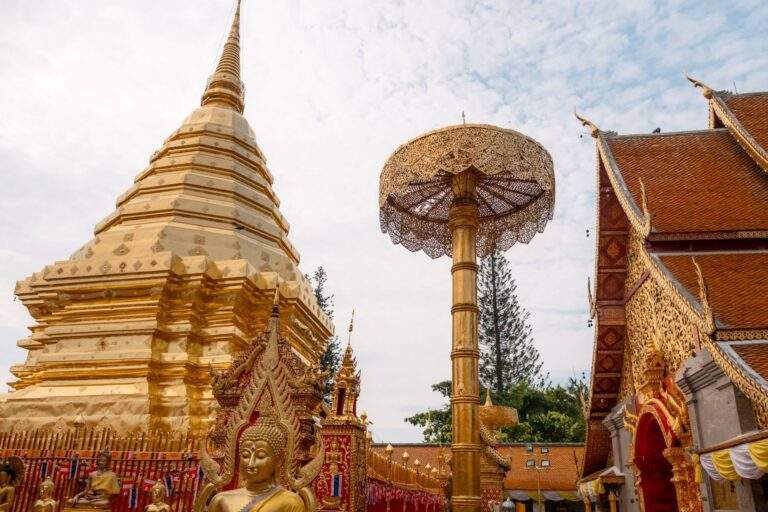
All you need to know about Chiang Mai in Northern Thailand, including what to see, lots of photos and our best tips
Read moreSo what is the best area to stay in Bangkok?
This is a common question, especially if you’re searching for where to stay in Bangkok for the first time.
But truthfully, there isn’t the one and only best area to stay in Bangkok – it really depends on what you’re after!
Whether you’re a first-timer or you’re returning to Thailand’s capital, we hope our overview of the city’s neighbourhoods helps you choose the right area for your stay.
- Backpackers and solo travellers: Khao San Road – Budget stays, lively nightlife and close to the historic temples.
- Shopping and modern city life: Siam – Huge malls, central location and easy transport.
- Cosmopolitan vibe and nightlife: Sukhumvit – Restaurants, bars and BTS access for getting around fast.
- Business meets leisure: Silom – Green spaces near Lumpini Park, rooftop bars and artsy corners by the river.
- Romantic or quiet riverside stay: Chao Phraya River area – Scenic views, boat rides and calmer hotels.
- Foodies and culture lovers: Chinatown (Yaowarat) – Bustling streets, amazing street food and affordable stays.
Basically, pick the area that fits your style, and you can’t really go wrong.
The best things to do in Bangkok
Bangkok is bursting with sights, flavours, and energy. Temples, street food, malls and markets are never far away.
The city is massive, so it helps to pick a few highlights – but leave room for surprises along the way.
We’ve put together a big guide on the best things to do in Bangkok to help you plan your trip.
Here are the best things to do and see in Bangkok:
- Grand Palace – Bangkok’s most iconic tourist attraction
- Wat Pho – The Reclining Buddha
- Wat Arun – The striking Temple of Dawn
- Khao San Road – Lively backpacker street
- Enjoy the sunset from a rooftop bar – See Bangkok’s glittering lights from above
- Chatuchak Weekend Market – Thailand’s largest market
- Bangkok’s shopping malls – Shopping for all budgets in cool air conditioning
- Wat Saket and Golden Mount – Temple with views over Bangkok
- Wat Ratchanatdaram – Bangkok’s Iron Palace
- Bangkok National Museum – Gain insight into Thailand’s history
- Wat Intharawihan – 32-metre high standing golden Buddha
- Benjakitti Forest Park and Lumpini Park – Walks in green surroundings
- Chinatown – Shopping and street food
- Talat Noi – Street art in a historic neighbourhood
- Wat Benchamabophit – Royal Temple with Italian marble
- Dinner cruise on the river – Evening views of the skyline
- Other things to do in Bangkok
- Day trips from Bangkok
How to get around Bangkok
Walk
Walking around Bangkok is undoubtedly the best way to see and experience the city.
However, if you want to visit several sights in different parts of the city, it’s not always practical (unless you have plenty of time and don’t mind the heat too much…).
It’s a big city, and getting around takes longer than you might think from simply looking at the map.


Everything you need to know, including what do, the best beaches, where to stay and our top tips
Read morePublic transport

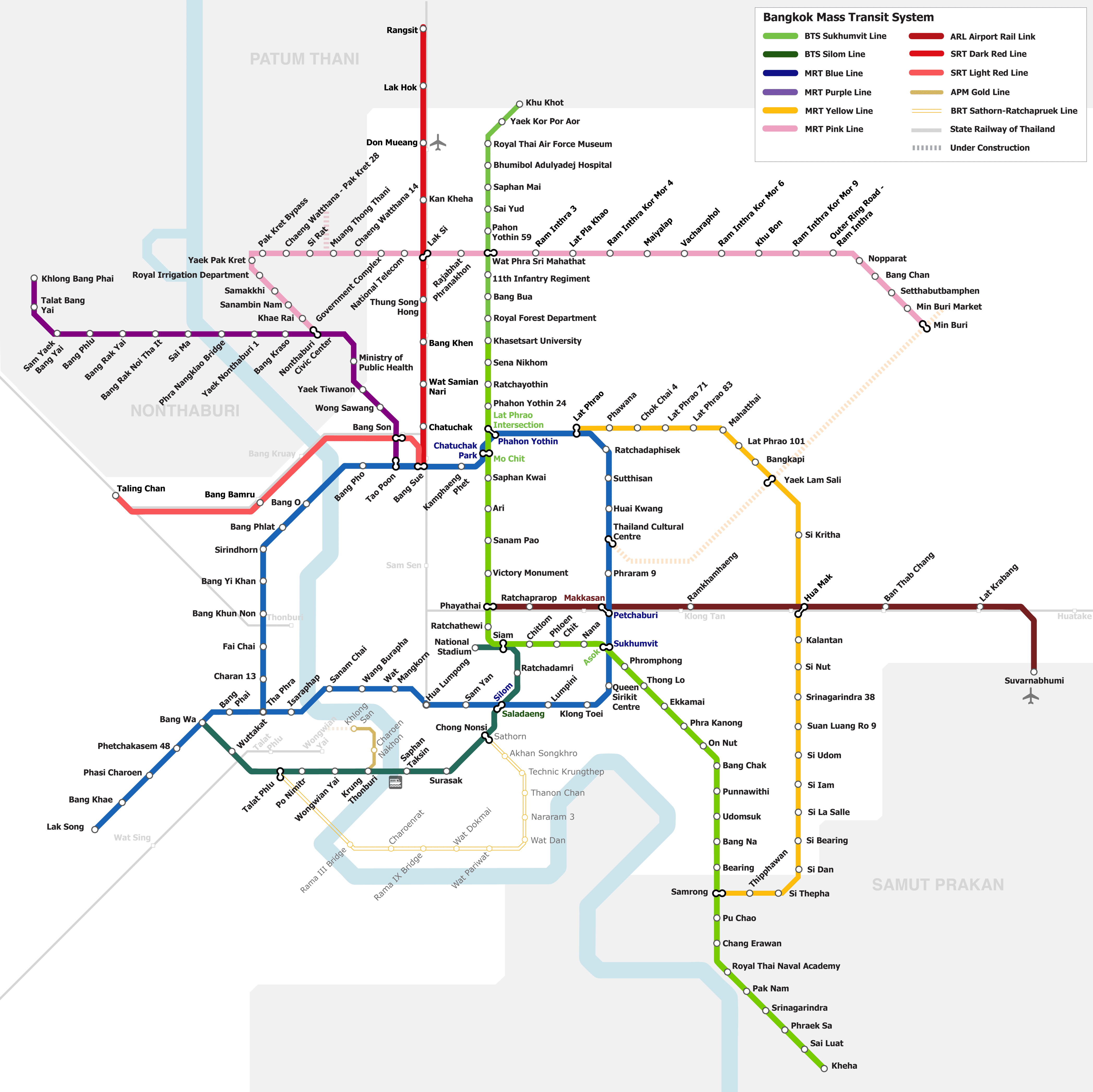
Although the metro network in Bangkok isn’t as extensive as, for example, in Singapore, it’s still a great way to get around the city.
The network consists of around ten operational lines spread across several networks, with the BTS Skytrain (mainly above ground) and MRT (mainly underground) being the most commonly used. More lines and extensions are under construction or planned.
While you can’t reach every destination in the city, the metro is still incredibly useful – especially when traffic in Bangkok comes to a standstill during rush hour.
Tickets can be purchased at all stations, and prices are reasonable.

Taxi, tuk-tuks and river ferries
Bangkok’s traffic is notoriously bad, so if you find yourself on the wrong road at the wrong time, you might end up spending a significant portion of your time stuck in a traffic jam.
That said, taxis can still be a convenient option, especially if you’re not near a metro station.
Apps like Grab and Bolt (which function similarly to Uber) are usually cheaper than traditional taxis, but in Bangkok, we’ve had mixed experiences with them: sometimes we’ve had to wait quite a while for a ride, as drivers often sit in traffic queues.
Interestingly, taking a tuk-tuk can often be more expensive than a taxi, but if you’re willing to embrace the traffic (and the pollution), it can be a fun way to get around the city.
River ferries and other boats offer a great (and very scenic) way to get around Bangkok, especially if you’re near the water.
Most boats travel up and down the Chao Phraya River, but you can also explore some of the smaller canals, giving you a unique perspective on the city.

When to visit Bangkok
With temperatures rarely dropping below 20°C (68°F) and sometimes reaching up to 40°C (104°F), Bangkok is a consistently warm metropolis.
However, there are distinct seasonal variations, which can be helpful to know if you’re planning a trip.
The cold season (high season)
The best weather in Bangkok, with relatively cooler temperatures, can be found from around November to February.
During the day, it’s comfortable for walking around, and in the evening and at night, temperatures may drop to just above 20°C (68°F).
The warm season (low season)
It starts to get hot on the Thai mainland in March, with temperatures typically peaking in April, when places like Bangkok can reach as high as 40°C (104°F).
During this time, it’s wise to seek shade (and air conditioning!) in the middle of the day.
If you visit Bangkok in April during the Songkran Festival, be prepared to be sprayed with water from cannons and water pistols. Tourists are often the main targets, but it’s all in good fun, with the Thais always offering a big smile.
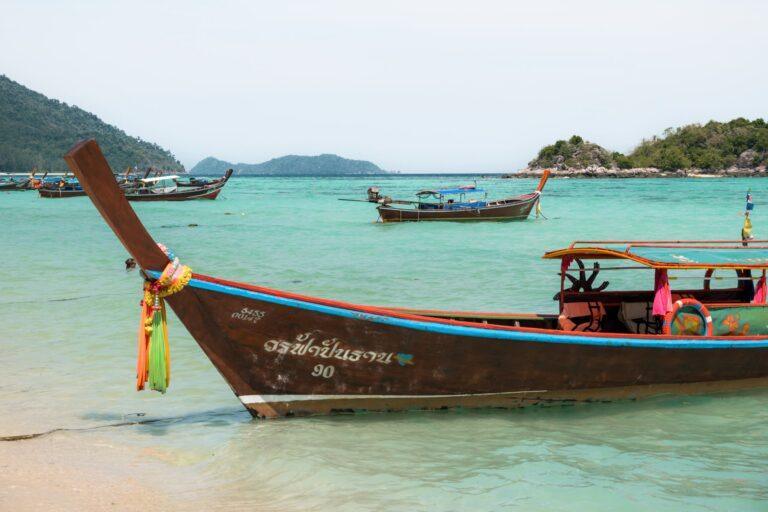
The best times to visit Thailand and what to expect – from the tropical islands to the northern hills
Read moreRainy season (low season)
When the rains begin around May, it’s possible to venture outside during the day without feeling completely overwhelmed by the heat.
At the start of the rainy season, however, the weather remains warm, with high temperatures continuing until September, which is when the heaviest rainfall occurs.
By the end of November, the weather typically becomes much drier again, and there’s still some time before the tourist crowds arrive around Christmas.

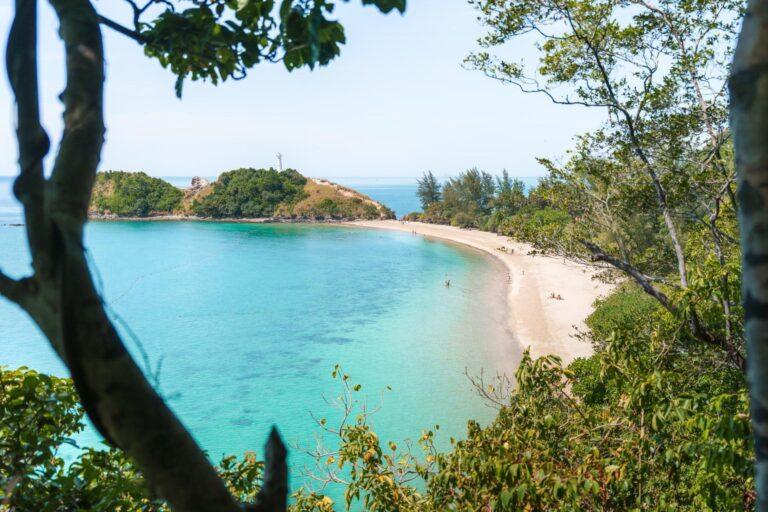
Everything you need to know about Koh Lanta in Thailand, including the best beaches, towns to see, what to do and our best tips
Read moreOur best tips for staying in Bangkok
- Factor in extra time for transport. Especially in the mornings and afternoons/evenings, it can take quite a long time to get around the gigantic city.
- Bangkok is an exciting and incredibly photogenic city. Make sure to bring a good camera! Here’s our guide to lightweight photography gear for high-quality travel content.
- Getting around with Grab or Bolt is often cheaper than local taxis. Both work just like Uber; simply download the apps, compare prices for your route, and make sure you have data on your phone.
- Be cautious in traffic. It can be hectic, and drivers either tend to go fast or you’ll find yourself stuck in long, chaotic traffic queues.
- Electrical outlets in Bangkok, as elsewhere in Thailand, are commonly combination sockets. They often take both two-pin Type A plugs with flat prongs and Type C plugs with round pins. Grounded Type O outlets also occur, so you may need an adapter. The standard voltage is 220 volts.
- How long to spend in Bangkok really depends on your interests. You can explore the main attractions in just a few days, but if you’re a digital nomad or looking to immerse yourself more deeply in the city’s culture, you could easily spend weeks here.
- Dress respectfully at the temples. Make sure your shoulders and knees are covered in religious surroundings.
- Book accommodation well in advance if you’re travelling during high season (roughly November to February, especially around Christmas and New Year). While there will always be rooms available in Thailand’s capital, many of the best hotels get fully booked months ahead of time.
- Wifi is widely available in hotels and cafés, and it’s usually very fast. If you need internet access elsewhere for services like Grab and Bolt, consider buying a local SIM card or eSIM with data. It’s affordable and easy to get hold of. We’ve previously used Airalo (adlink) with great success.
- The sun is strong. Remember your sun protection and stay in the shade during the hottest hours in the middle of the day.
- Credit cards are accepted in most higher-end establishments, but cash is more commonly used in local restaurants and smaller shops.
- ATMs and currency exchange are easy to find in Bangkok. It’s usually most cost-effective to withdraw money in baht, and to minimise extra fees, it’s worth withdrawing the maximum allowed amount in one go.
- With several first-class hospitals, clinics and dental practices in Bangkok, medical care is readily available if you need treatment or assistance during your stay.
- Bring your own water bottle and refill it at cafés and restaurants.
- Remember travel insurance! We compare the best travel insurance for digital nomads and long-term travellers here.


What camera, drone and accessories we use to capture life on the road
Read moreSustainable travel tips
To travel as sustainably as possible, we recommend the following:
- Book eco-friendly accommodation such as hotels with a sustainability focus or owned by locals.
- Minimise the use of air conditioning and turn it off when you are not in the room.
- Buy handmade souvenirs directly from the artist instead of mass-produced items in larger stores.
- Respect local traditions and follow the temple dress code.
- Eat as plant-based, local and organic as possible.
- Bring your own drinking water in a refillable bottle.
- Avoid disposable plastics as much as possible.
- Sort your waste and do not leave it on the ground.
- Take only photos and leave only footprints. Avoid taking things from nature with you.
Planning a trip to Thailand?
Don’t miss our guide with tips for visiting Thailand packed with must-know travel advice, local customs and important things to avoid for a lovely vacation and a respectful visit.


Essential Thailand travel tips covering costs, local customs, transport, safety and more.
Read moreFAQ about where to stay in Bangkok
What is the best area to stay in Bangkok for first-timers?
Sukhumvit or Siam (adlinks) are the two safest bets for a first visit. Both are central, well connected by BTS Skytrain, and surrounded by hotels, restaurants and shopping at every price point.
Sukhumvit has more nightlife and dining variety; Siam is slightly more compact and family-friendly.
If you’re backpacking and looking for nightlife, Khao San Road (adlink) is the place to be.
Is Bangkok safe for tourists?
Yes, broadly. Bangkok is considered one of the safer major cities in Southeast Asia for tourists. Violent crime against visitors is rare.
The main things to watch for are taxi drivers who refuse to use the meter (use Grab or Bolt instead), pickpockets in busy areas like Chatuchak Market and the Grand Palace, and Bangkok’s chaotic traffic, which is arguably the biggest day-to-day hazard.
The Khao San Road area can get rowdy late at night, but common sense goes a long way.
How far is the city centre from Suvarnabhumi Airport, and how do I get there?
Suvarnabhumi Airport is around 30 kilometres east of central Bangkok. The quickest option is the Airport Rail Link, which takes roughly 30 minutes to Phaya Thai station (for Sukhumvit and Siam connections via BTS) or Makkasan (for the MRT).
A taxi is more convenient if you have a lot of luggage, but budget 45 to 90 minutes depending on traffic, and make sure the driver uses the meter. Grab or Bolt also works well from the airport.
Is it better to stay near a BTS or MRT station in Bangkok?
In short: yes, and it’s one of the most important things to check before booking.
Bangkok’s traffic can be brutal, and being within a short walk of a Skytrain or MRT station means you can skip it almost entirely.
A hotel that looks conveniently placed on a map can still cost you an hour each way in a taxi during rush hour. Check the walking distance to the nearest station before you commit to anywhere.
What is the best area in Bangkok for families?
Siam (adlink) is a strong choice: it’s central, has huge air-conditioned malls perfect for escaping the heat, and is well served by public transport.
The Chao Phraya Riverside area (adlink) is another good option if you’d prefer a quieter base, with the added bonus of boat transport to the main temples and attractions.
Both areas have a wide range of family-friendly hotels at different price points.
Where is the best place to stay in Bangkok for couples?
The Chao Phraya Riverside area (adlink) is the obvious pick for couples, with romantic views, boat transport and a quieter, more intimate pace than the rest of the city.
The Mandarin Oriental (adlink) is the classic choice for a special occasion, while Riva Arun (adlink) offers similar river romance at a much gentler price.
If you’d rather stay somewhere central with easy access to nightlife and restaurants, the upper stretches of Sukhumvit or the lively Silom area (adlinks), home to Grande Centre Point Surawong (adlink) with its rooftop pool and skyline views, are good alternatives with a bit more buzz.
Is Khao San Road worth staying on?
The road itself is loud, touristy and best experienced for a night out rather than as a base.
That said, the surrounding neighbourhood is one of the better areas for budget travellers: quiet streets just a few minutes back from the main drag, easy access to the Grand Palace, Wat Pho and the river, and a good range of affordable accommodation.
Casa Nithra and Priya Boutique House (adlinks) are both close enough to enjoy the area without being in the thick of it.
Should I stay on the same side of the river as the temples?
It helps if the Grand Palace, Wat Pho and Wat Arun are the main point of your trip, since you can walk to the Grand Palace and Wat Pho without negotiating traffic or tuk-tuks. Wat Arun is just a short ferry ride across the river.
The trade-off is that the Old Town is quiet in the evenings, with fewer dining options once the temples close.
If you’re staying elsewhere, the river ferries and taxis make the temple area very reachable from most parts of the city.
The Riva Arun (adlink) is one of the best-positioned hotels if you do want to be right in the middle of it.
Thank you for reading our guide to the best hotels in Bangkok
Thank you for reading our travel guide on where to stay in Bangkok.
We hope our guide has helped you find the perfect area and accommodation that matches your trip, whether you’re looking for a budget dorm room, a family-friendly stay or one of the best hotels in Bangkok.
Have you visited Bangkok before? Where did you stay, and what did you think of the city?
We’d love to hear your thoughts in the comments below.
And if you have any questions about where to stay in Bangkok, the different areas, or the best hotels, feel free to ask. We are always happy to help!

Our favourite travel resources:
- Booking.com for hotels and apartments.
- Momondo for the best flight deals.
- AirHelp for flight delay compensation.
- GetYourGuide for great tours everywhere.
- Airalo for reliable eSIM.
- Discover Cars for transparent car hire.
- SafetyWing for travel insurance. We also like True Traveller. Compared here.

Ayutthaya Travel Guide: 14 Best Things to Do in Thailand’s Ancient Capital
What to do in Ayutthaya, including temples, river views, sunset spots and when to visit
-
Where to Stay in Ayutthaya: The Best Hotels in All Price Ranges
Our recommendations for the best places to stay in Ayutthaya, Thailand (from budget guesthouses to luxury hotels)
-
Ayutthaya Day Trip from Bangkok: How to Visit & What to See
How to get to Ayutthaya from Bangkok, must-see temples and our best tips to visit the ancient capital