Tropical weather in the Land of Smiles
In the Land of Smiles, there’s plenty of sunshine, a gentle breeze and calm, clear water – or is there?
For the most part, yes.
But now and then, Thailand’s tropical climate brings monsoon rain, surprisingly cool spells or intense heat.
If you want the best time to visit Thailand with the kind of weather you’re hoping for, it’s worth planning your trip around the country’s seasons and regional weather patterns.
This guide takes you through the weather in Thailand month by month and shows when it’s best to visit – whether you’re heading for the mainland, the far north or the islands scattered along its coasts.
We’ll also look at where to travel in different months, including Christmas and New Year, as well as during the European school summer holidays.
Hopefully, it will help you find the best time to go to Thailand for your plans.
Table of contents


Winter and summer holidays in Thailand
When is the best time to go to Thailand?
The main travel season across the country runs from November to March – the period with the most pleasant weather in nearly all regions.
December, January and February are the driest and coolest months (and yes, that’s a good thing).
These months are also widely regarded as the best months to visit Thailand if you prefer sunshine, low humidity and comfortable temperatures.
Since most Europeans (and Danes like us) travel to Thailand either to escape the winter or during the school summer holidays in July and August, we’ll start with a guide to where to go in both winter and summer.
Thailand in winter
During the winter season (from November to February), the weather is pleasant across almost all of Thailand.
The northeast monsoon brings dry air and cooler temperatures. Unless you’re high up in the northern mountains, you can still count on daytime highs above 25°C (77°F).
December, January and February are peak season everywhere, and this period is broadly considered the best time to travel to Thailand.
Prices reach their highest around Christmas, New Year and throughout January, so if you’re travelling then, it’s best to book your accommodation well ahead.
For perfect beach weather in December or January, the Andaman coast (for example Phuket) is usually a safer bet than the Gulf of Thailand (like Koh Samui), where there can still be some rain.
March is a good shoulder month, though temperatures start to climb quickly. Staying near the sea or with a pool makes a big difference.
Tip: If you’re planning to visit northern Thailand, be aware of the burning season. You can read more about it further down.

Everything you need to know about visiting Phuket, including what to see, things to avoid and our top tips
Read moreThailand in summer
July and August fall within Thailand’s rainy season (also known as the green season) when heavy showers sweep across much of the country.
That said, you can still have a lovely trip to Thailand in the summer.
The rainy season arrives a bit later in the Gulf of Thailand, so islands such as Koh Samui, Koh Phangan, Koh Tao (and further east also Koh Samet) often enjoy long stretches of dry weather and sunshine.
That’s why these islands are a great choice for summer holidays.
Big cities like Bangkok and Chiang Mai are still worth visiting, but expect heavy downpours. The rain typically falls in the afternoon.


Everything you need to know including what to do, best beaches, where to stay and our best tips
Read moreThe seasons in Thailand
Broadly speaking, Thailand has three main seasons: the cool, the hot and the wet – often referred to as winter, summer and monsoon.
- The cold winter season (November to February): These are the coolest and driest months, and also the most popular time to visit Thailand. December, January and February are high season, bringing blue skies, sunshine, light winds and very little rain.
- The hot summer season (March to May): During this period, Thailand becomes hot, hot, hot. The Thais call it summer, and it can feel scorching, especially on the mainland in places such as Bangkok and Chiang Mai.
- The wet rainy season (May to October): Also known as the green season, this period brings fewer visitors and lower accommodation prices. In Northern Thailand, the rains help clear the air after the burning season. The rainy season starts a little later around the Gulf of Thailand.
Differences in Thailand’s seasons by region
Thailand covers a large area, and although the overall weather pattern is similar across the country, there are key regional differences.
Generally, the seasons vary depending on whether you visit the Andaman coast (western Thailand), the Gulf of Thailand (including the eastern islands), the mainland (including Bangkok), or Northern Thailand.
Below, we’ve broken down the weather in Thailand by these areas.


Essential Thailand travel tips covering costs, local customs, transport, safety and more.
Read moreWeather on the Andaman coast
The Andaman Sea stretches along the southwestern coast of Thailand.
This region includes popular destinations such as Phuket, Khao Lak, Koh Phi Phi, Krabi, Koh Lanta and Koh Lipe.
In southern Thailand, the seasons and weather changes are not as pronounced as they are further north – partly because the sea keeps the temperatures more stable and because it lies closer to the equator.


The cold season (high season)
The high season (the cold season) along the Andaman Sea runs from November to February or March.
This is when the weather in Thailand is at its best, with pleasantly “cool” temperatures in the high 20s (~ 80-85°F), relatively little rain and a light breeze that keeps the humidity comfortable.
The hot season (low season)
From March to May, temperatures rise well above 30°C (86°F), and the breezes give way to heavier humidity.
It’s still perfectly fine to visit Thailand’s southwest at this time of year, but it’s a good idea to choose accommodation with a pool and/or air conditioning.
The rainy season (low season)
The rainy season begins towards the end of May and lasts until October.
Rainfall peaks in September and October. Earlier in the season, the showers are often brief and mainly occur in the afternoon.
The sea can be rough during this period, and boat trips or diving are generally not recommended.

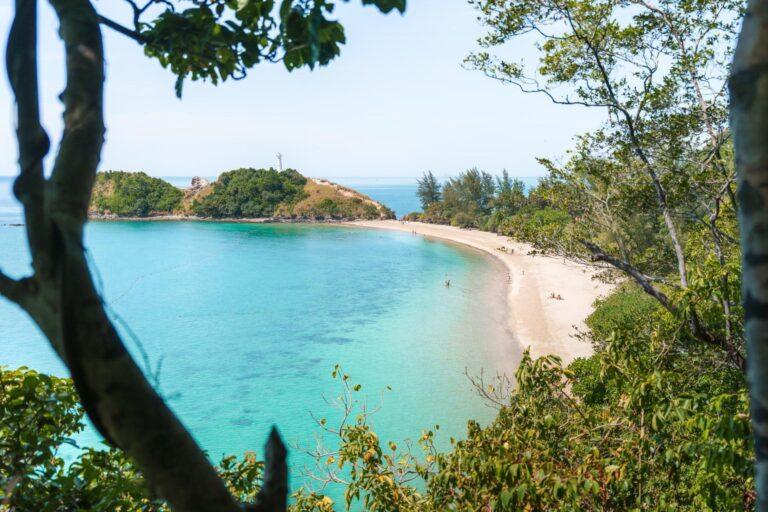
Everything you need to know about Koh Lanta in Thailand, including the best beaches, towns to see, what to do and our best tips
Read moreWeather in the Gulf of Thailand
The Gulf of Thailand (also known as the Gulf of Siam) includes islands such as Koh Samui, Koh Phangan and Koh Tao in the southwest, the coastal towns of Hua Hin and Pattaya on either side of Bangkok as well as the eastern islands, including Koh Samet.
Further southeast, Koh Chang and Koh Kood have weather and seasons more similar to those of the Andaman coast.


The cold season (high season)
As on the Andaman coast, the most stable and pleasant weather along the Gulf of Thailand occurs from December to February, when tourism is at its peak.
Book your hotel in advance, then simply enjoy long sunny days on the beautiful beaches.

Everything you need to know, including what do, the best beaches, where to stay and our top tips
Read moreThe hot season (low season)
Temperatures start to rise in March as the northeast monsoon fades.
Daytime highs can easily climb above 30°C (86°F), so it’s wise to seek shade and drink plenty of water if you’re visiting the Gulf of Thailand at this time.
Rainy season (low season)
The rainy season is (funnily enough) the wettest part of the year.
However, it arrives a little later here in the Gulf of Thailand than in the Andaman Sea.
Rain can be expected from June, but until the end of August, showers are generally brief and mostly occur in the afternoon, often followed by clear blue skies.
This makes Koh Samui and the surrounding islands a reliable choice for a beach holiday even in July or August.
Temperatures remain high until the northeast monsoon returns – usually around November.
In Hua Hin, the heaviest rain tends to fall in September and October, while on Koh Samui it’s normally closer to October and November.


Everything you need to know including where to stay, what to do and where to eat in Koh Phangan
Read moreWeather on the mainland
It’s difficult (and a shame) to skip Bangkok when travelling to Thailand.
In this context, the “mainland” also includes places such as Ayutthaya and the Isan region.
You can always take shelter in the big shopping centres, but if you want to get out and explore the temples and other attractions, it can be wise to avoid the hottest months.


The cold season (high season)
As in the rest of Thailand, the best weather with relatively mild temperatures occurs from November to February.
During the day, it’s pleasant to explore on foot, and in the evenings and at night, temperatures can drop to just above 20°C (68°F).
The hot season (low season)
Heat starts building on the mainland in March, peaking in April when temperatures in Bangkok and elsewhere can reach as high as 40°C (104°F).
It’s wise to seek shade (and air conditioning!) during the hottest part of the day.
If you’re in Thailand in April for the Songkran festival, expect to get soaked by water cannons and water pistols – tourists are a favourite target, met with big smiles from the locals.

Everything you need to know about Thailand’s capital, including what to do, plenty of photos and our top tips
Read moreRainy season (low season)
When the rains arrive around May, you can once again spend time outdoors during the day without getting completely overheated.
At the start of the rainy season, however, the weather remains warm, with temperatures staying high until September, which is also when the heaviest rain falls.
By the end of November, it is usually fairly dry again, and there is still some time before the tourist crowds arrive around Christmas.

Weather in Northern Thailand
Northern Thailand includes the popular (and rhyming) cities of Chiang Mai, Chiang Rai and Pai.
The mountainous regions in the north see significant differences between the seasons, both in temperature and rainfall, so it’s worth planning your trip carefully.


The cold season (high season)
If you visit the cities of Northern Thailand between November and February, you can expect cool temperatures (remember a warm sweater for the evenings) and dry weather.
It’s advisable to avoid the burning season as it can significantly affect air quality. Fires often start in late January, and haze tends to become more widespread from late February.
The hot season (low season)
Northern Thailand becomes very hot from mid-March and April until the arrival of the rains around May.
During this period, daytime temperatures can reach around 40°C (104°F), and air pollution is high.
For these reasons, it’s normally best to avoid Northern Thailand in the hot season if you can.

All you need to know about Chiang Mai in Northern Thailand, including what to see, lots of photos and our best tips
Read moreRainy season (low season)
The start of the rainy season is hard to pin down exactly, but once rain arrives in April, May or June, it signals the end of the burning season.
The smoke gradually clears, the waterfalls flow again, and overall, it becomes much more pleasant to be outdoors.
On the other hand, some roads can become difficult to travel, especially in the more remote parts of Northern Thailand, and trekking trails may also get muddy.

Month by month: Where is it best to travel in Thailand?
The climate in Thailand is shaped by the monsoons, bringing quite distinct seasonal changes across the country and between its regions.
The mainland tends to have more noticeable weather shifts than the islands in the south.
Here’s a quick month-by-month overview:
- January: Pleasant weather (peak season).
- February: Hot and dry (high season).
- March: Hot and dry (high/shoulder season).
- April: The hottest month.
- May: The rainy season begins.
- June: Hot and wet.
- July: Still hot, with more rain.
- August: Wetter still.
- September: The wettest month.
- October: The rainy season ends.
- November: High season begins (shoulder season).
- December: The coolest month (high season).
Thailand in January – Pleasant weather (peak season)
The weather doesn’t get much better in Thailand than in January – and plenty of travellers have caught on to that.
It lines up nicely with the gloomy winter back in Denmark (where we’re from) and the rest of Europe…
In Northern Thailand, January brings pleasantly cool temperatures (pack a warm jumper for the evenings).
It’s warmer in Bangkok and lovely on the islands, where a gentle breeze helps keep things comfortable.
The rainy season in the Gulf of Thailand (Koh Samui, Koh Phangan and Koh Tao) is coming to an end, though you might still get the odd shower.
The west coast (with places like Phuket, Koh Lanta and Koh Lipe) is a safer bet for guaranteed sunshine.

Everything you need to know about one of Thailand’s most beautiful islands, including the best beaches, where to stay and what to do
Read moreThailand in February – Hot and dry (high season)
The good weather continues in February.
Tourism slows down a bit (along with prices), and temperatures rise slightly from the cooler spell in December and January.
The skies stay bright blue, making February one of the best times to visit Thailand.
The end of Thailand’s winter (“the cold season”) is marked in Chiang Mai during the first weekend of February with the colourful annual Chiang Mai Flower Festival.
Thailand in March – The heat is coming (shoulder season)
The heat picks up, and travellers slowly but surely start heading home, which means March often brings good deals on accommodation across the country.
The sea is calm, the sun is strong, and rain only falls occasionally.
It’s a good idea to plan sightseeing for the cooler mornings or late afternoons – and remember to drink plenty of water!
Thailand in April – The hottest month
April is usually the hottest month of the year in Thailand.
Songkran, the Thai New Year festival, is celebrated from 13 April (with public holidays through 15 April), and it’s essentially one giant water fight.
Everywhere you go, people are armed with supersoakers, which is quite fitting as temperatures often climb well into the mid-30s (~ 95°F).
The mainland gets the hottest weather, especially in places like Chiang Mai and Bangkok.
Bangkok, in particular, feels noticeably quieter as many locals escape the heat.
It’s a little cooler up north in Chiang Rai, and you can always cool off in the sea on the southern islands.
A nice bonus of travelling to Thailand in April is that many tropical fruits are in season – including mango, mangosteen and durian.
Thailand in May – The rainy season begins
After the hottest month, temperatures in Thailand start to drop in May.
The rainy season begins as the moist southwesterly monsoon sets in, and by the end of the month, there are only a few completely dry areas left.
Most showers are short but intense, and they often pass quickly.
Despite the rain, May is still a wonderful time to visit Thailand – you’ll find lower accommodation prices and plenty of sunshine between the showers.
Thailand in June – Hot and wet
The rain continues in June, and in Northern Thailand, the otherwise dry, brown hills turn a lush green. Rivers and waterfalls are also in full flow.
As in May, you can expect heavy downpours across much of the country.
Temperatures stay high, averaging around 30 degrees (86°F).
The exception is the group of islands in the Gulf of Thailand (Koh Samui, Koh Phangan and Koh Tao), which largely avoid the rain and enjoy long stretches of sunshine.

Everything you need to know about the best places to stay in Koh Samui with specific hotel recommendations
Read moreThailand in July – Still hot, with more rain
Temperatures drop slightly in July, and the rain showers tend to last a bit longer.
On the bright side, rivers and waterfalls are at their most impressive.
Northern Thailand is lush and green this time of year, though trekking can be a bit of a muddy challenge.
If you’re after a beach or diving holiday, it’s still best to head for Koh Samui, Koh Phangan and Koh Tao in the Gulf of Thailand. The sun shines for longer stretches here, and it rains far less than on the west coast.
Thailand in August – Wetter still
The rainy season is in full swing in August, with showers across much of the country.
This also means it’s low season in Thailand, with fewer tourists and more affordable accommodation.
Rain rarely lasts all day, and even during heavy downpours, there’s usually time for sunshine between showers. Most rain falls in the afternoon.
In the Gulf of Thailand, the rainy season doesn’t begin until September, so Koh Samui, Koh Phangan and Koh Tao still enjoy a few weeks of mostly sunny, dry weather. It’s still high season on these islands.
Thailand in September – The wettest month
September is often the wettest month in Thailand.
By now, the rains have reached the Gulf of Thailand as well, particularly towards the end of the month, making it difficult to avoid heavy showers that can last much of the day.
If you’re planning a beach holiday in September, Hua Hin on the mainland is one of the better options.
Temperatures across the country continue to fall, while humidity peaks and thunderstorms are not uncommon.
Thailand in October – The rainy season ends
The weather usually starts to change in October, though there’s no exact guarantee when.
Rain begins to ease, giving way to cooler, drier conditions.
This is linked to the arrival of the northeast monsoon, which brings dry air with it.
The west coast, particularly Phuket and Koh Lanta, starts to enjoy more dry, sunny days during October.

Our recommendations for the best places to stay in Koh Lanta from budget to luxury
Read moreThailand in November – High season begins (shoulder season)
By November, the last drops of the rainy season are nearly gone, and most of Thailand is beginning to dry out.
High season is slowly starting, and accommodation prices reflect the improved weather.
However, November is still cheaper than December and makes a great shoulder month for travel.
Since the rainy season arrives later on Koh Samui, Koh Phangan and Koh Tao in the Gulf of Thailand, it also ends later there. If you’re after a beach holiday, the islands on the west coast are a better bet in November.
The Loy Krathong and Yee Peng lantern festivals fall on the full moon of the twelfth month of the Thai lunar calendar, which often lands in early to mid-November.
It marks the end of the rainy season with thousands of glowing lanterns illuminating the kingdom – beautiful, though not exactly eco-friendly.
Thailand in December – The coolest month (high season)
Thailand is back in business in December, with the perfect combination of “mild” temperatures (in the mid-20s / ~ 77°F) and mostly rain-free, sunny days filling the beaches with tourists once again.
Northern Thailand is slightly cooler than Bangkok, making December a wonderful month for hiking or cycling in the mountains.
Christmas and New Year are naturally a peak time for visitors, so it’s wise to book accommodation well in advance if you’re planning to travel then.
The west coast still enjoys slightly better weather than the islands in the Gulf of Thailand, but a beach holiday anywhere in Thailand in December is generally a success.
Diving is particularly good around Phuket.

FAQ: Weather and seasons in Thailand
How many seasons are there in Thailand?
Thailand has three main seasons: winter, summer and the rainy season.
- Winter (November to February): This is the coolest and driest time of year and also high season for tourism across the country. It’s generally considered one of the best times to visit Thailand for beach holidays and sightseeing.
- Summer (March to May): The hottest months in Thailand, though still dry, especially on the mainland. Temperatures can reach their peak, particularly in Bangkok and Northern Thailand.
- Rainy season (May/June to October): Also called the monsoon season. Rainfall is heaviest between August and September, but temperatures remain warm, and it can still be a pleasant time to visit, especially for fewer crowds and lower accommodation prices. The rainy season starts and ends later in the Gulf of Thailand than on the west coast.
When is the burning season in Northern Thailand?
In Northern Thailand (for example Chiang Mai, Chiang Rai and Pai), seasonal burning of fields and forests creates a period of high air pollution known as the burning season.
This usually lasts from mid-January to mid-April, though exact dates vary slightly each year.
Haze can appear as early as December, after the rainy season ends, but conditions are at their worst from late February through March.
Air quality improves once the rains return, typically around April (coinciding with the Songkran festival).
Breathing the polluted air is neither healthy nor pleasant, so if you have the option, we would really recommend avoiding Northern Thailand during the burning season.
When is the rainy season in Thailand?
The rainy season, also called the monsoon, generally begins in May and peaks between August and September.
Even during the rainy season, Thailand can still be a lovely destination with warm temperatures and lush green landscapes.
Just be prepared for sudden downpours, usually passing quickly.
What is the best time of year to travel to Thailand?
For most travellers, December and January offer the perfect weather for a trip to Thailand.
Temperatures are at their lowest, it’s often breezy and rain is rare.
The downside is that this is high season, so hotels and beaches can be busy.
March and November are good shoulder months if you prefer to avoid the biggest tourist crowds.

Everything we know about travelling in Thailand with a baby – including safety, packing, flights and where to stay
Read moreWhen is it coldest in Thailand?
The coldest weather occurs in December and January, making these months ideal for visiting.
Northern Thailand can be quite chilly, especially in the mountains.
By contrast, the coastal and island regions in the south remain pleasantly warm – it never gets truly cold.
What about the weather in Khao Sok?
Khao Sok National Park, located on the mainland, experiences weather patterns similar to those of the Andaman Sea and southwestern Thailand.
The coolest and driest period (which is also the high season) runs from November to March.
Temperatures rise towards May, and the rainy season spans the rest of the year, from May to November.
Khao Sok is a naturally wet area, so some rain is to be expected at any time of year.
Visiting the national park during the rainy season has its perks: temperatures are relatively comfortable in the mid-20s (~ 77°F), wildlife is easier to spot, and the scenery is at its greenest.
What are the most important holidays and festivals in Thailand?
- Chinese New Year (January/February): It falls on a date that shifts each year according to the lunar calendar, typically between late January and mid-February. The festivities in Thailand centre on three key days, though the traditional cycle runs for 15 days. It brings an extra surge of tourists to Thailand’s already busy high season.
- Songkran (April): Thailand’s New Year festival marks the hottest period of the year. Also known as the water festival, it turns the streets into a giant water fight (with tourists often being prime targets, to everyone’s amusement). Many locals head to the southern islands to escape the heat in the cities.
- Loy Krathong and Yee Peng (usually November): The end of the rainy season is symbolically marked by the first full moon of the twelfth month of the Thai lunar calendar, which is normally in November. You’ve probably seen pictures of the beautiful lanterns floating on rivers and lakes across the country. In Northern Thailand, they are also released into the sky.
- Christmas and New Year (December): This is the most expensive time to visit Thailand, with hotels and resorts filling up quickly. Booking accommodation well in advance is essential if you plan to travel during this period.

Thank you for reading about the seasons in Thailand
Thank you for reading our guide to the best months to visit Thailand and what to expect from the different seasons.
We hope it has helped you plan when to explore this beautiful country and decide on the best time to visit Thailand for your own travel style.
If you’d like to read more about Thailand, check out our guides on:
- Koh Samui
- Koh Phangan
- Koh Lanta
- Koh Lipe
- Koh Samet
- Phuket
- Bangkok
- Ayutthaya
- Chiang Mai
- Tips for visiting Thailand
- Thailand with a baby
If you have any questions about the weather in Thailand, don’t hesitate to ask in the comments below. We’re happy to help.
Choosing the best time to go to Thailand often depends on where you’re heading and what activities you have in mind.
Have you travelled to Thailand yourself? How was the weather? We’d love to hear about your experiences in the comments.
Our favourite travel resources:
- Booking.com for hotels and apartments.
- Momondo for the best flight deals.
- AirHelp for flight delay compensation.
- GetYourGuide for great tours everywhere.
- Airalo for reliable eSIM.
- Discover Cars for transparent car hire.
- SafetyWing for travel insurance. We also like True Traveller. Compared here.

Where to Stay in Phuket With Kids: Best Family Hotels, Resorts & Areas
Our recommendations for the best family-friendly places to stay in Phuket, from relaxed beach bases to resorts with kids' clubs
-
Phuket with Kids: Best Beaches & Child-Friendly Things to Do
The best things to do with kids, where to stay as a family, which beaches to choose, and what to avoid – based on two family trips
-
Ayutthaya Travel Guide: 14 Best Things to Do in Thailand’s Ancient Capital
What to do in Ayutthaya, including temples, river views, sunset spots and when to visit