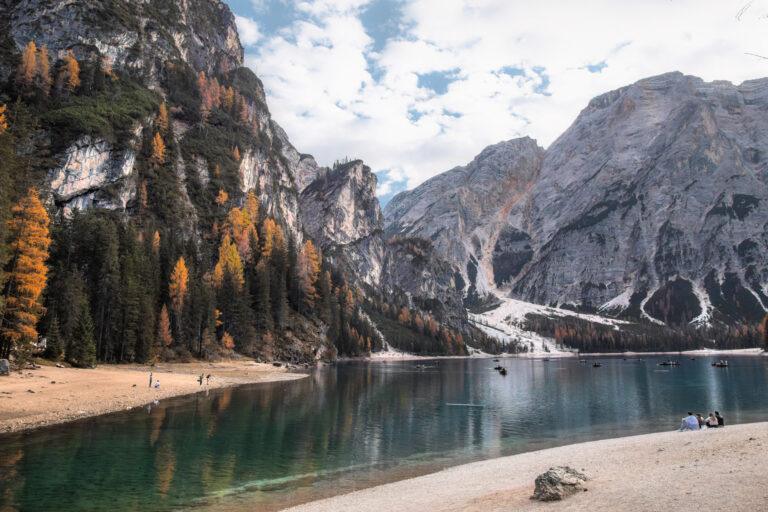
What to expect from mountain weather
When is the best time to travel to the Dolomites?
Well, that depends on whether you’re dreaming of snow-covered slopes, colourful alpine meadows or peaceful hiking trails.
The Dolomites have something to offer all year round if you love mountains and being outdoors.
But if you want the best weather for skiing or hiking, it’s worth planning your trip around the seasons.
Dolomites weather can make a big difference to your experience in the mountains – but other factors matter too, like whether the cable cars are running or if certain roads are closed to cars.
In this guide to when to visit the Dolomites, you’ll find tips on weather, seasons and the best time to plan your trip.
Table of contents
- What are the Dolomites?
- Weather and seasons in the Dolomites
- The best time to visit the Dolomites
- Summer in the Dolomites (June to September)
- Autumn in the Dolomites (September to November)
- Winter in the Dolomites (December to March)
- Spring in the Dolomites (April to May)
- Cable cars and seasons
- Clothes and gear for varied conditions
- Public holidays in Italy
- Time of day
- Sunrise and sunset
- Where to stay in the different seasons
- How long to stay in the Dolomites
- FAQs about Dolomites weather and seasons

What are the Dolomites?
Before looking at the best time to visit the Dolomites (and why the seasons matter so much), it helps to know exactly what the Dolomites are.
They’re an impressive mountain range in northeastern Italy, which is part of the Alps.
The area is famous for its dramatic peaks, deep valleys and epic views – some of the most beautiful in the world, in our opinion!
The Dolomites span several regions and vary greatly in altitude. You’ll find lush valleys as well as peaks soaring over 3,000 metres.
Because of this, the start and end of the skiing and hiking seasons depend a lot on where you are and how high up.
Weather can change fast, and conditions differ hugely between the valleys and the higher slopes.
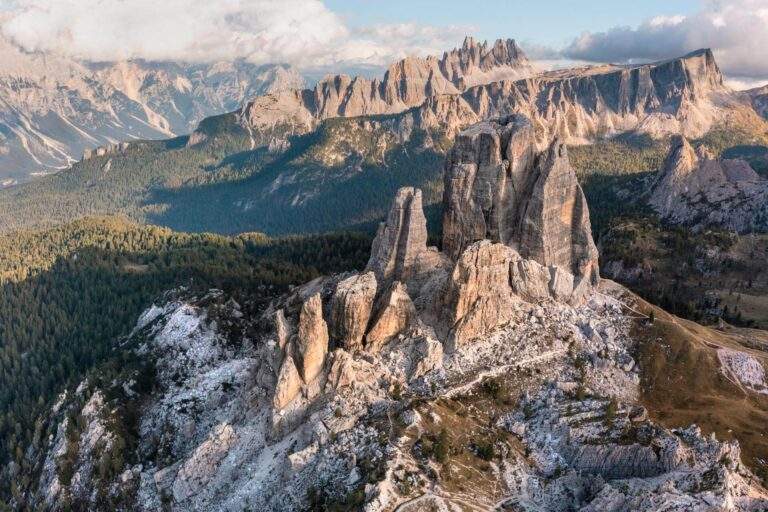
A travel guide to our favourite hikes in the Dolomites – from short walks to full-day adventures
Read moreWeather and seasons in the Dolomites
The Dolomites change character with the seasons.
Spring brings blooming meadows and fewer crowds, summer is perfect for active adventures, autumn colours light up the landscape and bring calm, while winter means skiing and cosy mountain villages.
But you can’t simply split the year into four neat seasons here – the Dolomites’ weather is much more unpredictable and can change quickly in the mountains.
It’s not unusual for the valleys to be sunny and warm, while snow covers the trails higher up.
If you’re wondering when to visit the Dolomites, it’s worth keeping an eye on both the season and local weather forecasts.
Get an overview of the weather in South Tyrol here, including conditions in different towns and mountain areas.
The Dolomiti Superski website is another useful resource, with up-to-date weather reports, cable car status and live webcams.
Keep in mind that most cable cars and mountain refuges close during the low season. We’ll cover more on this later in the guide.
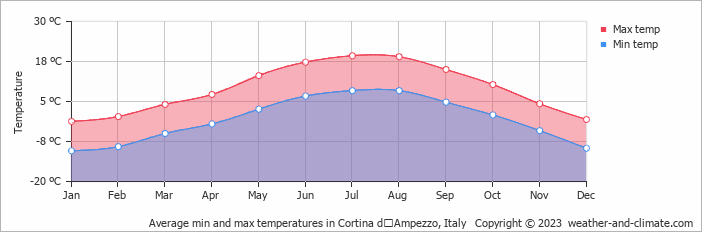
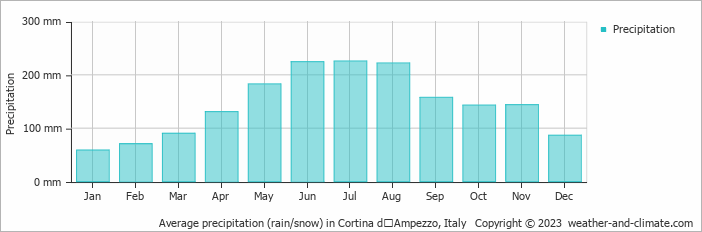
Average weather in Cortina d’Ampezzo
Here are the average temperatures and precipitation in Cortina d’Ampezzo.
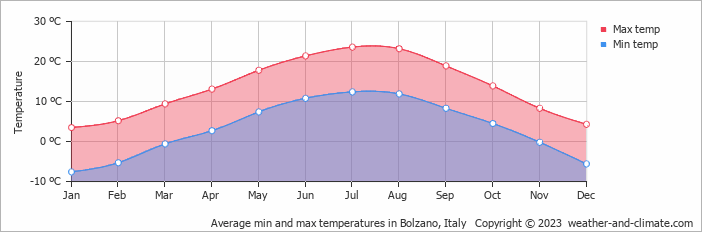
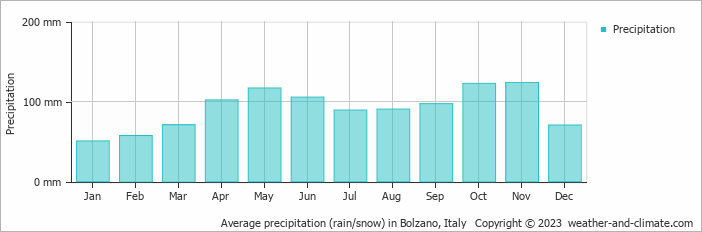
Average weather in Bolzano
Here are the average temperatures and precipitation in Bolzano.
Average weather in Ortisei (Val Gardena)
Here are the average temperatures and precipitation in Ortisei, which is located in Val Gardena.


Average weather on Alpe di Siusi
Here are the average temperatures and precipitation on the Alpe di Siusi high plateau.


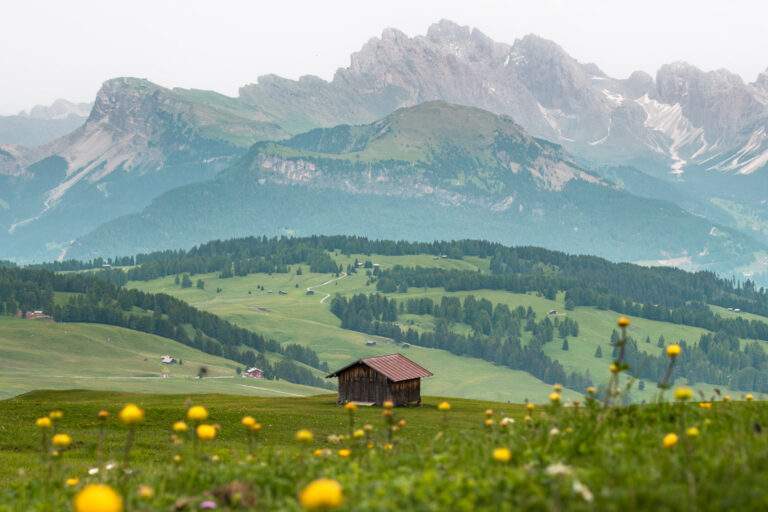
How to reach the alpine plateau of the Dolomites, hiking trails, best hotels, our top tips and more
Read moreThe best time to visit the Dolomites
Here, we give you a quick overview of the best time to visit the Dolomites.
If hiking is your plan, aim for June to September – the prime months for trails and warm weather.
For skiing, the months from December to March are the obvious choice, with snow almost guaranteed across most ski areas.
That said, there’s a lot more to consider when deciding the best time to travel to the Dolomites.
In the sections ahead, we’ll walk you through each season and what to expect in terms of weather, activities and atmosphere.

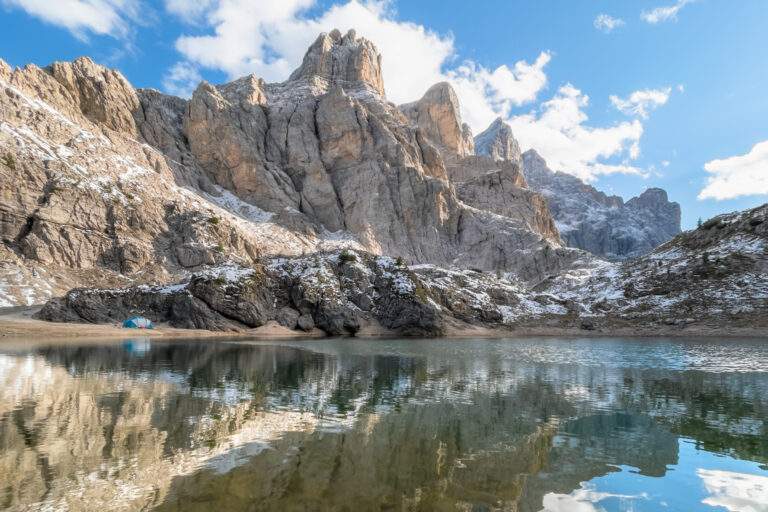
All you need to know about hiking to Lago di Coldai – parking, the route and our best tips
Read moreSummer in the Dolomites (June to September)
Summer usually runs from June to September, which is often the best time to visit the Dolomites if you’re wondering when to visit for warm weather and outdoor activities.
Thanks to the altitude, temperatures tend to be milder than in much of Italy, yet it’s still sunny and warm.
It’s usually perfect conditions for cycling, climbing and hiking in the Dolomites.
If you’re keen to try via ferrata or hut-to-hut trekking, summer is definitely the ideal season.
June marks the start of the season, but be prepared for some snow to linger on higher trails early on.
It’s wise to check local opening dates before you go, as many refuges and cable cars don’t open until mid-June.
July and August bring the classic mountain summer atmosphere.
Trails are clear of snow, huts and lifts are open, and the area buzzes with visitors.
At the same time, these months are peak season, so expect busy paths and to share the views with fellow nature lovers from across the world.
Tourist numbers peak during the European summer holidays, and August is especially popular as many Italians take their own holidays then.
September offers a calmer pace. The summer crowds thin out, and the atmosphere becomes more peaceful.
Early September can still be warm and sunny, making it a great time for hiking, but as the month goes on, more refuges and cable cars start to close for the season.
With autumn approaching, some mountain lakes (like Lago di Carezza and Lago di Sorapis) may also have lower water levels.
If you have the flexibility to plan exactly when to visit the Dolomites, late summer and early autumn strike a good balance between weather and tranquillity.
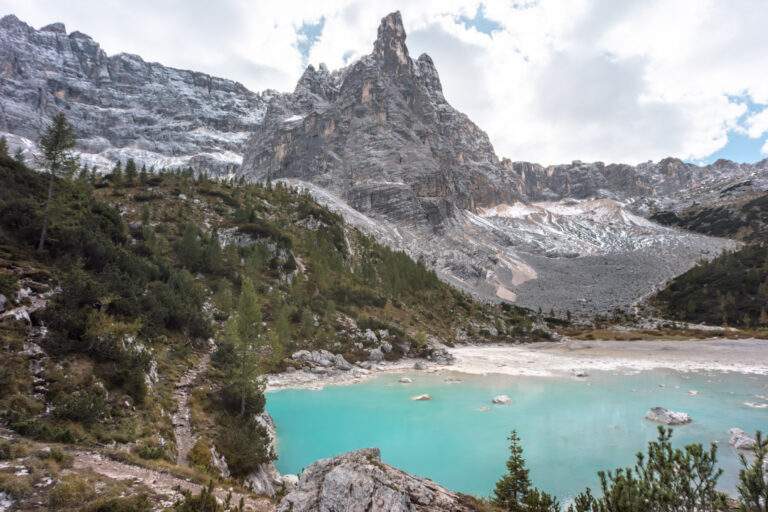
All you need to know about hiking to Lago di Sorapis, including parking, hiking route and our best tips
Read moreSummer crowds and peak times
If you want to experience summer in the Dolomites during high season, be prepared to share it with plenty of other visitors.
July and August attract crowds from Italy and across Europe, all eager to enjoy hiking and clear summer weather – and you’ll definitely notice the buzz.
The most famous spots and hiking trails can get quite busy, which may take away from the peace and quiet you’re hoping for in nature.
Popular places like Lago di Braies, Lago di Carezza, and easily reached viewpoints by cable car can fill up early in the day. Parking spaces often become overcrowded, too.
Accommodation prices rise with demand, and the best hotels and refuges usually need to be booked well in advance.
If you’re dreaming of a holiday that’s a little less crowded, consider travelling outside peak season or exploring lesser-known areas and trails instead.


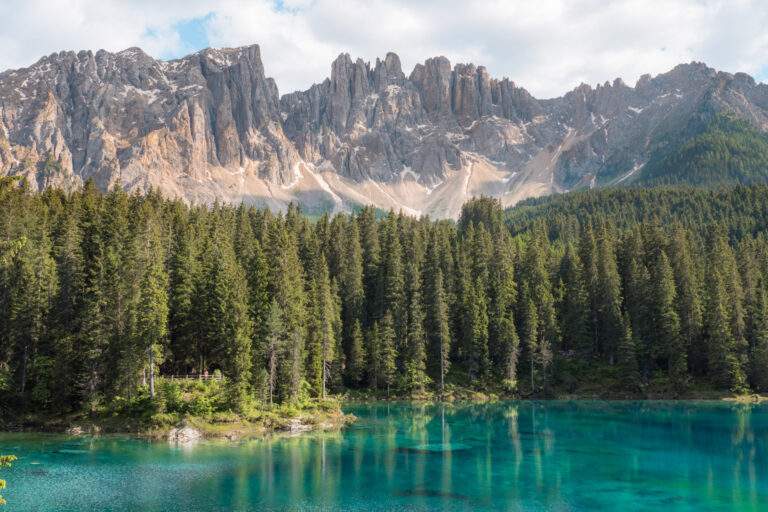
All you need to know about Lago di Carezza – parking, walking routes and our best tips
Read more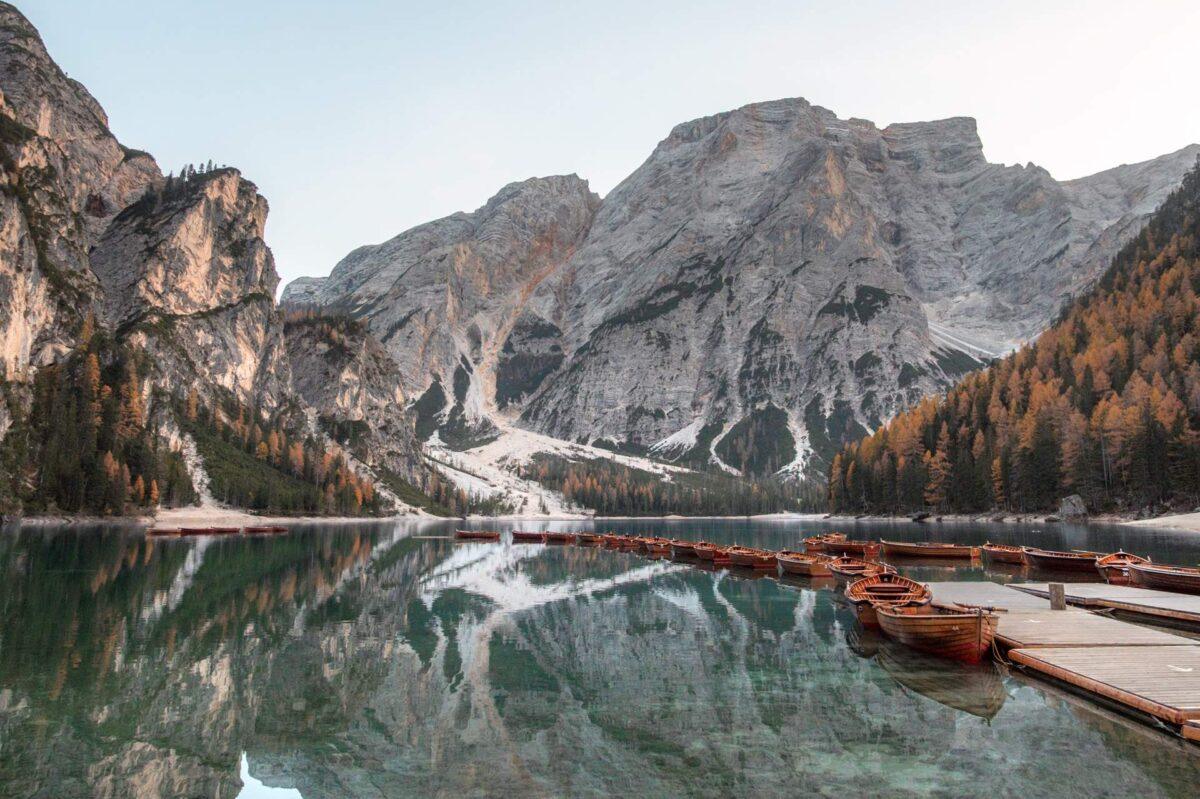
What to know before you go to Lago di Braies – including parking, the lake walk and our best tips
Read moreAutumn in the Dolomites (September to November)
Autumn is a calmer time of year, when you can experience the Dolomites’ autumn colours and the pace slows down.
At the beginning of autumn, from September to mid-October, hiking is usually still possible, and the golden autumn light makes it perfect for photography and lovely walks.
There are far fewer tourists than in the busy summer months, making autumn an ideal shoulder season for those wanting to avoid crowds on trails and in towns.
Most cable cars close for the season and only reopen in winter.
Later in autumn, from late October into November, conditions shift dramatically.
Snow begins to fall, and it’s no longer really hiking or skiing season.
By November, most facilities in the Dolomites close. While the mountains remain beautiful, many activities aren’t available.
At the same time, water levels in the picturesque mountain lakes often drop noticeably.
Autumn in the Dolomites doesn’t guarantee good weather or lots of activities, but if you’re ready to be flexible, it can offer peaceful moments and powerful nature experiences in one of Europe’s most impressive mountain regions.

Winter in the Dolomites (December to March)
December, January, February and March all count as winter months in the Dolomites – and they offer everything you’d expect from a classic mountain winter holiday.
You can generally count on snow from December through to March.
Snow conditions in December can vary, but the villages are beautifully decorated for Christmas, and several cosy markets open across the region.
January and February are usually the most reliable months if you want guaranteed snow.
Many people want to go skiing in the Dolomites and head there at this time for an active winter break, with well-prepared pistes and excellent conditions.
During these peak winter months, most slopes are open and the ski resorts are in full swing.
Val Gardena, Alta Badia and Cortina d’Ampezzo are among the most popular areas, drawing skiers from across Europe with their spectacular Alpine views and wide range of lifts and runs.
March often still delivers great snow, especially at higher altitudes, and the days are longer and sunnier – a welcome bonus for both skiers and après-ski enthusiasts.
Even when the slopes are closed or you’re not there to ski, winter in the Dolomites has plenty to offer: snowshoe hikes, cross-country skiing and wellness experiences with snowy mountain views.
If you’re thinking about when to visit the Dolomites for a winter experience, these months each offer something a little different, from festive charm to sunny slopes.

Spring in the Dolomites (April to May)
When to visit the Dolomites depends a lot on what you’re looking for, and spring (covering April and May) is one of the quieter and more atmospheric times of year.
Nature slowly changes character, but the weather can be rather unstable.
If you appreciate lower prices, empty hiking trails, fewer people on the slopes or don’t mind if everything isn’t open, spring can be a good time to go.
In April, you might still get a few good days of skiing, especially in the higher areas where the slopes sometimes stay open into Easter, depending on snowfall and temperatures.
Easter can be a lovely occasion for a skiing holiday in the Dolomites (particularly if it falls early and the snow holds up), but it’s a transitional period where you need to be ready for both powder and slush.
The trails can be busier during the Easter break, when Italians have time off, and it might be harder to find parking at popular spots…
Exact closing dates for the ski resorts vary year by year, depending on snow and weather, so check the conditions for the specific location in advance.
May is even more uncrowded, but many cable cars, refuges and hotels remain closed until summer. Skiing is usually over by then, and the weather can bring everything from warm sun to rain and snowfall – especially in higher areas.
If you don’t mind the closures, it can be a good month for hiking, as long as you’re flexible and prepared for snow on the trails.
The lower the trail, the better the chances that it’s already clear.

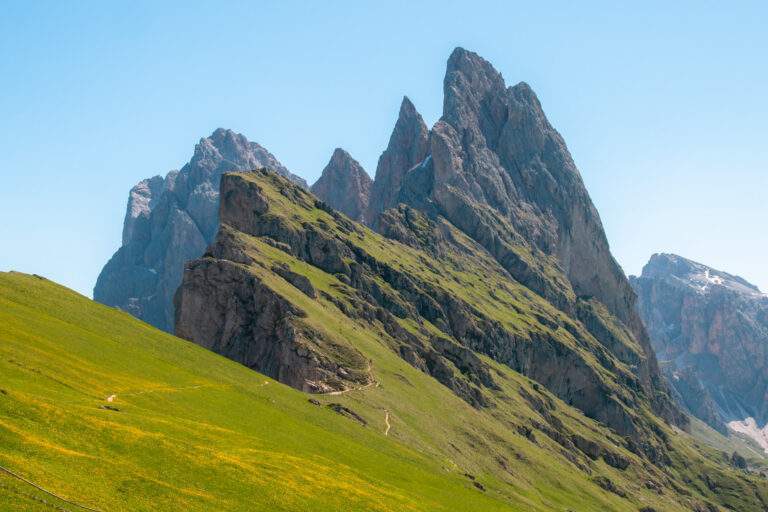
All you need to know about visiting Seceda – how to get there by cable car and our best tips
Read moreCable cars and seasons
As we’ve mentioned a few times already, it’s worth checking whether the cable cars are running.
This can influence when to visit the Dolomites – particularly if you plan to see popular viewpoints and areas like Seceda, Alpe di Siusi, Cinque Torri, Marmolada or Lagazuoi.
Cable cars are a key part of the infrastructure in the Dolomites and are found in almost all major valleys and ski resorts, so hikers, mountain bikers and skiers can access the mountains quickly and easily.
Most cable cars pause operations between the winter and summer seasons and do not run during the shoulder season.
If you have specific places in mind, it’s a good idea to check the opening dates in advance – both for the season and for the first and last ride of the day, as the daily hours can vary.

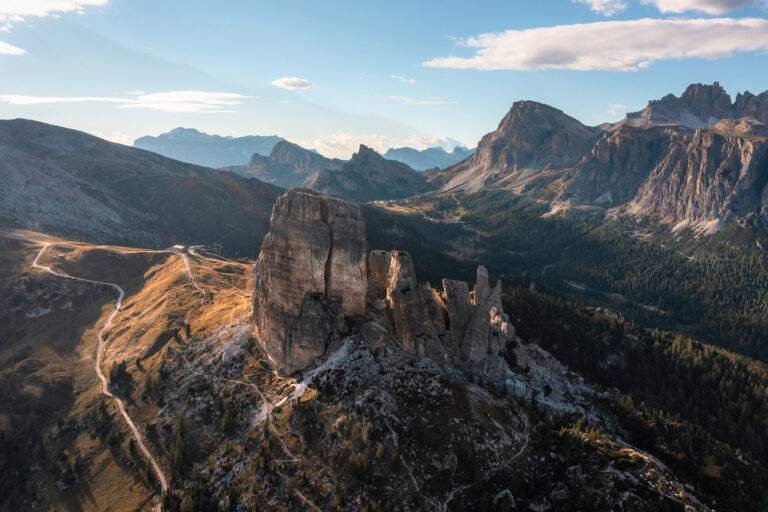
Guide to visiting Cinque Torri – walking routes, cable car, parking and our best tips
Read moreClothes and gear for varied conditions
No matter the time of year, it’s important to bring the right gear to the Dolomites – both for the weather and your planned activities.
If you’re going on a ski holiday, you’ll either need to bring your own equipment or rent it locally.
For hiking, layers are key.
Temperatures can shift quickly, and the weather can change from sunshine to rain or hail without much warning – even in summer.
Layered clothing makes it easier to adjust along the way, and rain gear and mittens are often just as relevant in July as they are in spring or autumn.
A good pair of hiking boots or sturdy sneakers is essential, especially for the uneven, stony paths.
Walking poles aren’t necessary, but can be helpful on steep or tricky terrain and we have found ours surprisingly useful on longer hikes and descents.
A headlamp or flashlight can make a big difference if you’re delayed and don’t get back before dark, or if you plan to stay for sunset and hike down afterwards.
Bring a refillable water bottle, snacks, and ideally a map or an offline hiking app, since mobile signal can be unreliable in the mountains.
You can also download Google Maps offline in advance when you have wifi; however, it’s not always very precise.
For day hikes, a solid daypack is enough.
For hut-to-hut trips, go for a proper backpack and pack light but practical.
Many mountain huts require you to bring a sleeping bag liner, and in some cases, also your own towel and slippers.
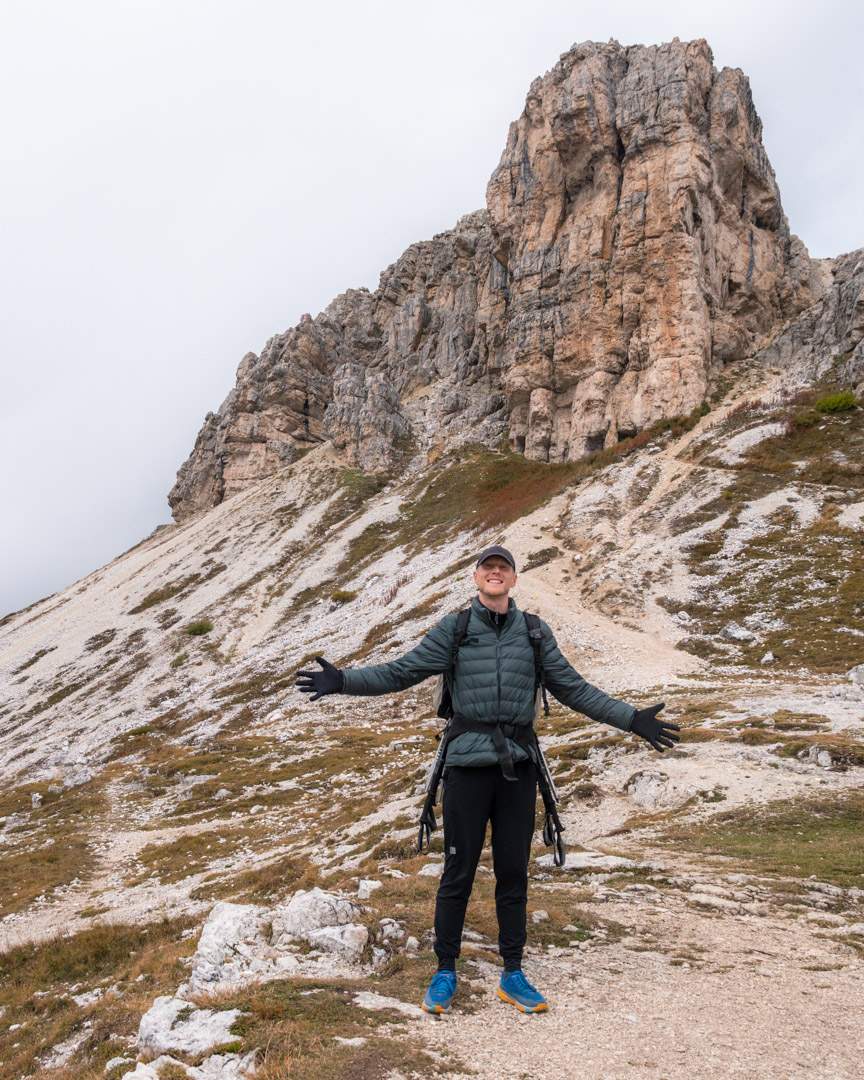
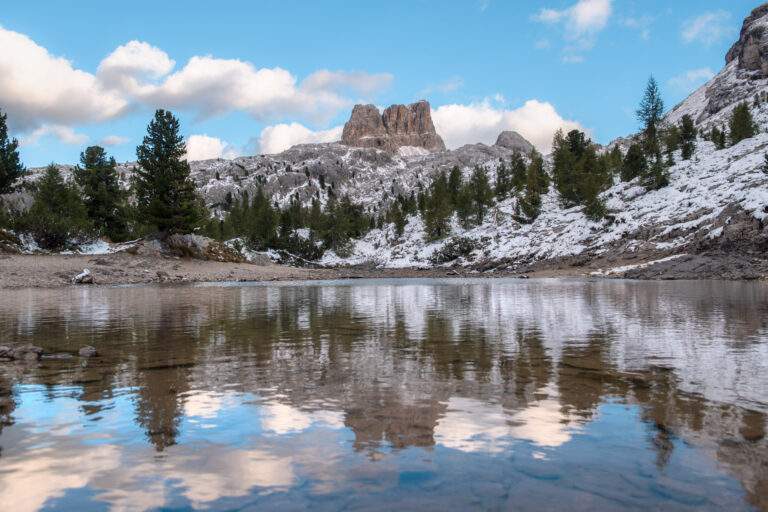
All you need to know about hiking to Lago di Limides – route, parking and our best tips
Read morePublic holidays in Italy
It’s useful to be aware of Italian public holidays when planning your trip to the Dolomites, as they can mean more visitors and changes in opening hours.
Here are some of the most important public holidays:
- Capodanno (New Year’s Day, 1 January): National holiday. Many restaurants and shops are closed, especially in smaller towns.
- Epifania (Epiphany, 6 January): National holiday that’s typically celebrated with the family.
- Pasqua (Easter): The Easter holiday usually falls in March or April and is a popular time for Italians to travel. Many attractions will be open, but it can be busy. Some local shops and small businesses close on Easter Day itself (Pasqua).
- Festa della Liberazione (Liberation Day, 25 April): Public holiday marking the liberation of Italy from the Nazis in 1945. Many restaurants and shops may have different opening hours.
- Festa dei Lavoratori (Labour Day, 1 May): Public holiday when many shops and restaurants are closed, though most tourist sites remain open.
- Festa della Repubblica (Italy’s National Day, 2 June): Many places are closed or have reduced opening hours on Republic Day.
- Pentecoste (Pentecost): Falls on the seventh Sunday after Easter.
- Ferragosto (15 August): One of the biggest holidays in Italy, when many Italians go on holiday. Several shops and restaurants close – especially in the cities. In the countryside and mountain areas, however, it is still possible to find open restaurants and hotels, as many tourists visit these places during this period.
- Ognissanti (All Saints’ Day, 1 November): Major tourist attractions usually stay open, but small shops and restaurants often close.
- Immacolata Concezione (8 December): Shops, banks and offices may be closed or have reduced opening hours, but tourist spots and restaurants usually remain open.
- Natale and Santo Stefano (Christmas and Boxing Day, 25-26 December): Many places are closed, though tourist-oriented businesses may remain open.
Many Italians take these days off and often head to the mountains for excursions, especially when the holiday falls near a weekend.
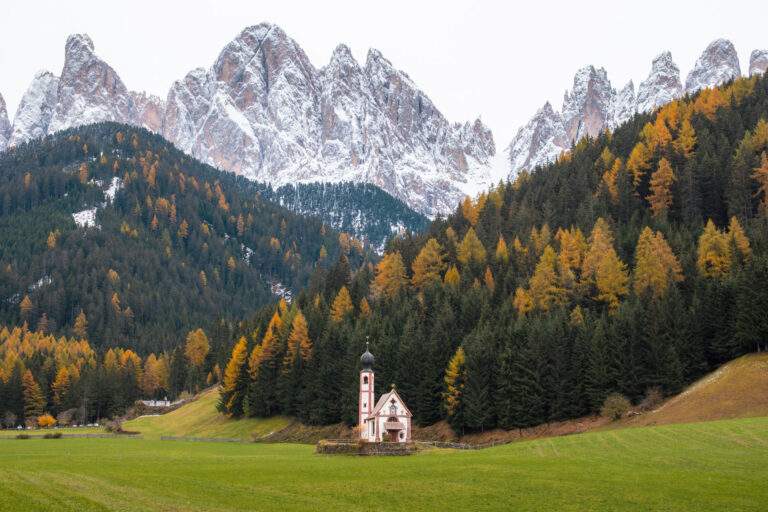
All you need to know about the Church of San Giovanni – how to get there, viewpoints and our top tips
Read moreTime of day
When to visit the Dolomites isn’t just about the right month – the time of day can make a big difference too.
So, when planning your trip, it’s worth thinking about more than just the season. The hour you head out can shape your whole experience.
If you’re an early riser, you can enjoy some of the area’s most beautiful places without the crowds.
Popular viewpoints and hiking routes tend to be busiest in the middle of the day, and even more so during summer and around Italian holidays.
For a quieter experience, it’s worth heading out early in the morning or waiting until late afternoon.
Most cable cars don’t run at sunrise, but if you catch the first ride, you can still enjoy a more peaceful trail and better light.

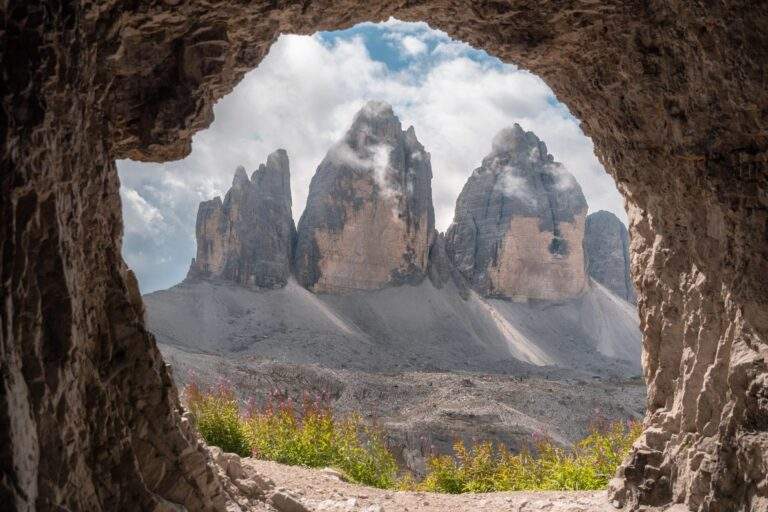
Travel guide to one of the best hikes in the Dolomites – route, highlights, facilities and our top tips
Read moreSeasonal road closures
Several of the Dolomites’ most popular nature spots have traffic restrictions during high season to limit car numbers and protect the environment.
This applies to selected roads and mountain passes where private vehicles are not allowed at certain times – for example at Alpe di Siusi, Cinque Torri, Tre Cime di Lavaredo, Lago di Braies and Monte Specie.
Roads are typically closed in the middle of the day, from around 9:00 to 16:00, between June and September.
Instead, you can take a shuttle bus, bike or walk to reach your destination.
If you prefer to drive, you’ll need to arrive early in the morning or wait until late afternoon, when the roads reopen.
Restrictions can vary depending on the location and year, so it’s wise to check the current rules for access and parking ahead of time.

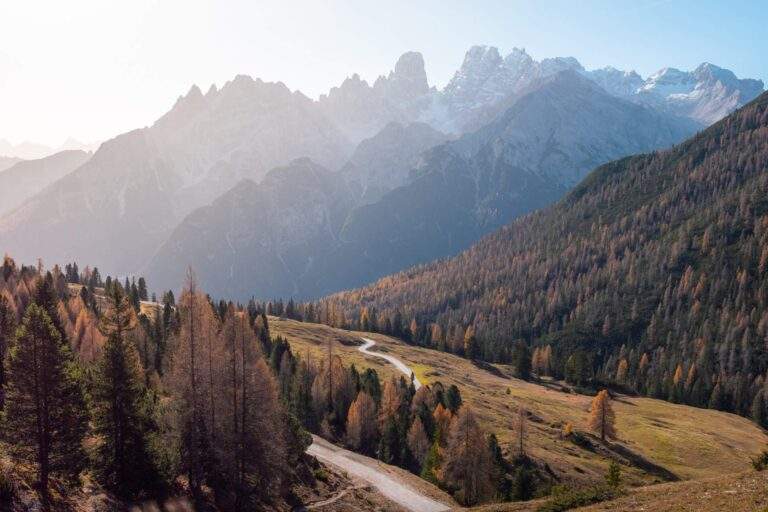
Hiking guide with everything you need to know about Monte Specie, including parking, route and our best tips
Read moreSunrise and sunset
When planning hikes in the Dolomites, it’s good to know that the sun often rises later and sets earlier than the “official” times suggest.
The high peaks and deep valleys mean that some locations don’t get sunlight until well after “sunrise” and lose it long before “sunset”.
It makes a difference – both for atmosphere and for safety, particularly if you’re out early or late in the day.
If you’re hoping to catch the golden light or enjoy a calm morning, it’s worth planning your timing and route with the terrain in mind.
That applies no matter when you visit the Dolomites. Even in the summer months, the shadows can be long.

Where to stay in the different seasons
When planning where to stay in the Dolomites, it’s important to consider how the season affects availability and price.
Choosing accommodation with the right facilities for the time of year can make a big difference.
In summer, air conditioning can be a bonus (though it’s not always guaranteed), and in winter, well-insulated rooms are much appreciated.
During the shoulder months, when the weather can be unpredictable, it’s useful to pick a place with extra amenities, so there’s something to do if the weather turns bad.
If you’re travelling to the Dolomites with children, accommodation near cable cars, hiking trails or playgrounds can make the trip smoother.
We’ve covered the best areas and hotels in our guide to where to stay in the Dolomites.
Here are some key points to keep in mind for each season.
Summer
Summer offers a wide range of accommodation options – from luxurious hotels to rustic mountain refuges.
Prices tend to be higher during this season.
It’s wise to choose places with easy access to popular hiking trails and viewpoints.
Since the most sought-after areas fill up quickly, booking early is recommended, in particular for July and August.
Mountain refuges near popular routes also get snapped up fast.
Autumn
In autumn, prices are generally lower, and many places offer attractive discounts.
However, keep in mind that some hotels and refuges close for the season, which may limit your choices.
Winter
The Dolomites ski season means hotels, cabins, and other accommodation options often fill up quickly – notably in popular ski areas like Cortina d’Ampezzo and Val Gardena (adlinks).
If you’re planning a winter trip to the Dolomites, it’s best to book well in advance.
Prices tend to be high during peak season, and availability can vary a lot depending on the week – for example around Christmas, New Year, Easter, and school winter holidays in the Dolomites.
Some places can feel quite remote if you opt for a secluded cabin or a smaller ski resort. It’s important to check whether transport options like cable cars and shuttle buses are running.
For a cosy and comfortable winter stay, consider accommodation with good facilities such as heating, wellness areas, saunas or a fireplace.
Spring
Spring is a great time to visit the Dolomites if you want to avoid the crowds.
That said, many cabins and hotels may be closed, so it’s important to be aware that facilities can be limited.
On the plus side, prices are generally lower than in winter and summer, and you can often find good deals on accommodation.
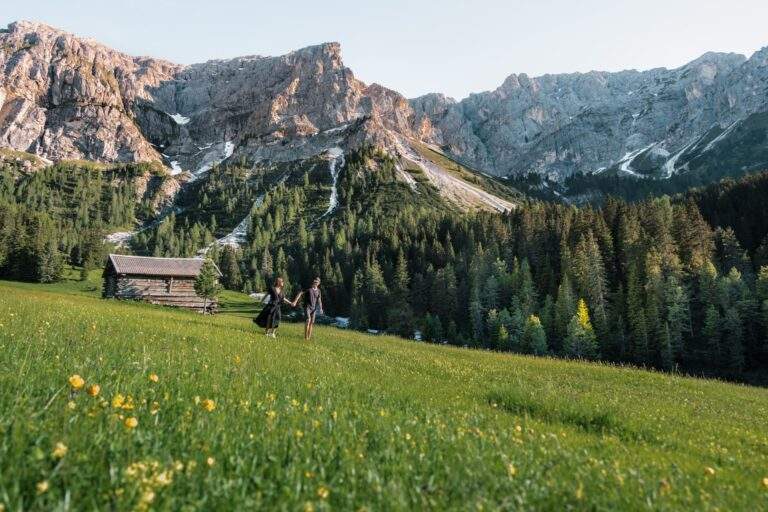
Our recommendations for the best places to stay in the Dolomites, Italy
Read moreHow long to stay in the Dolomites
How long to spend in the Dolomites is a tough question – but our answer is simple: as long as possible!
We’ve visited five times (so far) and spent anywhere from 3 to 10 days on each trip.
If it’s your first time, we’d recommend staying at least 4-5 days – ideally a full week.
That gives you time to go on a few hikes, visit some of the famous viewpoints and settle into the slower pace of the mountains.
With a week or more, you can take on longer hikes or space out your plans a bit, so you’re not cramming everything into one day.
It also makes more sense to stay in different areas, giving you the chance to reach several of the best viewpoints and hikes, which are quite spread out.
If you only have a few days, it’s still worth going, but we’d suggest picking one area and focusing on what’s close by, so you don’t spend too much time on transport.

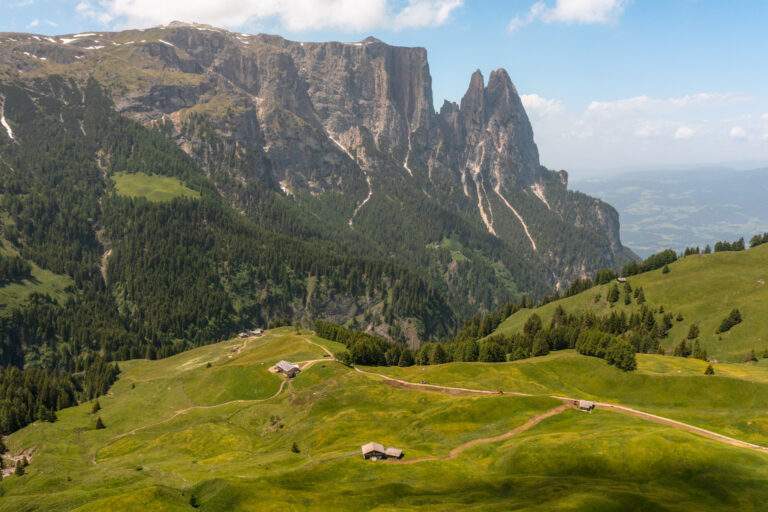
Child-friendly hikes, viewpoints, playgrounds, climbing parks and lakes for the whole family
Read moreFAQs about Dolomites weather and seasons
How many seasons are there in the Dolomites?
The Dolomites generally have four seasons, but they’re often grouped into two main ones: summer and winter.
Both summer and winter are high seasons, while spring and autumn are low seasons when many facilities close.
When is the high season in the Dolomites?
High season in the Dolomites falls into two main periods: winter and summer.
Winter is the peak time for skiing and winter sports, with Christmas, New Year, winter holidays and Easter bringing many local and international visitors.
Expect bigger crowds from late December as well as in January and February.
Summer is the busiest period for hiking, climbing and outdoor activities.
July and August see the most visitors, as Europeans (including Italians) take their summer holidays.
Both seasons are popular, so when planning when to visit the Dolomites, be prepared for busier trails and higher accommodation prices during these months.
What is the best season to visit the Dolomites?
Summer (June to September) is ideal for hiking and outdoor activities, while winter (December to March) is perfect for skiing.
If possible, try to avoid the high season in July and August, when many choose to visit the Dolomites.
Planning when to visit the Dolomites with this in mind can help you enjoy quieter trails and better accommodation options.
What is the weather like in the Dolomites in summer?
Summer weather in the Dolomites is usually warm and sunny, with daytime temperatures ranging from 20 to 27°C (~ 68-80°F) in the valleys, while it’s cooler at higher altitudes.
Afternoon thunderstorms and rain showers can occur, and the weather tends to be changeable (as always).
It’s wise to pack several layers of clothing and possibly rain gear to stay comfortable in all conditions.
What is the best month to hike the Dolomites?
The best month for hiking in the Dolomites depends on the weather and the type of hike you have in mind, but generally, June to September is ideal.
- June is great if you want to avoid the largest crowds. Temperatures are pleasant, and most trails are generally open, though there may still be snow at higher elevations early in the month.
- July and August are the high season for hiking in the Dolomites, with warm, sunny weather but also more tourists on the trails.
- September is often one of the best months for hiking, offering comfortable weather and fewer visitors.
What is the best month to ski in the Dolomites?
The best month for a ski holiday in the Dolomites depends on your preferences for weather, snow conditions and crowd levels.
Overall, January and March are often considered the best options.
- December appeals to those keen to start the season early. Christmas markets add to the atmosphere, but snow conditions can be uncertain at the start of the month, and the Christmas and New Year period draws large crowds.
- January usually brings excellent snow and fewer tourists than in December, making it one of the best months for skiing in the Dolomites.
- February is usually popular, as many Europeans take their winter holidays in the Dolomites. Conditions are generally very good, with stable weather and well-prepared slopes, making it one of the best months for skiing.
- March is ideal if you want more daylight and milder temperatures. The sun is stronger, yet the snow usually holds up well. There are fewer visitors towards the end of the season.
- April can also be a good time for a ski holiday in the Dolomites. Snow may start melting at lower altitudes, while conditions on higher slopes are often still good. There are fewer people on the slopes – except around Easter.
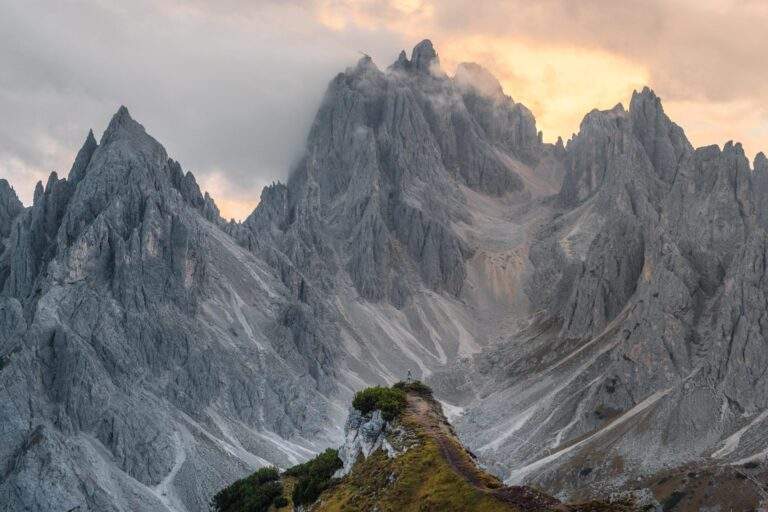
Travel guide to the dramatic viewpoint near Tre Cime di Lavaredo
Read moreWhen does it snow in the Dolomites?
Snow in the Dolomites typically arrives from late November or early December and lasts until April.
The amount and reliability of snow vary from year to year, depending on altitude and location.
December to March are usually the snowiest months. January and February often offer the most reliable snow conditions, with stable cold and regular snowfall.
The ski areas in the Dolomiti Superski network have efficient snow cannons, so skiing is usually possible throughout the high season – even in winters with limited natural snow.

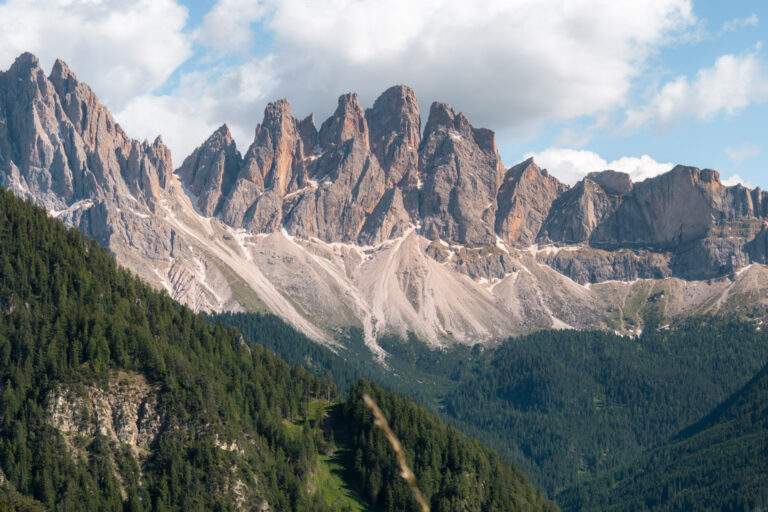
Practical tips + helpful advice to plan your Dolomites trip and enjoy every moment
Read moreThank you for reading along
Thanks for reading our guide on when to visit the Dolomites.
We hope it helped you get a sense of the best time to go to these beautiful mountains!
If you have any questions about the weather or seasons in the Dolomites, feel free to drop them in the comments. We’re happy to help.
And if you’ve already been, we’d love to hear your tips and experiences too.
More from the Dolomites
We absolutely love the Dolomites. Here are all our guides to the stunning mountains in northeastern Italy, with our best tips for hiking, viewpoints, where to stay, transportation and more.
Overview:
Hiking guides:
Our favourite travel resources:
- Booking.com for hotels and apartments.
- Momondo for the best flight deals.
- AirHelp for flight delay compensation.
- GetYourGuide for great tours everywhere.
- Airalo for reliable eSIM.
- Discover Cars for transparent car hire.
- SafetyWing for travel insurance. We also like True Traveller. Compared here.

Where to Stay in the Dolomites with Children: Best Family Hotels & Areas
Our recommendations for the best family-friendly hotels and areas in the Dolomites, Italy
-
Where to Stay in the Dolomites: Best Hotels & Areas for Hiking and Skiing Holidays
Our recommendations for the best places to stay in the Dolomites, Italy
-
37 Best Tips for Visiting the Dolomites: What to Expect & How to Prepare
Practical tips + helpful advice to plan your Dolomites trip and enjoy every moment