The Norway road trip we’ve been dreaming about
Who doesn’t love a good road trip?
There’s something special about following the open road, taking spontaneous detours, waking up surrounded by nature and discovering places you never planned to visit.
That’s exactly what a caravan trip through south Norway is all about.
Before this trip, we had never travelled to Norway together. It didn’t take long before we fell in love with its dramatic landscapes, peaceful roads and incredible scenery.
To make the most of our time, we decided to focus on south Norway rather than trying to cover the entire country.
That way, we could spend more time hiking, sightseeing and enjoying the journey instead of rushing from one destination to the next.
We wondered whether we’d be missing Norway’s most spectacular sights by staying in the south, but in the end, it certainly didn’t feel that way.
We discovered crystal-clear lakes, breathtaking fjords, towering mountains and quiet roads that made every drive a pleasure.
Below, you’ll find our 2 week south Norway itinerary, starting and ending in Jutland, Denmark.
Whether you’re planning a campervan or caravan trip, we hope our route inspires you to set off on your own unforgettable Norway road trip.
Table of contents
- Our two-week Norway caravan itinerary
- Day 1: From Copenhagen to North Jutland
- Day 2: From Hirtshals to Langesund
- Day 3: From Langesund to Rjukan
- Day 4: Gaustatoppen
- Day 5: Hardangervidda Visitor Centre & Bosnuten
- Day 6: Haddelandsveien
- Day 7: Across the plateau
- Day 8: Vøringsfossen
- Day 9 to 12: Eidfjord
- Day 13: Røldal
- Day 14: Back to Denmark
- Day 15: Skagen
- Visiting south Norway during summer
Our two-week Norway caravan itinerary
Below, you can see our route from Copenhagen to Norway via North Jutland.
Although we travelled with a caravan, this itinerary works just as well as a campervan road trip. You could even follow the same route in a regular car and stay in hotels along the way, making it easy to adapt to your own travel style and budget.

Day 1: From Copenhagen to North Jutland
As we live in Copenhagen, the first leg of our journey took us across Zealand and Funen to KG Camping in Kolding, Jutland.
Crossing the Storebælt and Littlebælt bridges is always a memorable part of the drive, and we arrived at KG Camping excited to finally pick up the caravan we’d spent months talking and dreaming about.
Mads gave us a thorough introduction to the Eriba Troll 530 “Rockabilly”, showing us everything we needed to know before it became our home for the next two weeks of our Norway caravan trip.
Having travelled through the American Southwest in an RV back in 2018, we quickly got the hang of the basics.
Before setting off, we made one final stop just a few hundred metres away at the large Bilka supermarket in Kolding Storcenter to stock up on groceries and snacks for the journey.
With everything we needed on board, we headed north towards Hirtshals.


Travelling South Norway with the retro charm of the 50’s including modern amenities
Read more
Hirtshals Camping
When we got to our camping spot in Hirtshals at Hirtshals Camping (adlink), it was already dark.
We found our spot and made our little camper ready for the night for the first time and slept wonderfully.

Day 2: From Hirtshals to Langesund
The next morning, we started the day with a delicious coffee before taking a closer look at Hirtshals Lighthouse. Then it was time to head to the ferry terminal.
From Hirtshals Camping (adlink), it’s only about a 10-minute drive to the ferry, making it a convenient place to stay the night before crossing to Norway.
After joining the queue, we showed our tickets and drove the caravan on board. The crossing was calm, and the 4-5 hour journey passed surprisingly quickly.
You can book with Fjordline or Color Line. Note that Fjord Line no longer sails Hirtshals to Langesund; the Norwegian arrival port has moved to Kristiansand, so plan your own crossing accordingly.
From Hirtshals, there are ferry connections to Bergen, Stavanger, Kristiansand and Larvik in Norway.
You can also take the ferry to Tórshavn in the Faroe Islands and Seyðisfjörður in Iceland.
Arriving in Norway
Arriving in Norway, we were greeted with sun and clear weather.
From the ferry, it was only about 15 minutes of driving to Rognstranda Camping, where we parked our car and caravan near the glistening water.
The campground is located with direct access to the sandy beach, called one of the most beautiful in Telemark.
We jumped in from the rocks and enjoyed our first day in Norway profoundly!


Day 3: From Langesund to Rjukan
On the way to Rjukan from Langesund, we drove some very scenic roads, giving us a taste of what Norway’s nature has to offer.
We stopped in at Heddal Stave Church, Norway’s largest stave church. It was built at the beginning of the 13th century, but it has since been restored.
Usually, we aren’t big church-goers, but we were really impressed at Heddal.
The area is serene, and we enjoyed stretching our legs here.
To get to Rjukan, it was only about an hour of additional driving, and we arrived at Rjukan Hytte- og Caravanpark in time to relax, eat a good meal and work a bit before tucking in for the night.


Day 4: Gaustatoppen
After a slow morning, we set off towards Gaustatoppen on day 4 of our south Norway trip.
Our timing wasn’t great as it turned out an extreme triathlon race was going on – with the finish line at the summit of Gaustatoppen.
On the two-hour hike to the top, we were passed by several triathletes, who had at that point swum 3.8 kilometres, bicycled 180 kilometres and run about 38 kilometres…
When we got to the finish line (Gaustatoppen’s summit), we also felt like winners – albeit having only climbed about 700 metres of vertical and walked a distance of 5 kilometres.
The view was amazing.
It is said that on a clear day, it’s possible to see about 1/6 of continental Norway from Gaustatoppen.
Walking back down, the light got better and better and we stopped several times for photos and for flying our drone.
Read our full Gaustatoppen guide, including all the routes to the summit.
Where to stay near Gaustatoppen:
- Gaustablikk Fjellresort – A stylish 4-star mountain resort with excellent facilities, stunning views and the closest luxury stay to Gaustatoppen.
- Rjukan Hytteby – A cosy collection of self-catering cabins in central Rjukan, perfect for longer stays and travellers who want a little more space.
- Rjukan Hotell – A comfortable, centrally located hotel with an included breakfast and free parking, ideal for exploring both Rjukan and Gaustatoppen.
Search for the best hotels near Gaustatoppen here.

All you need to know to climb Telemark’s highest mountain with the easiest hiking routes
Read more

Day 5: Hardangervidda Visitor Centre & Bosnuten
Once again, we woke up to a clear view of Gaustatoppen.
Having just climbed it, we felt a sense of accomplishment looking at how far away the top looked from down at our camping site.
After less than half an hour of driving on a very scenic road, we reached the Hardangervidda Visitor Centre, which is beautifully located next to a lake and lots of hiking options.
We were recommended a hike to Bosnuten and enjoyed walking on the outskirts of Hardangervidda’s fjäll.
Fun fact: Hardangervidda National Park is Norway’s biggest national park.


Day 6: Haddelandsveien
We decided to stay in Rjukan for an extra day to catch up on some work.
Alex trekked and ran Haddelandsveien from the centre of Rjukan town to Krossobanan and back down again – a nice 9-10 kilometre trail with an elevation gain of about 900 metres.
Day 7: Across the plateau
Day 7 of our road trip started with a run up near Gausta towards Toreskyrkja.
It was a very rainy and foggy day, so Alex decided to turn around right about when visibility dropped to a metre or two.
We did some final shopping in the Kiwi store in Rjukan before heading out on the road.
With Vøringsfossen as the drive’s destination, we had about 200 kilometres of driving slowly on winding and inclining roads ahead of us.
And how we loved it.
The road was spectacular all the way; especially once it turned into the Norwegian National Road 7 going across the Hardanger plateau.
At Vøringsfossen, the fog was so thick that we couldn’t see anything. We could just hear the roaring water.
We had originally planned to see the falls on the way down to Eidfjord about 20 kilometres away, but instead, we parked our car and caravan at Vøringsfossen to wait out the weather.
And so we did – until the next morning.

Day 8: Vøringsfossen
Our first night in Norway without a camp spot went smoothly. Lots of other campers had joined us during the evening.
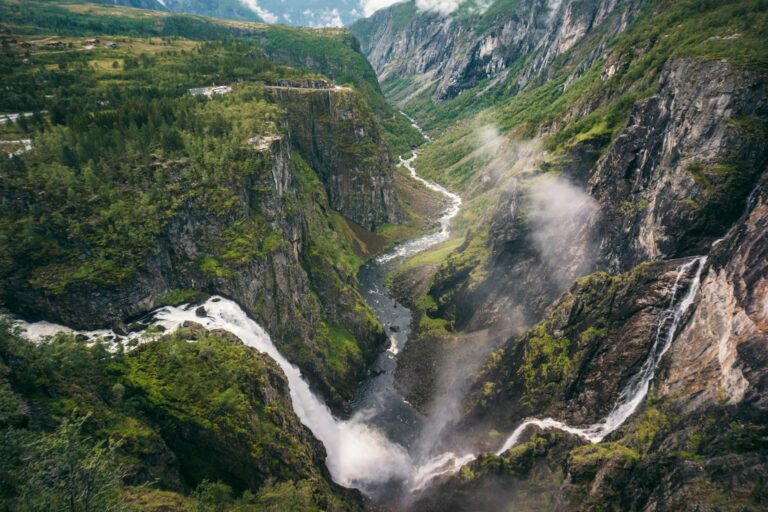
Thankfully, the weather had cleared up quite a bit during the night, and we could now see the majestic waterfall and the valley created by it.
We went to all the viewpoints by the parking lot and also drove up to see it from above, which was even more spectacular.
Next time, we would love to hike to the base of the waterfall as well.
See our Vøringsfossen Waterfall guide.

What to expect from visiting Norway’s most famous waterfall
Read moreDay 9 to 12: Eidfjord
The weather got incrementally better during the day, and once we arrived at Eidfjord in the afternoon, the sun was shining, and we could jump in the (still very cold!) fjord water.
Our camp spot at Kjærtveit Camping was just perfect with direct views to the fjords and mountains.
We walked around Eidfjord and soaked in the area’s natural beauty.
Fun fact: Eidfjord is one of Norway’s least populated municipalities with just about 950 inhabitants.


Four nights in Eidfjord
We spent four nights in Eidfjord in total and loved the complete serenity of staying by the water.
A hike around the plateau starts just behind the campground. Following the road “Simadalsvegen” also provided great views.
Eidfjord is, by all means, a small town, but it was a perfect base to explore the nearby areas.
Search for the best hotels in Eidfjord here (adlink).


Day 13: Røldal
We had originally planned to stay in Odda to hike the famous Trolltunga, but as the weather looked especially grim, we skipped Odda and headed to nearby Røldal instead.
Here we stayed at Seim Camping Røldal (adlink) right next to the lake Røldalsvatnet.
With mountains all around us, the scene was spectacular, and we spent our time hiking the nearby trails while picking lots of wild strawberries and raspberries.


Day 14: Back to Denmark
After driving from Røldal to Langesund and taking the ferry back to Hirtshals in Denmark, we drove directly towards Rubjerg Knude Lighthouse (Rubjerg Knude Fyr) in North Jutland.
We left Norway with rain behind us and Denmark greeted us with a glorious sky.
The sunset at Rubjerg Knude Lighthouse over the water was unforgettable.
To experience Denmark’s northernmost point the next morning, we headed to Skagen and stayed at First Camp Grenen Strand as our last night in the Eriba caravan.


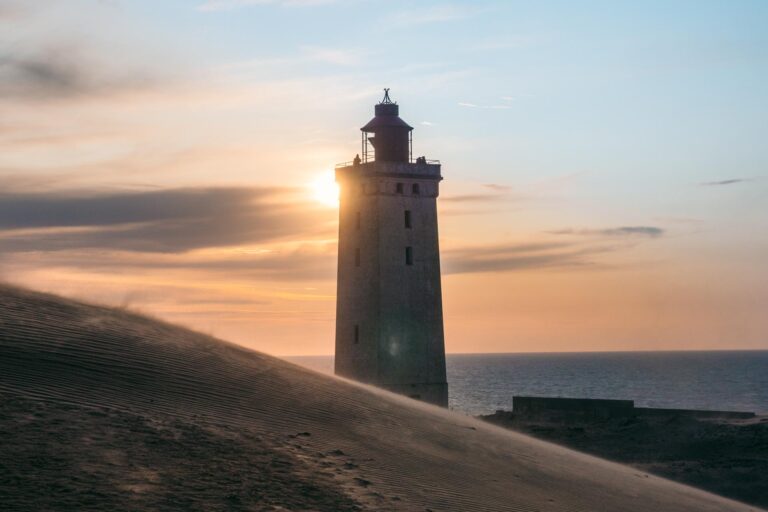
Everything you need to know about Rubjerg Knude Lighthouse, including where to stay, where to eat and our best tips
Read moreDay 15: Skagen
Although we both grew up in Denmark, we hadn’t really explored much of the incredible nature our own country has to offer.
So we set off to discover some of North Jutland’s most spectacular landscapes and attractions on our last day.
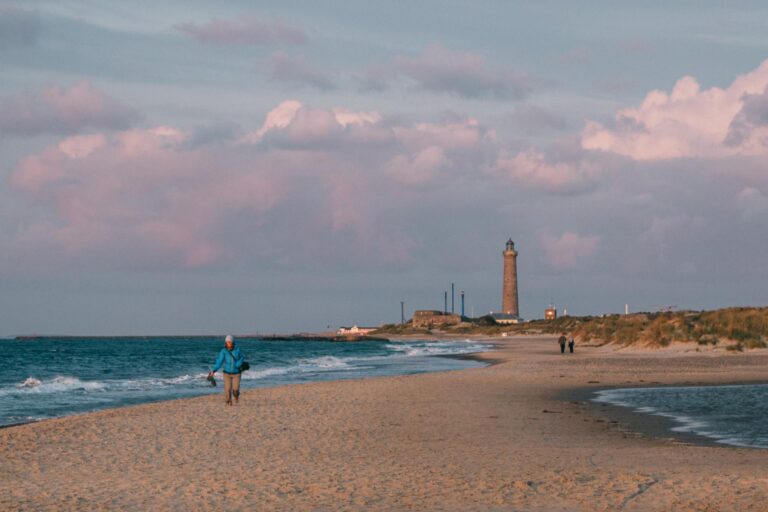
Everything you need to know about Skagen in North Jutland, including why you should visit, what to do, where to stay and our best tips
Read moreGrenen
Our final day started with walking to Grenen – the point at which the two seas Skagerrak and Kattegat collide.
We had hoped to spot seals in the early morning but had no luck in that regard.
We did witness a beautiful sunrise, though, and rising early was nonetheless essential as we had a long day ahead of us.
Check out our full Grenen travel guide.


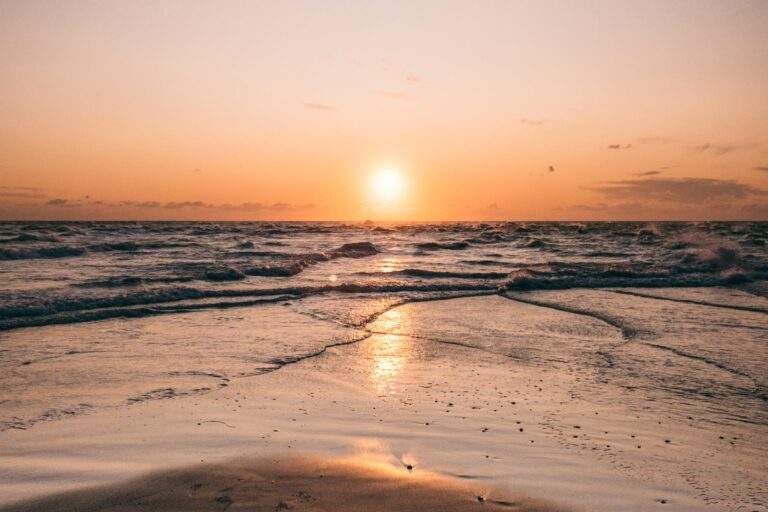
Everything you need to know about the long sandbar at Skagen Odde including what to do, where to stay and our best tips
Read moreThe Sandburied Church
From Grenen we stopped at the Sand-Covered Church (Den Tilsandede Kirke), which, to be honest, let us down as we had our expectations all wrong.
It’s not, in fact, a sand-covered church, but rather just the church’s tower.
The history is interesting, and the area is nice, though. Just don’t expect to see an actual church buried in sand.
Check out our full travel guide to the Sand-Covered Church.


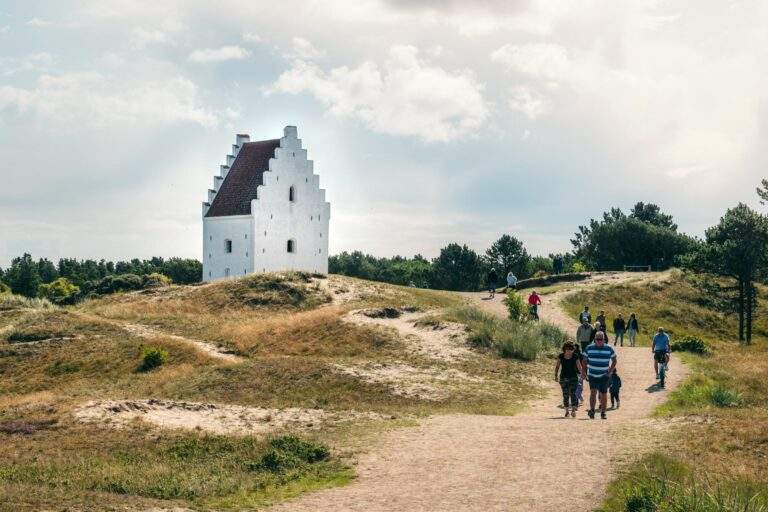
Everything you need to know about the Sand-Covered Church in Skagen, including why you should visit, where to stay and our best tips
Read moreThe Migrating Dune
We also made a stop at the Migrating Dune (Råbjerg Mile): a vast expanse of shifting sand that feels more like a desert than the landscapes typically associated with North Jutland.
It was a fascinating place to explore, and unlike anything we’d normally expect to find in Denmark.
Check out our full Råbjerg Mile travel guide.


Everything you need to know about the migrating coastal dune of Råbjerg Mile in northern Jutland, including what to do, where to stay and our best tips
Read moreReturning the van
After our whirlwind tour of some of North Jutland’s highlights, we made the long drive back to KG Camping in Kolding to return our beloved caravan, bringing our unforgettable Norway road trip to an end.
Two weeks had flown by, leaving us with countless memories of breathtaking landscapes, winding scenic roads, peaceful campsites and adventures we’ll never forget.
Visiting south Norway during summer
We visited Norway in August during the Norwegian summer (normally defined as June, July and August).
Travelling by caravan in Norway during these months means long daylight hours for exploring, though the weather can still be unpredictable.
During summer, the whole country is in full bloom, and you can expect the highest temperatures of the year.
That doesn’t necessarily mean warm water in a Scandinavian context.
Some weeks during some years there’ll be heat waves, and temperatures soar. Other weeks just rain, rain, rain.
We experienced a bit of both with nice sunny days as well as several grey and rainy days. The weather changed almost daily.

Crowds
Crowds are at their peak from June to August, so it can be a good idea to book accommodation in advance if you plan to travel during summer.
None of the campsites we stayed at was full.
Other seasons
Spring and autumn are definitely also great times to visit Norway, as you can still get great weather and will see less tourism.
In spring, especially, you will see fjords and waterfalls at their best.
Winter is beautiful but can be very cold and dark.
Always plan and pack for unpredictable weather.
Thanks for reading our itinerary to South Norway
Thanks for reading our south Norway road trip itinerary. We hope you have been inspired to go on your own caravan trip through Norway.
If you’ve been to south Norway, it would be awesome to hear your best tips in the comments.
If you haven’t been yet but would like to, please don’t hesitate to ask us about anything.
Pin for later:


Our favourite travel resources:
- Booking.com for hotels and apartments.
- Momondo for the best flight deals.
- AirHelp for flight delay compensation.
- GetYourGuide for great tours everywhere.
- Airalo for reliable eSIM.
- Discover Cars for transparent car hire.
- SafetyWing for travel insurance. We also like True Traveller. Compared here.

Our Year in Travel 2022
Which countries we have visited and what we have been up to in 2022
-
Our Year in Travel 2021
Which countries we have visited and what we have been up to in 2021
-
Our Year in Travel 2020
Which countries we have visited and what we have been up to in 2020