One of Italy’s most underrated cities
We spent three nights in Turin (or Torino, as the Italians call it) at the end of June, and honestly, we were pleasantly surprised.
With temperatures climbing to 36°C (97°F) in an early heat wave, we took things very slowly – helped along by the fact that we were travelling with our almost two-year-old and Victoria was seven months pregnant.
Despite the heat, we really enjoyed exploring yet another beautiful Italian city.
Turin was easy to walk around, with less traffic than we expected and surprisingly few tourists for that time of year.
There was also no shortage of good food, plenty of gelato breaks and lots of gorgeous architecture to admire.
What stood out most, though, was the mix of elegance and culture.
Turin is known for its palaces, pretty public squares, covered walkways, cosy cafés and for being the headquarters of the Italian automobile manufacturer Fiat. It was also Italy’s very first capital (1861-1865).
The city feels classy without trying too hard, and is absolutely worth a stop if you’re heading through northwestern Italy.
If you’re wondering what to do in Turin, you’re in the right place! In our big travel guide to Turin, we’re sharing the best things to see and do, where to stay, how many days you should spend, how to get around, our best tips and much more.
Where to stay in Turin?
- Luxury: Royal Palace Hotel – Don’t be fooled by the exterior; inside this gem awaits a true palace experience.
- Value for money: Q71 Timeless Suites – Family-friendly apartments right by Piazza Castello with large beds and simple kitchens.
- Budget: Tohouse Rooms – Cheap and comfortable double rooms within a short distance of the river, the park and the main things to do in Torino.
Search for the best value accommodation in Turin here (adlink).
Table of contents

Why visit Turin
Turin is a city that somehow manages to be both historic and laid-back with elegant Baroque architecture, world-class museums and a food scene that’s hard to beat.
It has a fascinating industrial past and played a significant role in Italy’s unification, but it lacks the hustle and bustle of larger Italian cities.
Alex first visited Turin as a kid with his parents, but apart from that, we hadn’t really spent much time in this corner of Italy together.
On our recent road trip from Corsica back to Denmark, we decided to stop for three nights to explore Turin before heading to Gran Paradiso National Park and the Aosta Valley.
We really enjoyed the city!
Its mix of culture, great restaurants and amazing gelaterias made a lasting impression.
We’d definitely recommend Turin to anyone travelling in northwestern Italy, or if you’ve already ticked off the big-name cities like Rome, Florence, Milan, Naples and Venice.
Plus, with the Alps and vineyards nearby, it’s the perfect spot to enjoy both city life and nature.


Everything you need to know about Florence in Tuscany, including what to do & our top tips
Read moreWhere is Turin?
Turin is the capital city of the Piedmont region of Northern Italy.
It lies on the western edge of the Po Valley, at the foot of the Alps, about 140 kilometres southwest of Milan.
With a population of around 850,000, Turin is known for its rich industrial heritage, cultural landmarks and its role as a gateway to nearby Alpine resorts.
Our recommendations for the best places to stay in Turin (Torino), Italy
Read moreBest things to do and see in Turin
There’s so much to do in Turin – here’s what to see and where to start.
Consider a Turin City Card (adlink) if you plan to see many of the paid attractions. We’ll write more about it below the activities.
Here are the best things to see in Turin:
- Duomo di Torino – Turin’s historic cathedral
- Torre Campanaria Duomo di Torino – Panoramic views from the cathedral tower
- Royal Palace of Turin – Luxurious former home of the Savoy dynasty
- Giardini Reali di Torino – Tranquil gardens behind the royal palace
- National Museum of Cinema – Iconic tower with a film museum
- Palatine Gate – Ancient Roman gateway in red brick
- Piazza Castello – Turin’s grand central square
- Palazzo Madama – Palace on the square
- Porta Palazzo Market – Europe’s largest open-air market
- Turin Antique Market – Treasure hunting for vintage finds
- Museo Egizio – One of the world’s finest Egyptian collections
- Piazza San Carlo – Elegant square with twin churches
- Turin’s main shopping streets – Covered walkways
- Galleria San Federico – Stylish, covered shopping arcade
- Basilica di Maria Ausiliatrice – Stunning 19th-century basilica
- Walk along the Po River – Scenic riverside strolls
- Chiesa di Santa Maria del Monte dei Cappuccini – Hilltop church with city views
- Parco del Valentino – Riverside park with castles and gardens
- Eat gelato – Indulge in creamy frozen treats
- Car history in Turin – Learn more about Italy’s car-making heritage
- Basilica di Superga – Hilltop basilica with panoramic vistas
- Juventus Museum – A shrine for football fans
Map of the best things to see in Turin.
1. Duomo di Torino – Turin’s historic cathedral
We have to admit, Turin Cathedral (also known as Cathedral of Saint John the Baptist or Cattedrale di San Giovanni Battista) didn’t exactly sweep us off our feet like some of Italy’s grander churches.
It’s still well worth stepping inside, though.
Built in the late 15th century in Renaissance and Baroque styles, it features a calm, light-filled interior with marble columns and simple yet graceful details.
The big draw here is the Chapel of the Holy Shroud, which was added in the 17th century by architect Guarino Guarini.
The Shroud of Turin (said by many to bear the image of Christ after the crucifixion) is one of the most famous religious relics in the world.
However, the real cloth is kept safely out of sight and only shown on rare occasions, but even the chapel itself, with its dark marble and dramatic dome, is impressive to see.


2. Torre Campanaria Duomo di Torino – Panoramic views from the cathedral tower
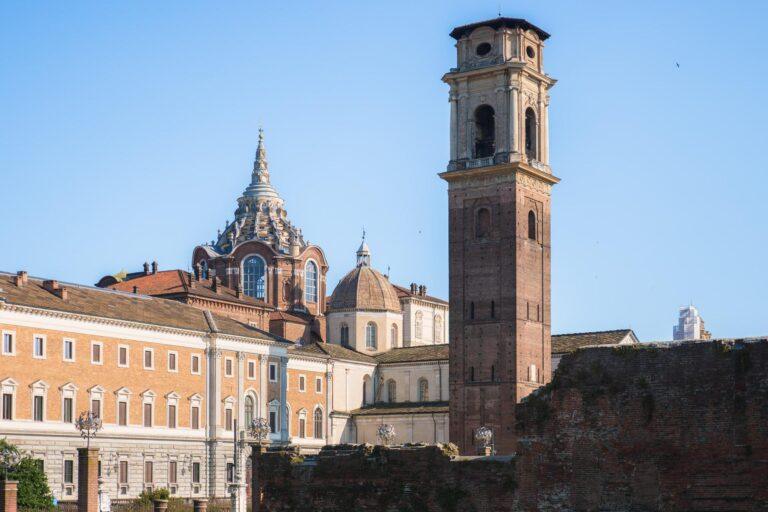
Right next to the cathedral stands the Torre Campanaria, a 15th-century bell tower that was once part of Turin’s city walls.
A climb up its narrow staircase rewards you with incredible views over terracotta rooftops, the nearby ruins, the Palatine Gate, the churches, the famous Mole Antonelliana and, on a clear day, the snow-capped Alps.
We imagine it’s the perfect spot for a panoramic Turin photo. Sadly, it was closed when we visited, but we would have loved to go up.
Seeing a city from above is always memorable, and we make a point of doing it whenever we can.
We can imagine it’s one of those things to do in Turin that costs very little but leaves a big impression.
However, it looks like the tower is only open a few days a week (for a small fee), so it’s a good idea to check the opening times before you go.


3. Royal Palace of Turin – Luxurious former home of the Savoy dynasty
The Royal Palace of Turin (Palazzo Reale di Torino) is as pompous and glittering as you might hope from the former home of the Savoy dynasty – the powerful royal family that ruled parts of Italy and France for centuries.
They went on to become the kings of Italy from its unification in 1861 until the monarchy was abolished in 1946, and their wealth is clear the moment you step inside: there are lots of gold details, velvet drapes and grand halls.
We visited in the middle of the day to escape the heat and harsh sun, and it turned out to be the perfect choice – cool, calm and utterly beautiful.
Victoria has a soft spot for historic royal palaces, and this one did not disappoint.
The Armoury, with its rows of swords, suits of armour and horse gear, was especially fascinating. The ticket also includes the Galleria Sabauda art collection and access to The Chapel of the Holy Shroud (Cappella della Sacra Sindone) in the cathedral.
We can really recommend visiting the Royal Palace if you have the time and enjoy exploring beautiful historic buildings with plenty of interesting details to discover.
If you plan on going during a busy period and want to avoid queuing for tickets, you can book yours in advance below.
Advertisement


4. Giardini Reali di Torino – Tranquil gardens behind the royal palace
Just behind the Royal Palace, the Giardini Reali is a peaceful place for a stroll after all that grandeur.
With 18th-century statues and the large Fountain of the Nereids and Tritons, it is a lovely spot to wander.
It doesn’t quite match the palace for spectacle, if we’re being honest, but we found it wonderfully relaxed and enjoyed seeing the fountain.
The gardens are free to visit, even if you skip the palace (although you will need coins if you want to use the toilets).
A great little add-on if you are already here for the palace, or if you simply want to experience some green space in the city centre.


5. National Museum of Cinema – Iconic tower with a film museum
Housed inside the striking Mole Antonelliana, the National Museum of Cinema is one of Turin’s most unique attractions.
The building itself is a symbol of the city and one of the best things to see in Turin, with its distinctive spire visible from almost anywhere you stand.
Unfortunately, the Mole was closed for a longer period during our visit, so we missed the famous panoramic lift ride to the top (and the 85-metre-high terrace with city views), which we had really been looking forward to.
Normally, it is one of the best viewpoints in the city!
We did see a small part of the museum, though, and it looked really cool.
It tells the story of cinema through interactive displays, historic equipment and a huge collection of movie memorabilia.
The Turin City Card (adlink) includes entry to the museum, but you can also buy a standalone ticket or join a guided tour if you want to make sure you don’t miss any of the highlights.
Advertisement


6. Palatine Gate – Ancient Roman gateway in red brick
The Palatine Gate (Porta Palatina) is one of the best-preserved Roman gateways in the world, and a rare survivor from Turin’s ancient past.
The city gate was built in the 1st century AD and its twin towers and red-brick arches once welcomed travellers into the Roman city of Julia Augusta Taurinorum (the forerunner of modern Turin).
Today, it stands in a leafy spot within an archaeological park, alongside the ruins of a Roman theatre, looking rather striking against the backdrop of the modern city.
We enjoyed strolling around and picturing the hustle and bustle that would have passed through here two thousand years ago.
It is free to visit and easy to combine with a trip to the nearby cathedral or royal palace.


7. Piazza Castello – Turin’s grand central square
Piazza Castello is a big, central open square surrounded by arcades, historic buildings and a steady hum of city life.
From here you can see several of Turin’s most important landmarks, including the Royal Palace, Palazzo Madama and the Teatro Regio opera house.
We passed through it a few times during our stay, and it’s definitely one of the best things to see in Turin if you want to soak up the local vibes.
There was especially a lot going on when we passed by on a Sunday – live music, food stalls and children playing, giving the square an extra lively and festive feel.


8. Palazzo Madama – Palace on the square
In the centre of Piazza Castello stands Palazzo Madama, a beautiful building with two identities: a medieval castle with towers at its core and an elegant Baroque palace facing the square.
The Savoy family made it an important residence, and in the 17th and 18th centuries, it was home to two powerful Savoy duchesses who left their mark on the palace.
That is where the name “Madama” comes from – a nod to the noblewomen who shaped its history.
Over the centuries, it has served many purposes: a fortress, a royal residence and even the seat of Italy’s first Senate.
Today it houses the Turin City Museum of Ancient Art (Museo Civico d’Arte Antica), filled with paintings, sculptures and decorative treasures, mostly dating from the late Middle Ages through to the 18th century.
Advertisement


9. Porta Palazzo Market – Europe’s largest open-air market
Since we stayed close by, we ended up passing through the lively Porta Palazzo Market several times.
Spread across Piazza della Repubblica, it is Europe’s largest open-air market. The name comes from the nearby Porta Palatina (the ancient Roman gate we mentioned earlier in this Turin guide).
The market has both indoor and outdoor sections, with endless stalls selling fresh fruit, vegetables, bread, spices, clothes, household goods and just about anything else you can imagine.
We especially liked the colourful, ripe fruit and vegetables, as well as watching the locals shop for their daily fresh produce.
The Porta Palazzo Market is usually open Monday to Saturday from 7:00 to 14:00, and on Saturdays it stays open until 19:00.
It’s at its liveliest in the mornings and on Saturdays, when the atmosphere is wonderfully chaotic.


10. Turin Antique Market – Treasure hunting for vintage finds
Turin’s Antique Market, also known as Gran Balôn, is the city’s historic antiques and flea market.
It takes place on the second Sunday of every month from around 8:00 to 18:00 and completely transforms the Borgo Dora district into a paradise for treasure hunters.
With more than 300 stalls and about 50 antique shops in the area, you can find everything from vintage furniture and ceramics to old books, prints, paintings, jewellery, clothes, cameras and all sorts of curiosities.
There is also the smaller flea market, called il Balon, which happens every Saturday from 7:00 to 18:00 in the same charming streets – Via Borgo Dora, Via Lanino, Via Mameli, Via Canale Carpanini and the surrounding lanes.
It’s more of a regular flea market, with plenty of second-hand goods and the occasional antique hidden among them.
We stayed nearby, so of course we had to stop by, and we really enjoyed strolling past the stalls.
Both markets are free to visit and a great way to spend a few hours browsing and soaking up the atmosphere.


11. Museo Egizio – One of the world’s finest Egyptian collections
Turin might not be the first city you think of when it comes to ancient Egypt, but Turin Egyptian Museum, Museo Egizio, is actually one of the most important museums of its kind in the world.
In fact, it has the largest collection of Egyptian artefacts outside Cairo.
You can wander past delicate papyri, statues of pharaohs, sarcophagi and even mummies – all beautifully presented so it feels more like stories being told than dusty displays.
Alex’s mum is an Egyptologist and curator for the Egyptian collections at the Ny Carlsberg Glyptotek here in Copenhagen, so we have a bit of a soft spot for these museums.
Unfortunately, the Turin one closed down for the day just as we arrived, but since we had recently been in Egypt (and visited the Grand Egyptian Museum in Cairo), we managed.
Still, if you haven’t had that chance, you should absolutely check it out!
People seem to love it, and it’s one of the best things to do in Turin.
Advertisement

12. Piazza San Carlo – Elegant square with twin churches
Piazza San Carlo is one of the city’s main squares, and in our opinion also one of the most beautiful.
The square is lined with arcades filled with cafés and shops, with a striking equestrian statue of Duke Emanuele Filiberto standing proudly in the centre.
At the far end are two near-identical Baroque churches, Santa Cristina and San Carlo Borromeo, which we found especially beautiful.
The square is also crossed by Turin’s main shopping street, Via Roma.


13. Turin’s main shopping streets – Covered walkways
Turin’s long, straight avenues are lined with shaded arcades (called porticos), cafés, designer boutiques and international brands.
They are great for shopping, even better for a leisurely stroll – and gelato is always a good idea.
The porticoes are one of Turin’s distinctive architectural and social traits. Even if you’re not here to shop, we think the architecture alone makes it worth wandering.
The city boasts over 18 km (~ 11 miles) of porticoes, with approximately 12 km (~ 7.5 miles) being continuous. These covered walkways offer shade in the summer and shelter from rain, snow and wind in the winter.


14. Galleria San Federico – Stylish, covered shopping arcade
Just a short stroll from Piazza San Carlo, Galleria San Federico is a beautiful covered shopping arcade that feels both grand and inviting.
With its high glass ceilings, marble floors and pretty storefronts, it’s as much about the architecture as it is about the shopping.
We enjoyed wandering through on our way to other sights – it almost feels like a quieter, smaller cousin of the famous Galleria Vittorio Emanuele II in Milan.
You will find boutiques, cafés and even a cinema tucked under its arches, so it’s a nice place to stop whether you are browsing or just passing through.


Spend a few days soaking up the world-class architecture, food and shopping
Read more15. Basilica di Maria Ausiliatrice – Stunning 19th-century basilica
While Turin’s cathedral tends to get most of the attention, we actually found the Basilica di Maria Ausiliatrice to be even more beautiful.
It was built in the 19th century in a Neoclassical style commissioned by Saint John Bosco and it’s dedicated to Mary, Help of Christians.
The church has since become a key pilgrimage site for Salesians around the world – a Catholic religious order focused on education and helping young people.
Inside, the basilica is bright, ornate and surprisingly peaceful considering its size, with high ceilings and colourful frescoes.
It also contains the remains of Don Bosco himself, along with six thousand numbered relics of other Catholic saints.


16. Walk along the Po River – Scenic riverside strolls
If you need a break from Turin’s palaces and piazzas, a walk along the banks of the Po is the perfect escape.
The river winds through the city, lined with leafy paths, charming bridges and benches where you can simply sit and watch the world go by.
It’s also a great way to see some of Turin’s landmarks from a different angle – from the Monte dei Cappuccini hilltop church to the grand Parco del Valentino a little further south (more on both later in our Turin guide).
It wasn’t as busy as some other European riversides, but we loved wandering along on our way to the hilltop church, spotting locals walking their dogs, jogging or just enjoying a quiet moment by the water.


Everything you need to know about Pisa in Tuscany, including what to do & our top tips
Read more17. Chiesa di Santa Maria del Monte dei Cappuccini – Hilltop church with city views
Located on the opposite side of the Po, this hilltop church offers one of the best viewpoints over Turin!
It’s the kind of panorama that makes you stop and take a deep breath – also because the walk uphill is a bit of a climb…
But! We managed to do it with a toddler in a stroller and a baby in the belly in 36°C (~ 97°F), so you can probably do it too.
Chiesa di Santa Maria del Monte dei Cappuccini was built in the early 17th century and it’s a peaceful spot to pause after the climb. It has a striking façade and a simple, yet elegant Baroque style inside.
There are a few lovely artworks, but the real draw is the view over the city, the Po River and even the Alps in the distance if visibility allows.
It’s definitely one of the best things to see in Turin for city views and photography (if you don’t mind a bit of uphill walking).


A travel guide to our favourite hikes in the Dolomites – from short walks to full-day adventures
Read more18. Parco del Valentino – Riverside park with castles and gardens
If you need a break from cobbled streets and grand palaces, Parco del Valentino is the place to go.
Stretching along the banks of the Po River, it’s Turin’s most famous green space – a big park where you can wander shaded paths, admire fountains, or simply settle on a bench for some people-watching.
Scattered through the park are statues, flowerbeds, and even a small reconstructed medieval-style village called Borgo Medievale.
The open-air museum was originally built for an exhibition in the late 19th century and has since become a quirky attraction in itself.
We would have loved to see it, but like a few other things we had our eyes on in Turin, it was closed for renovations during our visit. You can still make out the towers and walls from the paths along the river, though the hoardings and scaffolding take some of the fairytale out of it.
However, the park is a lovely spot to slow down and seek some shade if you’re visiting in summer.


19. Eat gelato – Indulge in creamy frozen treats
This probably should have been our very first recommendation, since eating gelato is one of the best things to do in any Italian city!
Turin’s gelato is famously creamy and rich, often made with high-quality, natural ingredients that set it apart from regular ice cream.
You can rarely go wrong with any gelateria, but here are three we visited and highly recommend: Papalele, Gelateria La Romana and VANILLA Creams & Fruits.
Papalele stood out in particular and we ended up going back twice. Their pistachio was outstanding, and the peanut flavour with crunchy bits was a real treat.
It’s some of the best gelato we’ve had in a long time!

Charming streets, beautiful bridges and lots of canals – and oh, gelato of course
Read more20. Car history in Turin – Learn more about Italy’s car-making heritage
Turin’s identity is closely tied to the car industry, thanks largely to the Italian car brand Fiat.
If you’re a car enthusiast (or travelling with one), the city offers two unmissable stops.
First, the Museo Nazionale dell’Automobile (MAUTO), a modern museum dedicated to the history of the automobile.
Here you can wander among more than 150 cars, tracing the story from the very first motor carriages to futuristic prototypes.
It’s a real journey through global car culture – not just about Fiat, though naturally, they feature prominently.
Then there’s Lingotto, the old Fiat factory turned shopping centre, hotel and cultural hub, located just a short walk away from the museum.
Its most famous feature is the rooftop test track, where brand-new Fiats were once put through their paces high above the city. Today the track is still there and now includes a huge rooftop garden, with art installations by international artists along the Pista 500.
Whether you’re into horsepower or just curious about Turin’s industrial past, both places offer a fascinating glimpse into the city’s love affair with cars.
The Museo Nazionale dell’Automobile is included in the Turin City Card (adlink), though you can of course just buy a single ticket if that’s all you’re after. The Lingotto complex itself is free to enter, but if you want to walk the famous rooftop test track, there’s a small fee (as far as we know).
Advertisement
21. Basilica di Superga – Hilltop basilica with panoramic vistas
A trip to the Basilica di Superga ended up being a little too ambitious for us, but if you have the time, it looks like an incredible place to visit!
Located at the top of the hill of Superga, about 10 kilometres east of Turin, this beautiful Baroque church was built in the early 18th century.
From up there, you get wonderful views of the city and, on a clear day, even the Alps.
Inside, you can admire ornate chapels and lots of marble details.
The basilica is also tied to the Savoy dynasty, as it houses the Royal Tombs where many of the family members are buried.
Getting there takes a bit of planning as it’s not a walkable distance from the city centre, but you can easily drive if you have a car (or take public transport, though it takes a while).
Admission to the Royal Tombs, the Royal Apartment or the Ascent to the Dome is free if you have the Turin City Card (adlink). Otherwise, you can check admission prices here.

22. Juventus Museum – A shrine for football fans
We’ll admit it: this one made the list more for football fans than for us.
But leaving out Juventus in a guide to Turin would feel almost criminal.
Even if you’re not into the sport, there’s no denying that Juventus is one of the most successful and storied football clubs in the world.
The museum celebrates its history with trophies, memorabilia, interactive displays and a deep dive into the legacy.
For true fans, a visit here is more than just a museum stop – it’s a pilgrimage.
And if you want the full experience, you can also join a combined tour of the Juventus Museum and the Allianz Stadium.
Advertisement
Map of the best things to see in Turin
Find the best things to see in Turin we’ve written about in this Turin guide on the map below.
Click on the icon in the top left to see an overview.
Turin City Card
If you plan on seeing several museums, palaces and landmarks during your stay, the Torino + Piemonte Card (often just called the Turin City Card) is well worth looking into.
The card comes in different durations: 24 hours, 2 days, 3 days or 5 days, and it gives you free entry to many of the region’s top sights, from museums and monuments to castles and royal residences across both Turin and Piedmont.
On top of that, you’ll also get discounts on sightseeing tours and other attractions.
It covers some of the things to see in Turin that we’ve already mentioned in this guide – like Palazzo Madama, the Royal Palace of Turin, Basilica di Superga, the National Museum of Cinema and the Egyptian Museum, but there are other museums, galleries and palaces, too.
Read more about what’s included and how the Turin City Card works here (adlink).
Advertisement
How long to stay in Turin
Spending two to three days in Turin gives you enough time to see the main attractions without rushing.
You can visit the highlights, explore historic sites and enjoy walks through the parks and along the river.
With extra time, it’s possible to explore quieter neighbourhoods, sample the local cuisine or even take a day trip to nearby Alpine towns and vineyards.
We stayed three nights ourselves. Travelling with an almost two-year-old, and with Victoria being seven months pregnant, we took things at a very relaxed pace.
If you’re not moving at a pregnant person’s speed or needing frequent playground stops, two nights is usually enough for at least one full day of city exploration.
But if museums and a slower pace appeal, there’s certainly plenty more to enjoy!

Tips for visiting Turin with children
Is Turin a nice city to visit with kids?
As we’ve just mentioned, we explored Turin with our toddler while Victoria was very pregnant, so we can definitely vouch for it being a manageable city for families – though the heat did test us at times!
The good news is that Turin’s city centre is compact, mostly flat and wonderfully stroller-friendly, with excellent sidewalks and those lovely covered arcades that provide shade (and shelter if it rains).
That said, we did take things at a very relaxed pace, which meant frequent stops, plenty of gelato breaks and strategic indoor visits during the hottest parts of the day.
There’s a lot to do in Turin with little ones, and one thing that really helped was discovering the many small playgrounds dotted around the city.
We found ones at Giardino Jan Palach, Giardino Aiuola Balbo and in Giardini Reali bassi, which made it easy to break up sightseeing with play breaks whenever he needed to burn off some energy.
Just be prepared if you’re visiting in summer. When temperatures climbed to 36°C (97°F) during our trip, we had to plan our days more carefully.
Overall, Turin is absolutely doable with young children, especially if you embrace a slower pace and build in plenty of rest stops along the way.

10 nice things to do in Turin with children:
- Parco del Valentino – Large park with plenty of space for children to run around, shaded paths for stroller walks and the quirky Borgo Medievale (medieval village), which is closed for renovations until further notice but still worth a look from the outside.
- Walk along the Po River – Flat, scenic paths perfect for strollers.
- Piazza Castello on Sundays – We found a lively, festive atmosphere here with live music, food stalls and children playing.
- Gelato breaks – Essential! Papalele near Porta Palazzo Market was our favourite, with flavours even the fussiest eaters will love.
- The covered arcades – Via Roma and the surrounding streets have covered walkways that provide shade and shelter, making stroller navigation easy even in hot or rainy weather.
- Porta Palazzo Market – Colourful fruit and veg stalls that are visually engaging for little ones, and a great place to pick up snacks.
- National Museum of Cinema – If your children are a bit older, the interactive displays could be fun.
- Museo Nazionale dell’Automobile – Car-mad kids will love seeing over 150 vehicles, from vintage carriages to racing cars. The museum is spacious and engaging for all ages.
- Giardini Reali – The gardens behind the Royal Palace offer a peaceful spot for children to stretch their legs, with fountains and statues to discover.
- Tram rides – Sometimes just hopping on a tram for a few stops can be an adventure in itself for little ones, and gives tired legs a rest.


Where to stay in Turin
When we visited Turin, we stayed in the northern part around Porta Palazzo.
While this was perfectly central for us, as we could walk or take a quick tram into the city centre, staying directly within the historic heart (Quadrilatero/centro) is optimal, and this is where you will find many of the best hotels in Turin.
Being a little closer to the Po River is also a nice option.
This way, you will be able to go everywhere with ease, have lots of restaurants and cafés at hand and generally just be where things happen.
For more about the best hotels and areas, read our complete guide on where to stay in Turin here.
Advertisement
Where to stay in Turin’s city centre?
- Luxury: Royal Palace Hotel – Don’t be fooled by the exterior; inside awaits a true palace experience.
- Value for money: Q71 Timeless Suites – Family-friendly apartments right by Piazza Castello with large beds and simple kitchens.
- Budget: Tohouse Rooms – Comfortable double rooms within a short distance of the river, the park and the main things to do in Torino.
Search for the best value accommodation in Turin here (adlink).


Our recommendations for the best places to stay in Turin (Torino), Italy
Read moreHow to get around in Turin
By foot
We mostly got around Turin on foot during our stay and we found it really easy.
Turin’s city centre is compact and mostly flat with great sidewalks that are very stroller-friendly – perfect if you’re travelling with little ones, like we were.
Walking between sights gave us the chance to admire the elegant architecture up close, browse charming shops beneath the covered arcades and stumble across hidden squares and cosy cafés whenever we fancied.
Most of the main attractions are close enough to each other that you can comfortably explore without rushing.
Public transport
Turin’s bus and tram network is straightforward and handy for when you want to cover longer distances or visit areas outside the centre.
Tickets cost 2 euros per person per trip (~ 2.4 USD ) when we visited in 2025 and are easy to buy right on board with contactless payment.
It’s a simple and efficient way to get around if your feet need a break.

Everything you need to know about Lucca in Tuscany, including what to do & our top tips
Read moreHop-on Hop-off Bus Tour
If you want a fun and flexible way to see the city’s highlights, the hop-on hop-off bus tour is worth considering.
It lets you explore at your own pace – hop off at the spots that catch your eye, take your time, then jump back on when you’re ready to keep going.
There are three different routes to choose from and many language options for the included audio guide.
Read more about the hop-on hop-off bus tour here (adlink).
Advertisement
By car
If you have a car, you can drive around the city, but it’s not the most practical option for exploring central Turin and we wouldn’t recommend it.
We parked our car just north of the city centre and didn’t touch it again until we left – everything we wanted to see was easy to reach without it.
Parking can be limited and many areas are ZTL zones (limited traffic zones) with camera enforcement, so it’s important to pay close attention to signs and restrictions.
That said, having a car is useful if you’re heading out of the city to the mountains, countryside or nearby day-trip destinations.
We usually compare car rental deals on DiscoverCars (adlink), where the quoted price includes all mandatory fees, taxes and basic extras, so there are no surprises at pickup.

Taxi and ride-sharing
Taxis are available around the city or can be booked by phone or app. They’re obviously more expensive than public transport, but useful if you’re travelling with luggage or late at night.
Uber operates in Turin as well, though availability can vary depending on the area and time of day.
Bike and e-scooter rental
Turin has a number of bike and e-scooter rental services, which can be a quick and simple way to get around.
There are bike lanes on many streets and paths along the river, but traffic can be a bit unpredictable, so stay alert if cycling with kids.
We saw plenty of people zipping around the city on e-scooters – and quite a few riding two at a time. It’s worth knowing that the scooters are officially meant for just one person. Riding double isn’t allowed and could result in a fine if you’re caught.
Everything you need to know about Siena in Tuscany, including what to see and our top tips
Read moreHow to get to Turin
From outside Italy
By plane
Turin Airport (Aeroporto di Torino-Caselle) is the city’s main airport, located about 15 kilometres north of the centre.
It has direct flights to and from various European cities, including Paris, London, Madrid, Barcelona, Amsterdam, Frankfurt and Munich.
From the airport, you can reach the city by bus (around 45 minutes to an hour), taxi or rental car.
Search for the best and cheapest flight tickets here (adlink).

What to do in charming Bergamo, where to stay and our best travel tips
Read moreBy train
If you’re coming from neighbouring countries like France or Switzerland, high-speed and regional trains are a good option.
The TGV connects Paris directly to Turin, while trains from Geneva or Lausanne also offer good connections – typically with a change along the way.
By car
Turin is close to the French border and can be reached by car through several routes across the Alps.
It’s usually a scenic drive, but keep in mind that motorway tolls and mountain crossings can be expensive.
From inside Italy
By train
Turin is on Italy’s high-speed rail network with Frecciarossa (Trenitalia) and Italo trains connecting it to major cities.
The main train stations, Torino Porta Nuova and Torino Porta Susa, are both centrally located.
By car
Turin is accessible via several major motorways, making it easy to reach by car from different parts of northern and central Italy.
If you’re driving, look out for ZTL zones (limited traffic zones) in the city centre.
By bus
Long-distance bus companies like FlixBus and Itabus serve Turin from cities across Italy.
Buses typically arrive at the main bus terminal near Torino Porta Susa or at Corso Vittorio Emanuele II.


Everything you need to know about San Gimignano in Tuscany, including what to do & our top tips
Read moreWhen to visit Turin
Choosing when to visit Turin depends on your preferences for weather, crowds and events, but the city has something to offer throughout the year.
High season (late spring to early autumn)
The busiest time to visit Turin is from May through September, when the weather is warm and mostly sunny.
Daytime temperatures typically range from 20°C to 30°C (68°F to 86°F), making it pleasant for sightseeing and outdoor activities.
This period also brings more tourists, especially in July and August, so popular attractions can be crowded and accommodation prices tend to be higher.
Summer festivals and events make the city even more inviting, so it’s wise to book your accommodation early.
Keep in mind that July and August can be quite hot with daytime temperatures often reaching between 28°C and 33°C (82°F to 91°F). Occasionally, heatwaves push temperatures even higher – sometimes above 35°C (95°F).
When we visited at the end of June, temperatures reached as high as 36°C (97°F), which honestly felt too hot for exploring.
During the hottest hours, we stayed indoors for lunch or visited museums, or found shady spots to relax and cool down.
Note that some local businesses may close for holidays during August.
Shoulder and low season (late autumn to early spring)
Visiting from October to April means fewer tourists and often better deals on hotels.
Temperatures drop to between 0°C and 15°C (32°F to 59°F), with the coldest months being December through February when it can occasionally snow.
While the weather is cooler and less predictable, this quieter period offers a more relaxed experience.
Winter also brings festive markets and the chance to explore nearby Alpine ski resorts.
However, some outdoor attractions may have limited opening hours, so it’s worth checking ahead.
Early spring can be a lovely time to see the city wake up from winter with blooming parks and fewer crowds.

What is the best time of the year to visit Turin?
The best time to visit Turin is during late spring (May and early June) or early autumn (September and October).
During these months, the weather is generally mild and pleasant, with temperatures between 15°C and 25°C (59°F to 77°F).
However, June and September can sometimes be quite hot, with temperatures occasionally rising above 30°C (86°F).
Overall, these periods offer a good balance of comfortable weather and fewer crowds, making it easier to enjoy the city’s cultural sites and outdoor cafés.


What to see in Tuscany and where to go on a road trip
Read moreOur best tips for visiting Turin
- Visit the most popular spots early or late in the day. For a more peaceful experience, go in the early morning or in the evening when the crowds have gone.
- Book tickets in advance for major attractions. This can save you time, especially during peak season.
- Get a Turin City Card (adlink) if you plan to visit several museums and palaces. It covers entry to the Royal Palace, the Egyptian Museum, the National Museum of Cinema and many more, and can save a significant amount over individual ticket prices.
- Some museums and smaller shops are closed on Mondays, so it’s a good idea to verify the opening hours of specific attractions or establishments in advance to avoid surprises.
- Be mindful of the local holiday in August. Some businesses close for part of August, so check opening hours if you’re travelling then.
- Many restaurants close for siesta between lunch and dinner, so keep an eye on the opening hours if you want to eat at a particular restaurant or café during the day.
- Expect an additional charge on the restaurant bill. Most restaurants add a “coperto” per guest, which is a fee per person regardless of your order. It is typically between 1 and 3 euros, which you pay in addition to the price of the food. It’s common to receive a small bread basket with butter or olive oil and balsamic vinegar as a starter.
- Wear comfortable shoes. Turin’s historic centre is best explored on foot and many streets are paved with cobblestones.
- Take advantage of the arcades. Many streets feature covered walkways, which are perfect for shelter from sun or rain while shopping or strolling.
- Wifi is widely available in hotels and cafes, and it’s usually fast. If you need internet access elsewhere, consider buying a local SIM card or eSIM with data. We’ve previously used Airalo (adlink) with great success.
- Watch out for ZTL zones if you’re driving. Camera-enforced restricted traffic zones cover much of the historic centre and fines are issued automatically.

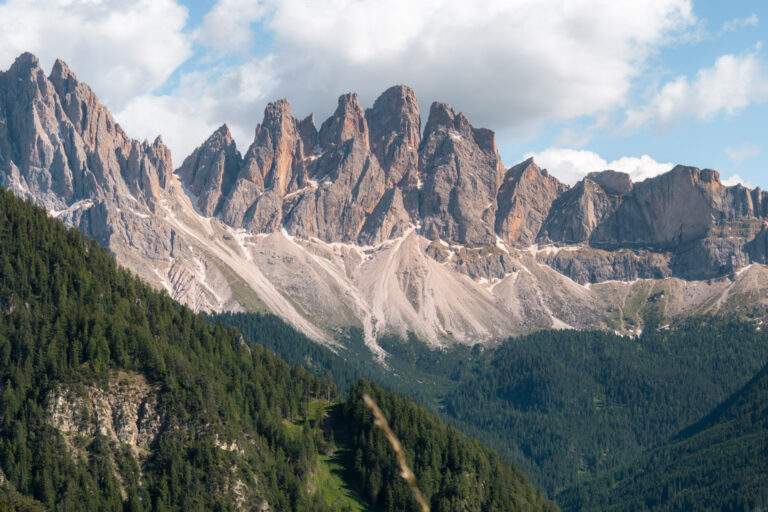
Practical tips + helpful advice to plan your Dolomites trip and enjoy every moment
Read moreWhat to bring to Turin
- Travel insurance (adlink). Never travel without it!
- A good camera – here’s a guide to the gear we use.
- Sunscreen (adlink) and sun protection like a hat, if you’re travelling in the summer. The sun is strong!
- Sneakers or other types of shoes that you can walk in comfortably. Turin’s cobblestone streets can be tough on your feet.
- Light, breathable clothing for late spring to early autumn or layers and a warm jacket if visiting in autumn or winter, as temperatures can drop quite low.
- An umbrella or raincoat. Rain showers can occur year-round.
- A refillable water bottle. The city has many public fountains where you can easily refill it for free.

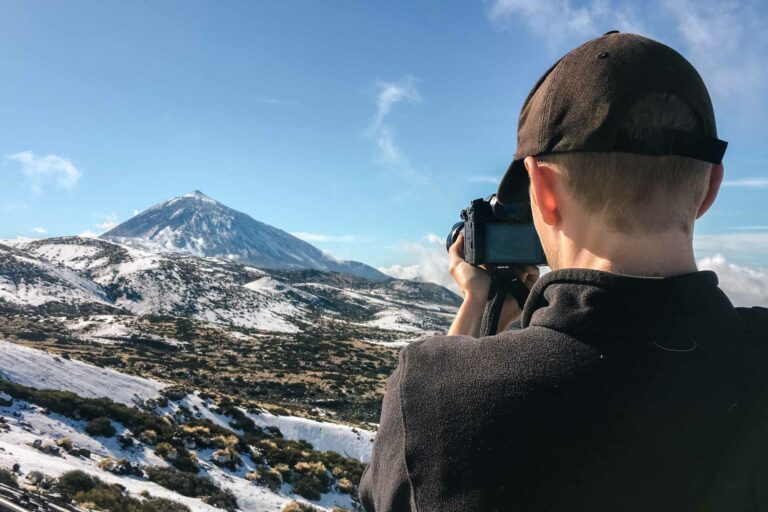
What camera, drone and accessories we use to capture life on the road
Read moreThanks for reading
Thank you for reading our travel guide to Turin. We hope you found it useful!
What are your thoughts on the capital city of the Piedmont region?
If you’ve visited Turin, we’d love to hear your best tips and recommendations.
If you haven’t been yet, feel free to ask any questions in the comments below. We’re here to help.

Our favourite travel resources:
- Booking.com for hotels and apartments.
- Momondo for the best flight deals.
- AirHelp for flight delay compensation.
- GetYourGuide for great tours everywhere.
- Airalo for reliable eSIM.
- Discover Cars for transparent car hire.
- SafetyWing for travel insurance. We also like True Traveller. Compared here.

Where to Stay in Turin: Best Hotels from Budget to Luxury
Our recommendations for the best places to stay in Turin (Torino), Italy
-
Where to Stay in Bergamo: The Best Hotels in Città Alta & Città Bassa
Our recommendations for the best places to stay in Bergamo, Italy
-
Where to Stay in the Dolomites with Children: Best Family Hotels & Areas
Our recommendations for the best family-friendly hotels and areas in the Dolomites, Italy