Visiting Copenhagen responsibly
Copenhagen is often held up as one of the most sustainable cities in the world – and with good reason.
It combines ambitious climate goals with practical solutions that make it easy for both residents and visitors to make low-impact choices.
We were both born and raised here, and even though we think the city can always do more on the green front, we’re proud of the many everyday initiatives that help point things in the right direction.
From the wide bike lanes and efficient public transport to clean harbour baths and eco-certified hotels, Copenhagen shows that sustainable travel is simply part of daily life.
For travellers, that means you don’t have to compromise to make responsible choices – whether you’re here for the design, the food, the hygge or just a good city break.
In this guide, we share how you, as a traveller, can make your visit part of keeping Copenhagen green and clean.
Where to stay sustainably in Copenhagen:
- Luxury: Manon Les Suites – A Bali-inspired green oasis in central Copenhagen with a lush indoor pool, rooftop sauna and strong sustainability certifications.
- Value for money: Zoku Copenhagen – Apartment-style hotel ideal for longer stays and remote work, with solar panels, zero single-use plastics and B Corp certification.
- Budget: Steel House Copenhagen – Large, stylish hostel in Vesterbro with an indoor pool, gym, Green Key certification and a focus on energy efficiency.
Search for the best hotels in Copenhagen here.
Table of contents
- Sustainable travel tips to Copenhagen
- 1. Get to Copenhagen using greener transport
- 2. Explore Copenhagen on foot
- 3. Rent a bike like a local
- 4. Use public transport
- 5. Stay in sustainable accommodation
- 6. Eat more plant-based meals
- 7. Drink the clean tap water
- 8. Avoid single-use plastics
- 9. Sort your waste properly
- 10. Return bottles using the pant system
- 11. Choose low-impact activities
- 12. Shop second-hand or local brands
- 13. Use eco-friendly sunscreen
- 14. Respect urban wildlife
- Where to stay sustainably in Copenhagen

Sustainable travel tips to Copenhagen
We’ve gathered our best tips on how to travel more responsibly in Copenhagen and help reduce your environmental impact while making the most of what the city has to offer.
From transport and food to shopping and everyday habits, here’s how to travel more responsibly in the Danish capital.
1. Get to Copenhagen using greener transport
If you’re coming from somewhere nearby like Sweden or Germany, travelling by train is a solid, eco-friendly choice.
It’s relaxed, scenic and far easier than airport security at 6 in the morning.
We’ve taken the train from Copenhagen to both countries (and back again) more times than we can count, and it really is a low-stress way to arrive in the city.
The trains are usually efficient, and Copenhagen Central Station is exactly what it sounds like – central.
It’s well connected to the metro, buses and local trains, so continuing your journey from there is easy, even if you can’t walk to your accommodation.
Flying isn’t always avoidable, and that’s fair. If you do fly, consider looking into carbon offsetting if you can. We know it’s not perfect, but it’s better than nothing.

2. Explore Copenhagen on foot
We walk a lot here.
Copenhagen’s central neighbourhoods are compact, charming and surprisingly calm, so getting around on foot just makes sense.
Pavements are everywhere – clean, well-kept and easy to navigate, even with a stroller or suitcase (though a few cobbled streets might slow you down a little).
You’ll notice details you’d otherwise miss – like tiny street signs, hidden courtyards or locals riding bikes with their children and groceries in both wind, rain or snow.
Wear comfortable shoes and give yourself time to wander a bit. It’s part of the fun!

3. Rent a bike like a local
There’s no way around it – Copenhagen is a bike city.
We grew up cycling everywhere, and it’s still our favourite way to get around.
The bike lanes are in great condition, the drivers are (mostly) respectful, and even the traffic lights are bike-friendly.
For visitors, rentals like Donkey Republic e-bikes (app-based orange bikes) make it easy to join in.
Many hotels also offer bike rentals, and otherwise, you can find plenty of rental shops around the city where you can pick the perfect bike for your Copenhagen adventure.
Just keep in mind that the bike lanes can feel like motorways: fast-moving and busy during the morning and afternoon rush. Locals won’t hesitate to ring their bell if you’re in the way.
Stick to the right side of the lane, don’t stop suddenly, always signal with your hand, and try to avoid riding side by side or filming while you cycle.
If you’re new to cycling, Copenhagen’s fast-paced bike lanes might feel a bit overwhelming, so it might not be the best place to learn.
Tip: Even though you might see many locals crossing on a red light or turning right when it’s red, don’t follow their lead – it’s illegal and can result in a fine.

4. Use public transport
If you’re not walking or cycling, the metro, S-trains, buses and harbour busses are all reliable, clean and mostly electric – and they run on time (yes, really). No need for a car.
The metro even runs 24/7, which we think is fantastic.
Grab the Rejsekort app or a City Pass if you’re here for more than a day or two – both make life easier when you’re trying to figure out how to get from Nørreport to Ørestad without guessing how many zones you’re crossing.
Use Google Maps or Journey Planner (Rejseplanen in Danish) to navigate the city. Both provide the quickest routes, departure times, walking directions to stations and more.
Public transport across the Copenhagen area operates on a unified ticket system.
While there are no gates or ticket validations at stations, you must have a valid ticket before boarding. An adult can travel with up to two children under 12 at no extra cost.
Ticket inspections happen frequently, and fines for travelling without a ticket are steep.
Consider a Copenhagen Card
The Copenhagen Card gives you unlimited access to public transport and free entry to many of the city’s top attractions – including museums, castles, Tivoli Gardens, Canal Tours, Christiansborg, The Cisterns and more.
There are two different options: you can choose between access to 80+ attractions with free public transport or 40+ attractions using Hop On – Hop Off buses (adlinks).
It offers great value if you plan to visit several sights within a short period.
The card is digital-only.
Advertisement

5. Stay in sustainable accommodation
Choosing the right place to stay can make a big difference.
Look for hotels with eco-certifications like the Green Key – it’s a sign they meet specific environmental standards and take sustainability seriously.
Many of these places use renewable energy, have solid waste and recycling systems and work with local producers for food and products.
Staying in a central neighbourhood is another easy way to reduce your footprint.
You’ll be closer to most sights, which means less need for transport and more time to walk or cycle.
Later in the guide, we share some of our favourite sustainable places to stay in Copenhagen that combine comfort with conscious choices.

6. Eat more plant-based meals
A plant-based diet is one of the simplest ways to lower your environmental impact – and it’s better for the animals, too.
Even if you’re not vegan or vegetarian, trying a few plant-based meals while you’re here is an easy (and tasty) step in a more climate-friendly direction.
In Copenhagen, that’s definitely possible.
You’ll find vegan options in most supermarkets, and eating out is no problem at all – the city has everything from casual breakfasts and hearty bowls to fine-dining tasting menus, all made by people who actually know how to cook vegan food well.
Even many non-vegan cafés and restaurants now offer good plant-based dishes.
We’re vegan ourselves, and Copenhagen has made that both easy and delicious.
See an overview of green eateries on HappyCow.
Below are some of our favourite spots for eating out:
- Café Kaf – Café with excellent vegan pastries and cakes.
- Bistro Lupa – Plant-based restaurant with seasonal Nordic-inspired dishes and natural wines.
- Ark – Michelin Green Star fine‑dining with vegan tasting menus made from locally sourced ingredients.
- Madenitaly – Vegan Italian comfort food.
- Bistro Verde – Stylish plant-based bistro near Nyhavn.
- Beyla – Modern spot in Carlsberg Byen serving nourishing bowls, pancakes and brunch plates.
- Souls – Plant-based burgers and fries at Torvehallerne.
- Vital Foods – Casual spot for burritos, sandwiches and quick bites to take away.
- Pow Vegan Pizza – Vegan pizzas with creative toppings.
- Urten – Vegan fine-dining that offers a seasonal tasting menu.
- Glean – Plant-based Danish flødeboller (chocolate-covered marshmallows) and other sweet treats.
- MooMoo Ice Cream – Delicious gelato! Try it at Gazelle Kaffebar, Glean Torvehallerne, Thunbergs Kreative Hjørne or Green Island.
Wherever you choose to eat, try to go for seasonal and sustainable options.
Organic and local food is widely available, and many places highlight Danish produce and seasonal menus.

7. Drink the clean tap water
There’s no need to buy bottled water in Copenhagen.
Danish tap water is clean, safe and of high quality.
It comes from groundwater and is so well-treated that it’s drinkable straight from the tap without any chemicals added.
Bring a refillable bottle and top it up throughout the day.
You’ll find public fountains around the city, especially in parks and central squares. Most cafés are also happy to fill your bottle if you ask (or you can fill it up from the tap in the bathroom).
It’s easy, free and much better for the environment.
8. Avoid single-use plastics
Copenhagen is moving in the right direction when it comes to cutting down on single-use plastics, but there’s still a lot of waste, especially from takeaway food and drinks.
You can help by refusing what you don’t need, reducing what you use, and reusing wherever possible.
Skip plastic lids, cutlery and straws when you can.
Sit down to enjoy your meal or coffee, or bring your own cup if you’re getting takeaway – some cafés even offer a small discount if you do.
It’s also a good idea to carry a reusable bag and water bottle.
Some takeaway spots even let you bring your own container, so it’s worth asking.
Small habits like these add up, especially in a city that serves thousands of takeaway meals a day.
9. Sort your waste properly
Sorting waste is taken seriously in Copenhagen, and as a visitor, you’re expected to do your part.
Most homes, hotels, cafés and public bins separate rubbish into several categories, including:
- Plastic
- Paper and cardboard
- Glass
- Metal
- Food waste
- Residual waste (restaffald)
You’ll often find colour-coded or clearly labelled bins, especially in public spaces and accommodation.
If you’re staying in a hotel or rental, check how they handle recycling and follow their setup.
Even small things, like putting your bottle or takeaway box in the right bin, help keep the city clean and reduce what ends up in landfills or incineration.

10. Return bottles using the pant system
In Denmark, many plastic and glass bottles as well as aluminium cans come with a deposit called “pant”.
When you buy drinks from supermarkets or convenience stores, you pay a small extra fee that you get back when you return the empty container.
To get your deposit back, bring your empty bottles and cans to the return machines found in most supermarkets.
The machine will print a receipt that you can redeem at the checkout.
If you don’t want to spend time collecting a few Danish kroner, you’ll often find small “shelves” on public bins where you can leave your empties for others to pick up and return.
It’s a simple way to keep bottles out of the trash and support the recycling system.

11. Choose low-impact activities
Enjoying Copenhagen without adding any environmental footprint is easier than you might think.
Low-impact activities doesn’t mean they’re low on joy – just lower on energy and resources.
They often focus on nature, culture or community, allowing you to connect with the city in a gentle, responsible way.
For example, visiting parks and green spaces like Ørstedsparken, Amager Fælled or Superkilen lets you relax outdoors while supporting local ecosystems.
The Botanical Garden offers a peaceful spot to learn about plants and biodiversity, and the harbour baths provide clean, free swimming right in the city.
Museums such as the National Museum or SMK (Statens Museum for Kunst) also promote sustainability through various initiatives, making cultural visits both inspiring and eco-conscious.
Other ideas for sustainable activities in Copenhagen:
- Head to CopenHill – A unique urban mountain with hiking and skiing on top of a waste-to-energy plant.
- Rent a kayak from Green Kayak for free – Help keep the waterways clean by picking up litter as you paddle through the harbour and canals.
- Rent a GoBoat – Captain a solar-powered boat in the harbour and bring snacks with you for a memorable time on the water.
- Explore local markets or street food markets – Check out Torvehallerne, Reffen (Refshaleøen), Banegaarden and Broens Gadekøkken (by Inderhavnsbroen).
- Step inside the Royal Library (The Black Diamond) – Browse books in a quiet, architectural space right by the water.
- Relax with a picnic at Østre Anlæg or Kongens Have – Bring your own food and chill out in the city’s lovely parks.
- Wander through Assistens Cemetery – A peaceful green space where you can reflect, walk and see graves of famous Danes like H.C. Andersen.
- Join free or donation-based events like open-air concerts or yoga in the park.
- Discover the city on foot – Take a walking tour through neighbourhoods like Christianshavn, Vesterbro, or Frederiksberg to experience local life.

12. Shop second-hand or local brands
Copenhagen is a great city for thoughtful shopping.
Whether you’re after clothes, homeware, children’s items or souvenirs, there are plenty of ways to support circular or conscious consumption.
You’ll find a strong second-hand scene here – from curated vintage to more casual thrift.
Check out Wasteland, Episode, Time’s Up Vintage, København K, O-S-V. Secondhand, Reseller (city centre), Rosy Vintage (Vesterbro), Second Wardrobe, HELLO GOOD BUY (Nørrebro), Paloma Vintage, Iblamelulu (Frederiksberg) or PRAG (multiple locations).
For home goods and more classic charity-run second-hand shops, look for Røde Kors, Kirkens Korshær and Blå Kors shops. They often have a mix of clothes, kitchenware and books.
Børneloppen is a bit outside the city centre, but if you’re looking for second-hand children’s clothes, toys or gear, it’s well worth the trip.
They run two massive indoor shops (in Valby and Vanløse) where hundreds of families rent stalls and sell their pre-loved items. It’s usually of great quality, often barely used and at a fraction of the price.
Also, keep an eye out for flea markets if you’re here on the weekend during the summer.
If you prefer new but want to shop responsibly, look for Danish brands that focus on organic materials, fair production and longevity.
Aiayu, Skall Studio, Organic Basics, Colorful Standard, Liewood and Konges Sløjd are some of our favourites.
Avoid buying mass-produced souvenirs or imported trinkets from tourist shops. Instead, look for handmade ceramics, locally designed jewellery, textiles or natural skincare.
For an easy way to cut down on waste, bring your own tote or backpack when shopping. Most places charge for bags, and it’s one of those small habits that make a difference.

13. Use eco-friendly sunscreen
If you plan to take a dip in Copenhagen’s clean harbour baths, it’s worth checking your sunscreen first.
Many common sunscreens contain chemicals like oxybenzone that can harm aquatic life and pollute the water.
Choosing an eco-friendly, reef-safe sunscreen helps protect the city’s waterways while keeping your skin safe.

14. Respect urban wildlife
Copenhagen is home to a variety of birds, squirrels and other small animals that share the city with us.
The best way to respect them is to observe from a distance without feeding or disturbing them.
Avoid littering, as trash can harm wildlife, and keep dogs on a leash in parks and natural areas to protect nesting birds and other creatures.
A little mindfulness goes a long way towards keeping Copenhagen’s green spaces wild.

Where to stay sustainably in Copenhagen
In our full guide to the best sustainable hotels in Copenhagen, you’ll find over 20 eco-friendly options covering all budgets and grouped by neighbourhood.
Here, we’ve handpicked 10 standout hotels that combine strong sustainability credentials with great locations and unique features, making it easier to choose the perfect green stay for your trip.
Our 10 favourite sustainable hotels in Copenhagen
- Manon Les Suites – A Bali-inspired green oasis in central Copenhagen with a lush indoor pool, rooftop sauna, and strong sustainability certifications.
- Hotel SP34 – Stylish boutique hotel in the Latin Quarter offering organic breakfast, Green Key certification, and a focus on reducing food and plastic waste.
- Bryggen Guldsmeden – Relaxed and stylish hotel in Islands Brygge with Orbital showers, organic breakfast and spa – certified by Green Globe, Green Key and the Golden Ø.
- Hotel Danmark – Stylish hotel between Vesterbro and the city centre, offering an organic breakfast and part of a certified B Corp hotel chain.
- Hotel Kong Arthur – Eco-conscious hotel featuring organic breakfast and Green Key certification, set near the lakes and close to the Botanical Gardens.
- Hotel Hans – Boutique eco-hotel in Frederiksberg with an organic breakfast, Green Key certification and complimentary wine hour in the lounge.
- Zoku Copenhagen – Apartment-style hotel ideal for longer stays and remote work, with solar panels, zero single-use plastics and B Corp certification.
- Crowne Plaza Copenhagen Towers – One of Denmark’s greenest hotels with solar panels, groundwater heating and B Corp membership, located near Bella Center and Field’s Shopping Center in Ørestad.
- Steel House Copenhagen – Large, stylish hostel in Vesterbro with an indoor pool, gym, Green Key certification and a focus on energy efficiency.
- CityHub Copenhagen – Futuristic pod-style hostel in Vesterbro with B Corp certification, renewable energy and ultra-efficient, low-impact stays.
Search for the best hotels in Copenhagen here.
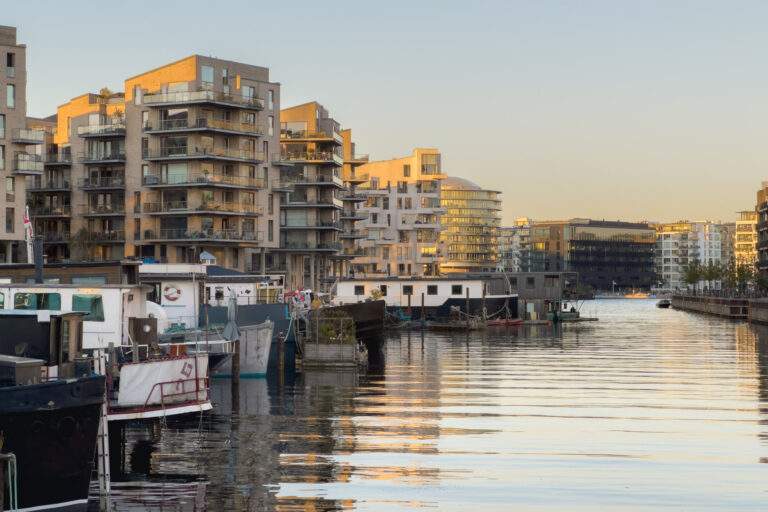
Our local recommendations for the best eco-friendly places to stay in the Danish capital
Read more




Thanks for reading
Thanks for reading our guide to sustainable travel in Copenhagen – we hope it has been useful.
Have you been to Copenhagen? We’d love to hear your own tips or favourite spots.
And if you haven’t visited yet, feel free to ask us anything in the comments. We’re happy to share more.
Our favourite travel resources:
- Booking.com for hotels and apartments.
- Momondo for the best flight deals.
- AirHelp for flight delay compensation.
- GetYourGuide for great tours everywhere.
- Airalo for reliable eSIM.
- Discover Cars for transparent car hire.
- SafetyWing for travel insurance. We also like True Traveller. Compared here.

Where to Stay in Østerbro & Nordhavn, Copenhagen: The 10 Best Hotels & Apartments
Our recommendations for the best places to stay in the family-friendly neighbourhood
-
Christmas in Copenhagen: 21 Best Christmas Markets in 2025
Everything you need to know about the best Christmas markets in Copenhagen, including where to find them and when they are open
-
The 24 Best Sustainable Hotels in Copenhagen (by Budget & Neighbourhood)
Our local recommendations for the best eco-friendly places to stay in the Danish capital