

Get ready for your trip to Seychelles
We spent 15 full days travelling around Seychelles in July, visiting Mahé, Praslin and La Digue as well as taking a boat trip to Curieuse Island.
The beaches were every bit as beautiful as we had hoped. However, the practical side of travelling between remote islands raised a few questions.
Do you need a visa? How rough is the ferry? Is Seychelles as expensive as everyone says? Can you drink the tap water? And are all those postcard beaches actually safe for swimming?
If you’re wondering what you should know before going to Seychelles, these travel tips cover the important preparations as well as the small things that make life easier once you arrive.
Let’s make sure the only surprises are the good kind!

1. Weather and seasons
Seychelles is warm throughout the year, but the weather is not identical on every island or coast.
The southeast trade winds generally bring stronger breezes between May and September, while the northwest monsoon brings the wetter, calmer season from around November to March.
The calmer periods in between are popular for diving and snorkelling.
We visited in July and experienced more wind than expected, including a few grey and rainy days.
It was still warm, and we had plenty of sunshine too, but conditions on the water could change quickly.
Rain is possible in every month.
A forecast showing clouds across Seychelles does not necessarily mean that every island will be wet all day, just as sunshine on one coast does not guarantee calm swimming on the other.

2. Seychelles isn’t only for honeymoons and luxury travellers
Private-island villas and five-star resorts are a large part of the image of Seychelles. They are certainly available, and some of them look tempting.
But you do not need to be on a honeymoon or have an unlimited budget to enjoy the islands.
Guesthouses, self-catering apartments, public buses, takeaway shops, free beaches and hiking trails make a more independent trip possible.
However, if romance is the main reason for your trip, our Seychelles honeymoon guide covers itineraries, hotels and things to do for two.
For the full private-pool-villa version, see our guide to the best luxury hotels in Seychelles.
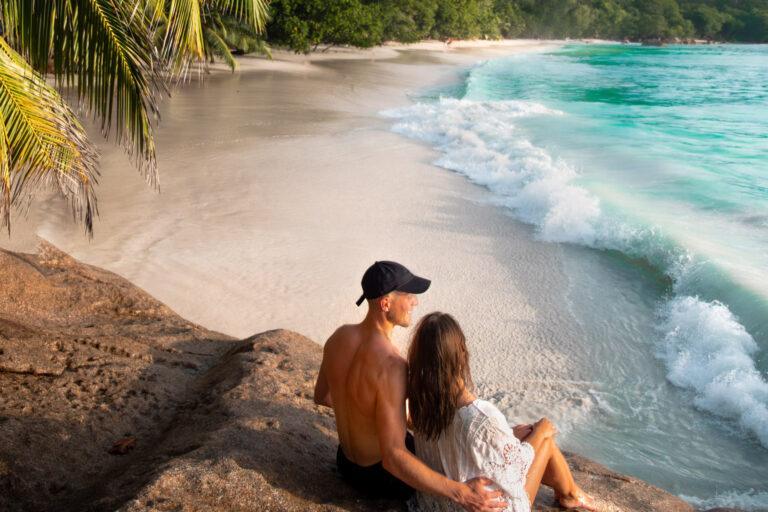
Plan a Seychelles honeymoon across Mahé, Praslin and La Digue with all of our tips
Read more3. Choose your islands before booking accommodation
Seychelles consists of 115 islands, but most first-time visitors focus on Mahé, Praslin and La Digue.
- Mahé offers the greatest variety, with mountain hikes, beaches, the capital Victoria and the widest choice of accommodation.
- Praslin is known for incredible beaches, Vallée de Mai with its coco de mer palms and boat trips to Curieuse Island, where you can meet giant tortoises.
- La Digue is smaller, slower and made for exploring by bicycle. The beaches are just as good and there are even fewer people around.
Private islands work differently. The resort is usually the trip, and getting there may involve a boat, light aircraft or helicopter.
Our complete Seychelles travel guide compares the main islands and explains what to do on each one.
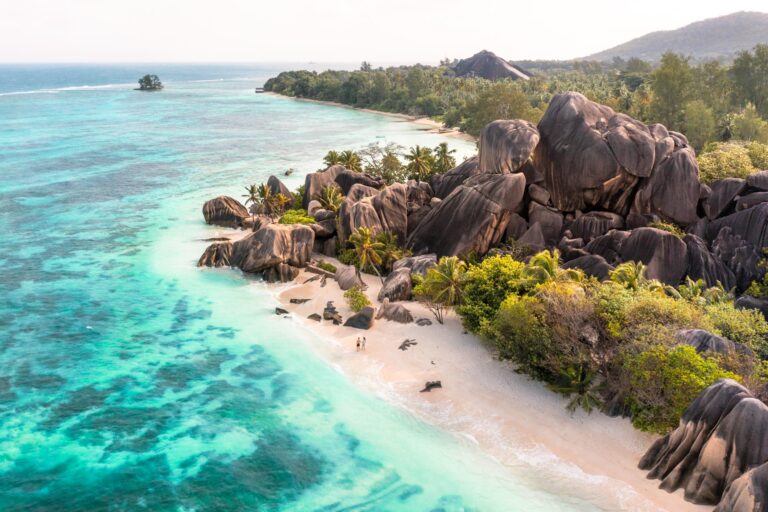
Everything you need to know including the best beaches, hikes & activities, which islands to visit, 1-2 week itineraries and where to stay in Seychelles
4. Don’t rush your Seychelles island-hopping itinerary
Moving between islands takes more time than the ferry timetable suggests.
Keep in mind that you also need to pack, check out, reach the harbour or airport, wait, travel, and then get to your next accommodation.
Every island change costs both time and money.
Our 15-day trip gave us time for all three main islands without racing from one beach to the next.
With one week, we would generally choose one or two islands.
Ten days can work for all three, while two weeks gives you space for day trips, pool time and the occasional rainy afternoon.
Seeing fewer islands properly is often more rewarding than collecting ferry tickets from all of them.

5. Mahé is more than an airport stop
International flights arrive on Mahé, which makes it easy to treat the island as somewhere to sleep before moving on.
That would be a shame.
Mahé has some of the country’s best hiking, plenty of beaches, the capital Victoria and more everyday Seychellois life than you are likely to see at a private-island resort.
We particularly enjoyed exploring Mahé by car.
Our Mahé travel guide covers the beaches, hikes and other things worth staying for.

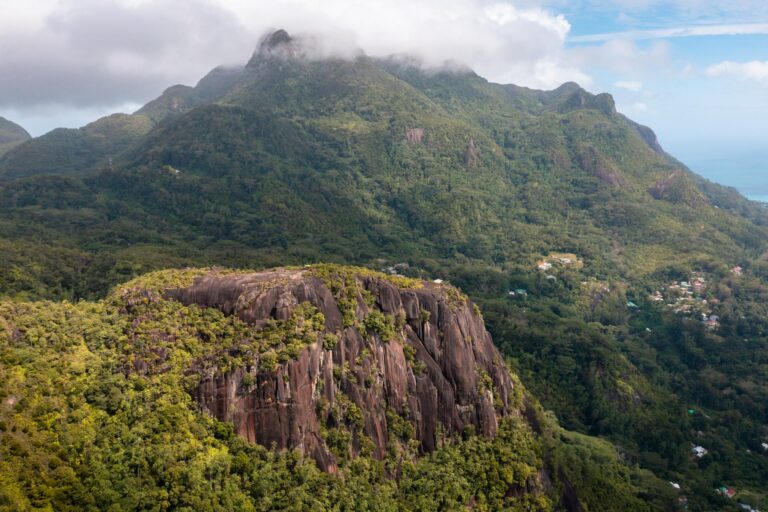
Everything you need to know about Mahé Island in Seychelles including what to do, when to visit, where to eat and where to stay
Read more6. Visa and entry rules
Seychelles is visa-free for visitors
Visitors do not normally need a visa before travelling to Seychelles.
If you meet the entry requirements, you receive a visitor’s permit on arrival, initially valid for up to three months.
Your passport must be valid for the duration of your stay.
Apply for the Electronic Travel Authorisation
A visa-free country does not mean a form-free country.
Every visitor must obtain an Electronic Travel Authorisation (ETA) before departure.
Applications can be submitted up to 30 days before travelling, and standard processing can take up to 24 hours.
You will need passport details, a photo of yourself, information about your journey, confirmed accommodation and a return or onward ticket.
Immigration also expects you to have enough money for your stay, and you may be asked for proof of travel insurance at the border.
Only use the official government website
Apply through the official Seychelles Electronic Border System.
Third-party websites may look official while charging an unnecessary service fee on top.
In summer 2026, the standard government processing fee for an adult application is 10 EUR, with more expensive express options available.
Check the official page before applying, as entry requirements and fees can change.
Save your confirmation to your phone
Save the authorisation, accommodation confirmations, return ticket and insurance details to your phone.
Do not leave the only copies sitting in an email inbox that suddenly decides not to load at the airport.

7. Check vaccination and yellow fever requirements for your route
Vaccination requirements can depend on where you are travelling from and where you have recently been, not only on your nationality.
A yellow fever vaccination certificate is required when arriving from a country listed as a transmission risk.
Transit details can matter too, so check the rules for your complete route shortly before departure.
Health notices about mosquito-borne illnesses can also change.
Check official travel health advice, discuss any recommended vaccinations with a medical professional and make sure your usual vaccinations are up to date.
The current Seychelles entry requirements provide a useful starting point, but always use guidance relevant to your own passport and journey.
8. Allow for the Tourism Environmental Sustainability Levy
Seychelles charges a nightly sustainability levy at many hotels and other places to stay.
It’s generally collected by the hotel during the stay, so it may not appear in the first price you see online.
From 1 January 2026, properties with up to 24 rooms are exempt.
The levy is 75 Seychellois rupees (SCR) per person per night at medium-sized properties with 25-50 rooms and 100 SCR at larger hotels, island resorts and yachts.
Children aged 12 and under are exempt.
Ask whether the levy is included when comparing accommodation prices, especially for a longer stay. A small nightly charge has plenty of time to add up over a two-week stay.
You can see the current rates on the official Tourism Seychelles website.

9. Book accommodation and important connections early
Seychelles is not the easiest place to arrive in and arrange everything at the last minute.
The number of affordable rooms is limited, particularly near popular beaches, shops and ferry connections.
Once the best-value guesthouses sell out, the remaining choice may be a much more expensive room or a cheaper one that requires taxis every day.
Ferries and domestic flights also have a limited number of seats.
Book the connections that your itinerary depends on, especially around weekends and busy holiday periods.
For help choosing a base, see our guides to where to stay on Mahé, where to stay on Praslin and where to stay on La Digue.
10. Plan international flights and island transfers together
A cheap international flight is less useful if it lands just after the final ferry or leaves before you can get back from another island.
Before booking, compare your arrival time with domestic flights and ferries.
Allow time for immigration, collecting your luggage, travelling between terminals or to the harbour and the operator’s check-in deadline.
If your flight lands late, spending the first night on Mahé may be the most relaxed choice.
The same applies before an early departure. Missing one beach afternoon is preferable to watching your international flight leave without you.
Find the best flight deals on Momondo (adlink).

11. Seychelles International Airport and the ferry terminal are not in the same place
International and domestic flights use the airport on the east coast of Mahé.
Ferries to Praslin and La Digue leave from the Inter Island Quay in Victoria.
So you need to travel by road between the airport and the ferry terminal.
Factor in traffic and check-in time when deciding whether a same-day connection is sensible.
If you prefer to have a driver waiting, you can book a private transfer between Seychelles International Airport and your hotel on Mahé (adlink).
12. Ferry or plane between Mahé and Praslin?
The ferry is normally the cheaper choice, while the small Air Seychelles plane is considerably faster.
The flight takes around 15 minutes and offers good views along the way.
The ferry takes just over an hour and brings you directly to Baie Sainte Anne, where boats also depart for La Digue.
We flew from Mahé to Praslin, took the ferry to La Digue and later returned to Mahé by ferry after a brief stop on Praslin.
Having tried both, we can see the appeal of spending more on the plane if you are prone to seasickness.


Everything you need to know about Praslin Island in Seychelles including what to do, when to visit, where to eat and where to stay
Read more13. Prepare for a potentially rough ferry crossing
Our ferry from Praslin to Mahé was modern and felt safe. It was also very rough.
The weather was particularly wild that day, but the open-water crossing between Mahé and Praslin is known for getting choppy.
The much shorter journey from Praslin to La Digue is usually easier.
If you tend to get seasick, take suitable motion-sickness medication early enough for it to work and follow the ferry company’s seating advice.
Keep water, tissues and a light layer within reach rather than buried at the bottom of your luggage.

14. The currency is the Seychellois rupee
The local currency is the Seychellois rupee, abbreviated to SCR or sometimes SR.
As a rough reference, 100 SCR was approximately 6.5 EUR / 7.5 USD in summer 2026.
Exchange rates change, and the amount charged by your bank or exchange office may differ.
Prices at hotels and tourism businesses may also be shown in euros.
Check which currency will actually be charged before paying, as a card terminal’s conversion is not always the best rate.
15. Seychelles is expensive, but costs vary greatly
There is no gentle way to put it: Seychelles is an expensive destination.
Accommodation, restaurant meals, taxis, tours and transport between islands can add up quickly.
On the other hand, many of the best beaches are free, buses are inexpensive, takeaway food costs much less than resort dining, and self-catering can make a large difference.
It’s possible to visit without choosing the absolute cheapest option every day.
The trick is deciding which experiences matter to you before the expensive decisions start making themselves.
Our detailed guide to visiting Seychelles on a budget includes realistic daily costs and practical ways to spend less without turning the trip into a test of endurance.

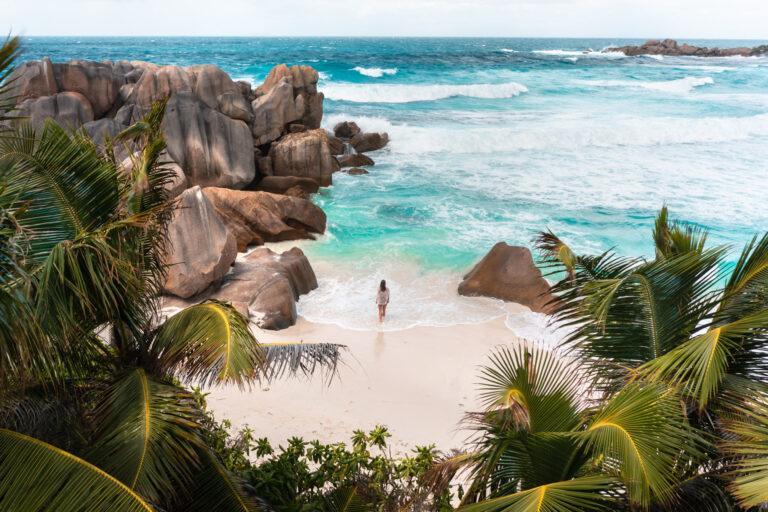
A practical guide to affordable accommodation, food, transport, activities and island-hopping in Seychelles.
Read more16. Carry both a card and some cash
Cards are widely accepted at hotels, larger shops, restaurants and established tour companies.
Cash remains useful for buses, small takeaway shops, bicycle rentals, market purchases and places where the card terminal is temporarily not cooperating.
ATMs are available on Mahé, Praslin and La Digue, though your own bank and the local operator may both charge a fee.
We would not rely entirely on either payment method. A card plus enough rupees for a day or two gives you a useful backup without carrying a large amount of cash.
17. Tipping is appreciated but not compulsory
Tipping is not mandatory in Seychelles, and some restaurants already add a service charge.
If service is not included and you were happy with it, leaving around 5-10% is a common guideline.
You can also round up a taxi fare or leave a small cash tip for a guide, driver, porter or housekeeper.
Check the bill first. There is generally no need to tip twice by accident, however friendly everyone has been.
18. Location can matter more than the cheapest room
A room that costs slightly less can become the expensive option if you need a taxi every time you want to get food, visit the beach or catch a ferry.
Look at the full stay rather than the nightly price.
Being near a bus route, supermarket, takeaway shop or the places you plan to visit may save both money and holiday time.
The calculation changes if your resort is the main experience and you barely plan to leave. In that case, a beautiful setting and good facilities may be worth paying for.
Our guide to the best luxury hotels and resorts in Seychelles compares the strongest options on the main islands and beyond.
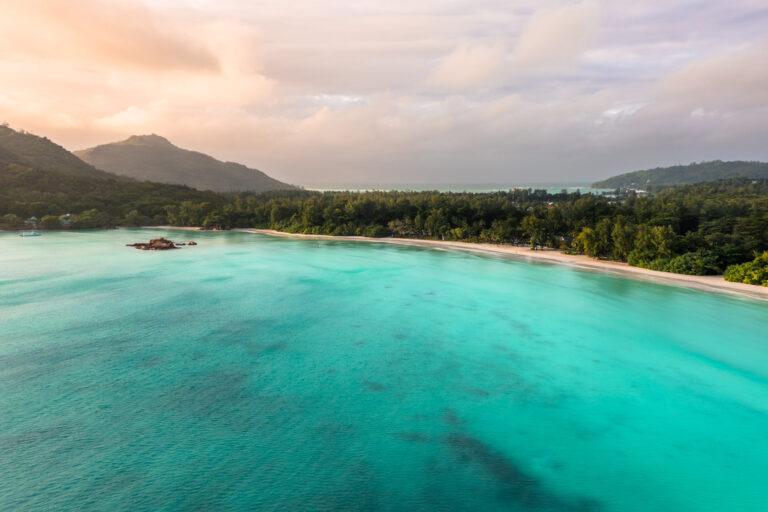
Our recommendations for five-star beach resorts on Mahé, Praslin and La Digue + private-island pool villas.
Read more19. Self-catering can make the trip easier
A kitchen is useful for more than saving money.
It gives you flexibility when restaurants are far away, opening hours do not match your plans or you want a quiet evening. We also like having a kitchen when travelling with small children.
On La Digue, we used a shared kitchen to cook some of our meals.
Porridge, fruit, bread, pasta, rice and a simple vegetable curry do not need much equipment, and it was nice not to have to search for a restaurant every single night.
Check whether basics such as oil, salt and cooking utensils are provided. A kitchen sounds less impressive when its entire inventory is one saucepan and a decorative fork…
20. Try the local takeaway shops
Small takeaway shops are one of the easiest ways to eat for less in Seychelles.
They commonly serve curries, rice, lentils, vegetables, noodles and samosas at much lower prices than sit-down restaurants.
The selection changes during the day, and popular dishes can sell out. Going around lunchtime gives you a better chance of finding a proper choice.
As vegans, we found vegetable curries and other plant-based meals on all three main islands.
Our vegan eating guide to Seychelles shares the restaurants and takeaway shops we tried.
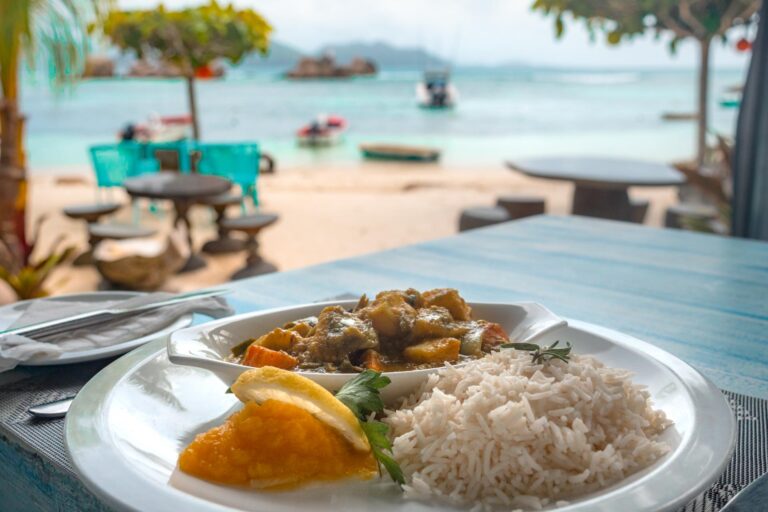
Everything you need to know about finding the most delicious vegan and vegetarian places in tropical paradise

21. Drive on the left and take care on the narrow roads
Traffic drives on the left in Seychelles.
Mahé is mountainous, and many roads are narrow, steep and full of bends. Deep storm drains run beside some stretches, while barriers and street lighting are not always present.
Sudden rain can reduce visibility quickly.
Take your time, avoid unfamiliar roads after dark if possible and do not let an impatient driver behind you decide your speed.
22. Choose between a rental car, buses and taxis
A rental car offers the most freedom on Mahé and Praslin, particularly if you want to visit several beaches in one day or stay away from the main settlements.
Buses are inexpensive and cover much of both islands.
They work best if you travel light, stay near a route and do not mind planning around the timetable. Large suitcases may not be accepted.
Taxis and private transfers are convenient but can become expensive if you use them for every outing.
Compare the total cost with the cost of a rental car, including fuel, insurance and parking.
Compare car rental prices in Seychelles with DiscoverCars (adlink).

23. Walk or rent a bicycle on La Digue
La Digue has very few private cars. Most visitors get around by bicycle or on foot, which is a large part of the island’s appeal.
We rented bicycles and loved the freedom they gave us.
Distances are short, but the roads are not completely flat, especially towards Belle Vue and the southeastern beaches.
If you stay centrally, you can walk on quieter days and rent a bicycle only when exploring further away.
See our La Digue travel guide for beach routes, hikes and the best things to do.

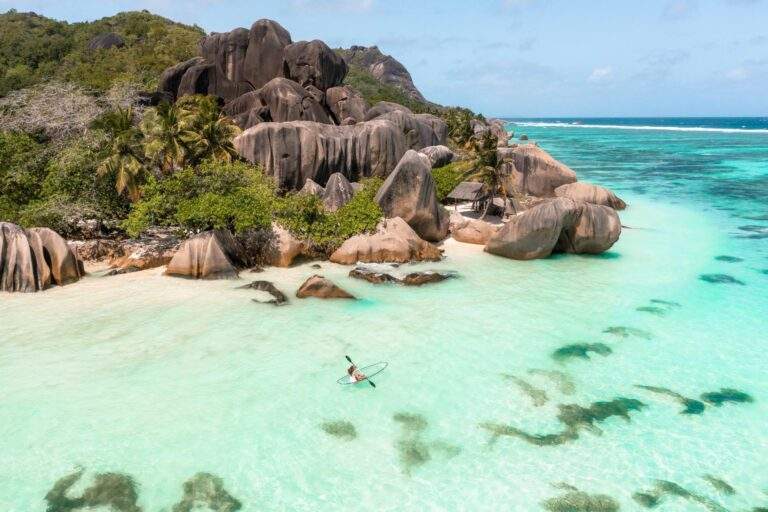
Everything you need to know about La Digue Island in Seychelles including what to do, when to visit, where to eat and where to stay
Read more24. Photograph rental cars and bicycles before using them
Before driving or cycling away, take a few photos showing any existing scratches, tyres, lights, locks and any other visible damage.
We had no problems with our rentals in Seychelles.
It’s a habit we keep wherever we travel, as one minute of documentation can prevent a long discussion about who caused a scratch.
25. Don’t rely on hotel wifi
Most resorts, hotels and guesthouses advertise wifi, but it can be slow, patchy or unreliable.
In our experience, mobile data was more dependable than hotel wifi.
Some connections were fine for messages and light browsing but less useful for uploading large files, making video calls or sorting out the next part of the trip.
If you need to work during your stay, ask where you are staying about the connection speed, data limits and whether wifi reaches the room rather than assuming the small symbol in the booking description tells the whole story.
26. Download offline maps before exploring
Download the islands in Google Maps or Maps.me while you have a stable connection.
Offline maps are useful for driving, finding smaller beaches and following hiking trails where reception may be weaker.
Save your accommodation, ferry terminal, airport and other important places in advance too.
A flat phone battery is still a problem, of course. Bring a power bank if you plan to use navigation for a full day.
27. Buy a local SIM card or install an eSIM
Mobile data makes it much easier to check ferry times, contact your accommodation, navigate and keep an eye on the weather.
We bought a local Airtel SIM in Seychelles. Visitor SIMs and data packages are also available from Cable & Wireless.
Internet access is expensive compared with many other destinations, so check how much data you get and how long it lasts rather than only looking at the headline price.
If your phone supports eSIMs, Airalo (adlink) is another option. We have previously used Airalo on other trips and like being able to install the eSIM before arrival.
Its Seychelles eSIM has used Airtel for coverage, though partners can change.
28. Seychelles uses type G electrical sockets
The standard sockets are type G, with the same three rectangular pins used in the UK. Electricity is 220/240 volts.
Some hotels provide adapters, European sockets or USB ports, but we would not plan around that.
Bring your own adapter, and consider a compact multi-port charger if cameras, phones and power banks all need charging at once.
29. English is widely spoken
Seychellois Creole, English and French are the country’s official languages.
English is widely used in tourism, and we found communication straightforward at places like hotels, restaurants, shops and transport offices.
Learning a greeting or two in Creole is still a nice gesture, though.

30. Ask locally about tap water
We drank the tap water on Mahé, Praslin and La Digue without problems, although we did not particularly enjoy the taste.
Water quality and plumbing can vary by property, so ask your accommodation if you are unsure.
A filter bottle, hotel refill station or larger water container can reduce the number of small plastic bottles you need to buy.
On remote islands, boats and long hikes, carry enough drinking water rather than assuming you can refill along the way.
31. Most beaches are public and free
One of the best things about Seychelles is that most beaches are public, including stretches in front of luxury resorts.
The access route may cross hotel property, and you may need to register at a gate.
However, public access does not include the right to use the resort’s sunbeds, pools or other facilities.
There are exceptions where you pay to pass through another attraction.
The epic Anse Source d’Argent, for example, is reached through L’Union Estate, which charges admission.

32. Check the tides before visiting a beach
Tides affect the amount of sand, the depth of the water, snorkelling conditions and whether some natural pools or passages are accessible.
This is particularly noticeable at Anse Source d’Argent on La Digue.
Low tide reveals more sand and shallow water, while a higher tide can be better for swimming over the reef.
Neither is automatically best, but they make for very different visits.
Check a local tide forecast and ask guides or the staff where you are staying when timing matters for a hike, snorkelling spot or boat trip.
Our Anse Source d’Argent guide explains how to plan a visit to Seychelles’ most famous beach.

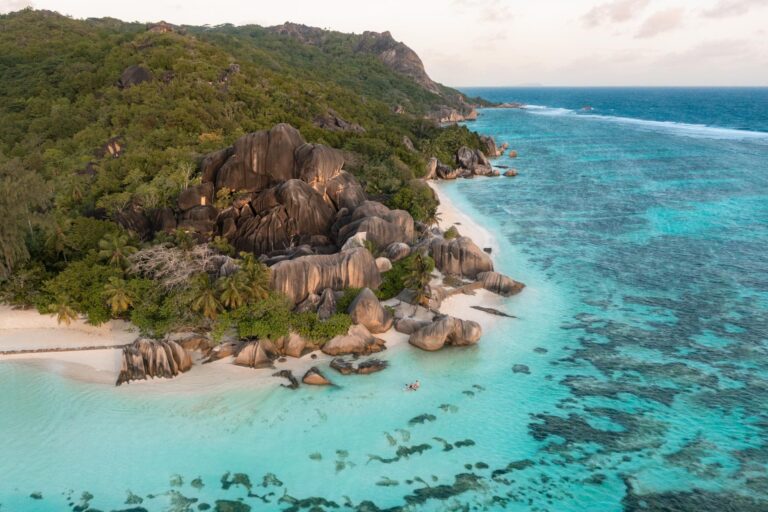
All you need to know about the famous paradise beach on La Digue, including how to get there, what to expect, where to stay and our best tips
33. Not every postcard beach is safe for swimming
A beautiful beach is not necessarily a swimming beach.
Strong currents, large waves and sudden changes in depth affect beaches on all three main islands.
Conditions also change with the wind, tide and season.
Grand Anse, Petite Anse and Anse Gaulettes on La Digue are among the beaches known for powerful waves, and several beaches on Mahé can also be unsafe for swimming.
We treated the wilder beaches as places for walking and enjoying the scenery when the sea did not look safe.
Respect warning signs, ask locally and do not assume that no sign means the water is calm. Many beaches have no lifeguard.
The official Seychelles Beach and Sea Safety Guide covers currents, swimming and marine hazards in more detail.

34. Some beaches require registration or advance reservations
There is a difference between paying for a beach and arranging access through private property.
Petite Anse on Mahé is behind the Four Seasons (adlink) gates. The beach is public and entry is free, but visitors register at security before walking down.
Anse Georgette on Praslin is also public and free, but the usual route crosses Constance Lemuria (adlink).
Visitor numbers are controlled, so contact the resort or ask your accommodation to reserve access at least a day or two ahead.
Arrangements can change, so confirm access shortly before visiting.

35. Pack for more than beach days
Swimwear will get plenty of use, but Seychelles is also excellent for hiking, cycling and boat trips.
- Comfortable hiking shoes for forest trails and uneven coastal paths.
- A light rain layer for tropical showers and breezy boat trips.
- A torch or charged phone for roads and paths without street lighting.
- A dry bag for ferries, kayaks and boat excursions.
- A refillable bottle, water and snacks for remote beaches and hikes.
- A plug adapter and power bank for keeping maps and tickets accessible.
A good camera is worth bringing too.
The granite beaches, green mountains and giant tortoises tend to make it difficult to put the camera away.
You can see what we carry in our camera bag here.

What camera, drone and accessories we use to capture life on the road
Read more36. Protect yourself from both the sun and mosquitoes
The tropical sun is strong even when clouds and wind make the temperature feel comfortable.
Use shade, a hat, lightweight clothing and reef-safe sunscreen, and remember to reapply after swimming.
Drinking enough water matters on hikes and bicycle days too.
Mosquitoes can transmit illnesses including chikungunya, dengue and Zika.
Use an effective insect repellent, particularly around dawn and dusk, and consider a lightweight long-sleeved top and trousers when mosquitoes are active.
Check official travel health advice for Seychelles before your trip.
37. There are very few dangerous animals to worry about
For a tropical destination, Seychelles has surprisingly little dangerous wildlife on land.
There are no large land predators, and the native land snakes are not considered dangerous to people. Hiking is not a matter of watching every step for a hidden cobra (phew).
Mosquitoes and biting midges, also called sand flies, are more relevant day to day. Repellent helps, especially around vegetation, still water and quiet beaches.
Sharks live in Seychelles waters (as they should in a healthy marine ecosystem).
The small reef sharks sometimes seen in shallow water generally avoid people, but they are still wild animals.
Never feed, touch or chase one, and calmly leave the water if a large shark appears.
Venomous yellow-bellied sea snakes occur in Seychelles waters, though encounters close to swimmers are unusual. Never touch a snake in the water or on the beach.
The same simple rule applies to jellyfish, lionfish, stonefish, stingrays, sea urchins and crown-of-thorns starfish. Look, but do not handle or stand on marine life.
In practice, currents and waves are usually a greater concern for swimmers than animals are.

38. Travel insurance matters more on remote islands
The main hospital is on Mahé, while medical facilities are more limited on the smaller islands.
Treatment and emergency medical transport can be expensive for visitors.
Choose insurance that covers your full itinerary and the activities you plan to do, including hiking, snorkelling, diving or boat trips where relevant.
Keep the policy number and emergency contact details available offline.
The emergency number in Seychelles is 999 for the ambulance, fire service and police. For the ambulance directly, dial 151.
We never travel without insurance. See travel insurance from SafetyWing here (adlink).
39. Respect giant tortoises and marine life
Meeting free-roaming Aldabra giant tortoises on Curieuse Island was one of the highlights of our trip.
Give tortoises space, follow the rules of the sanctuary or reserve and never climb on them.
Feeding and touching policies vary between places, so follow the instructions where you are rather than assuming every encounter works the same way.
The same respect applies underwater. Do not chase turtles, stand on coral or touch animals for a photo.
Letting wildlife carry on with its day usually creates a better encounter anyway.

40. Leave shells, coral and natural souvenirs where they belong
Shells, coral and pieces of the landscape are part of the ecosystem, not free souvenirs.
Leave them on the beach or in the sea.
As well as protecting nature, this avoids problems with strict rules governing the export of plants, animals and protected natural items.
The famous coco de mer is a special case.
If you want to buy one, use a licensed seller and make sure it has the required official documentation and identifying tag.
Do not pick one up or buy an untagged specimen.

41. Think carefully before bringing a drone
Seychelles is one of the strictest countries we have visited when it comes to flying a drone.
We registered our drone before bringing it into the country and called ahead to the relevant control towers on the days we planned to fly.
Airports, heliports and controlled airspace make the rules particularly important across the main islands.
Current guidance from the Seychelles Civil Aviation Authority (SCAA) requires drones weighing 200 grams or more to be registered before operation.
Restrictions also apply near airports and heliports, over groups of people, private property, restricted areas and at night. Some flights require advance authorisation.
We got some of our best Seychelles photos with the drone, so the effort was worth it for us.
If you are an amateur who only wants to fly for fun, however, we would recommend leaving it at home. The paperwork and planning are a lot of hassle for a few minutes in the air.
Read the official SCAA drone guidance and check for updates before travelling.

42. Respect local life and minimise your impact
Seychelles is home to more than beaches and hotels.
People live, work and raise families on the islands, especially on Mahé, Praslin and La Digue.
Greet people politely, keep noise down around homes and reserve swimwear for beaches and pools.
Ask before photographing anyone or flying a drone near private property.
Carry a refillable bottle, avoid unnecessary single-use plastic, dispose of rubbish securely and use reef-safe sunscreen.
Take your rubbish with you, including on the smaller beaches where there are no bins.

Thank you for reading our Seychelles travel tips
We hope these tips have answered the most important questions about what to know before going to Seychelles and helped you feel ready for your trip.
You can also browse all of our guides to Seychelles.
If you have any questions about visiting Seychelles, let us know in the comments. And if you have already been, we would love to hear your best Seychelles travel tips, too.

Our favourite travel resources:
- Booking.com for hotels and apartments.
- Momondo for the best flight deals.
- AirHelp for flight delay compensation.
- GetYourGuide for great tours everywhere.
- Airalo for reliable eSIM.
- Discover Cars for transparent car hire.
- SafetyWing for travel insurance. We also like True Traveller. Compared here.

How to Visit Seychelles on a Budget: Travel Costs & 22 Ways to Save Money
A practical guide to affordable accommodation, food, transport, activities and island-hopping in Seychelles.
-
The Best Luxury Hotels in Seychelles: Resorts, Villas & Private-Island Stays
Our recommendations for five-star beach resorts on Mahé, Praslin and La Digue + private-island pool villas.
-
Seychelles Honeymoon Guide: Romantic Hotels, Costs & Itinerary Ideas
Plan a Seychelles honeymoon across Mahé, Praslin and La Digue with all of our tips


