

From A to B in Mexico City
In March 2023, we spent 10 wonderful days exploring the huge capital and got a good feel for how to get around Mexico City efficiently.
We’ve kept this transport guide updated since then, so the information below reflects the latest changes we’ve found.
The sheer volume of traffic can feel overwhelming, and it can easily take an hour or more to travel from one side of the megacity to the other.
What’s the best way to get around Mexico City? Is walking in Mexico City safe? And which taxi and ride apps are the most reliable and affordable?
In this guide to transport in Mexico City, we answer some of the most common questions about getting around.
You’ll find tips for walkable neighbourhoods, advice on how to use the metro in Mexico City, and our experiences with taxis and apps such as Uber in Mexico City.
Our favourites: Where to stay in Mexico City
- Budget: Hotel Escala Colonia Roma – Small, comfortable double rooms with private bathrooms at reasonable prices.
- Value for money: District Polanco by Lumina – More affordable than it appears, and it looks pretty great!
- Luxury: Ignacia Guest House – A colourful boutique hotel with just nine suites.
- Ultra-luxury: Las Alcobas – Exceptionally luxurious, with a homely atmosphere and outstanding service.
Search for the cheapest and best hotels in Mexico City here (adlink).
Table of contents

A quick overview of transport in Mexico City
With more than 23 million people in the metropolitan area, Mexico City (CDMX) is one of the largest cities in the world.
However, most visitors spend their time in a few key areas: Roma Norte, Condesa, Polanco, Centro Histórico and Coyoacán.
Even if you stay within these tourist-friendly neighbourhoods, traffic can still be challenging.
A journey that should take 20 minutes can easily stretch to an hour during rush hour.
Fortunately, getting around Mexico City is quite straightforward.
The city has a wide range of transport options – from an extensive metro network to reliable and affordable taxi apps such as Uber in Mexico City.
Map of Mexico City’s main neighbourhoods
We’ve gathered all the best neighbourhoods, experiences and attractions in Mexico City on the map below.
As you can see, most are clustered around a small group of central neighbourhoods.
Walking in Mexico City
You might be wondering if Mexico City is walkable, and yes, many of the most popular areas, such as Centro Histórico, Roma Norte and Condesa, are ideal for exploring on foot.
Wide pavements and plenty of parks make walking in Mexico City a pleasant experience, and you’ll often come across cute cafés, interesting shops or colourful street art along the way.
If you steer clear of the large, motorway-like roads, it’s also generally easy and safe to walk between different parts of the city during the day.
That said, it isn’t always the most comfortable way to cover longer distances, so we recommend taking the metro or a taxi between neighbourhoods.
It’s worth noting that it’s generally advised not to walk after dark.

Public transport in Mexico City: Metro and buses
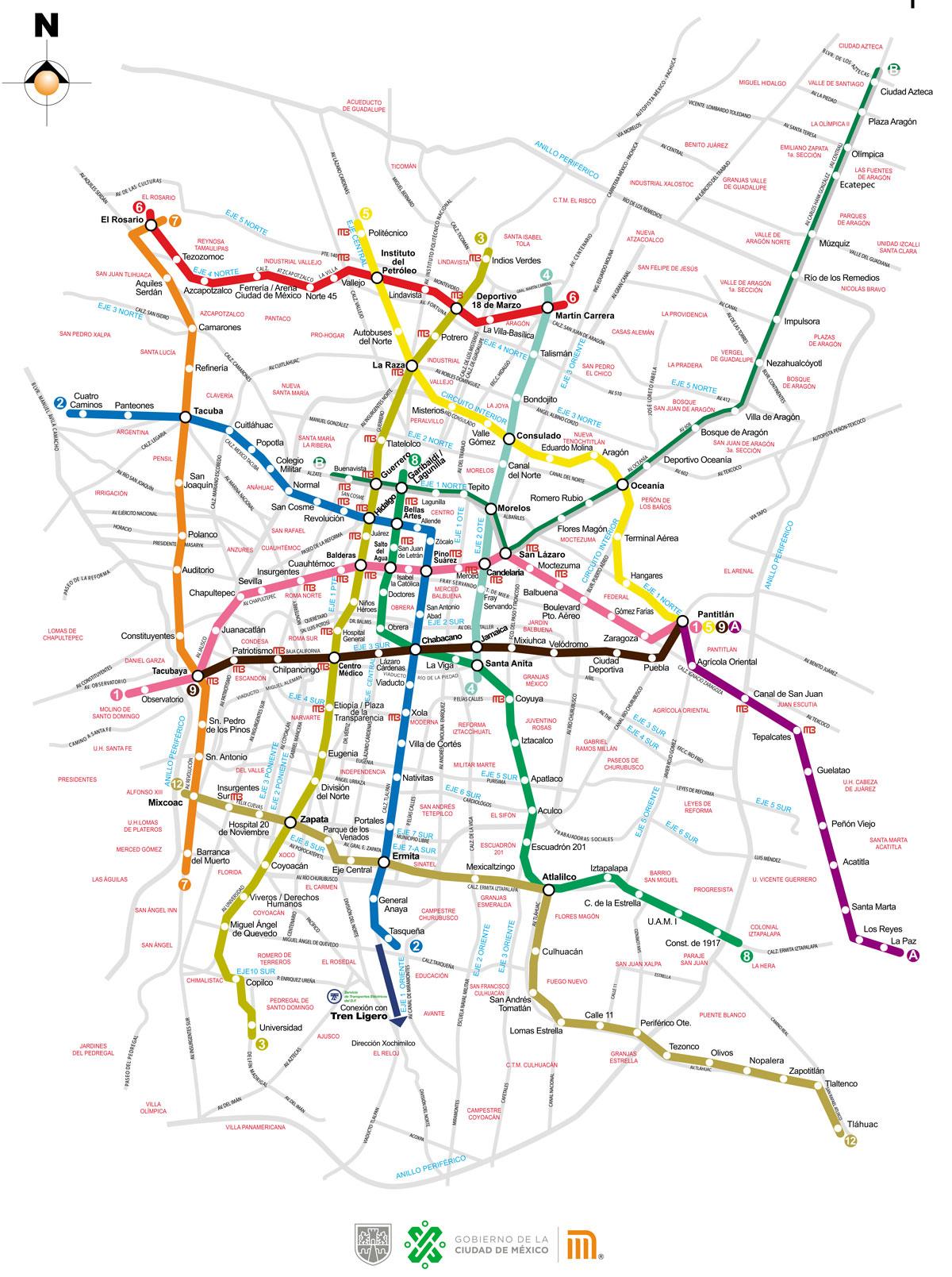
The metro in Mexico City is both quick and inexpensive – a single journey costs just 5 pesos (less than 0.5 EUR / USD)*, no matter how far you travel.
We used the metro quite a lot ourselves, and it’s a great alternative to taxis during rush hour, when traffic on the roads can be heavy.
Metrobús can be a useful alternative when you’re travelling along one of its main routes and don’t want to rely on the metro or sit in traffic.
Unlike the underground metro, Metrobús is a rapid bus system that runs on dedicated lanes along major roads.
You can pay with the same Integrated Mobility Card (MI) used for the metro.
Practical info about Mexico City’s metro:
- Opening hours:
- Weekdays: 5:00 to midnight.
- Saturdays: 6:00 to midnight.
- Sundays and holidays: 7:00 to midnight.*
- Tickets: 5 pesos* per journey. There are no zones, so one ticket covers the whole trip. Buy your card at the stations.
- Integrated Mobility Card (MI): Buy an MI card at a metro ticket office or machine for 15 pesos (less than 1 EUR / USD)* and top it up as needed – it also works for Metrobús, Cablebús and much of Mexico City’s wider public transport network.
- Rush hour: If possible, avoid travelling between 7:00 and 9:00, and between 17:00 and 19:00.
- Women-only areas: Some carriages have sections reserved for women and children under 12. Look out for the pink signs.
Read more about how to use the metro in Mexico City here.
*Opening hours and prices were last updated in 2026.
Taxis and ride apps in Mexico City
In Mexico City, ride apps are the easiest and often safest way to get around.
We used Uber almost exclusively during our stay and had good experiences with it.
There’s also DiDi (though we couldn’t find it in the app store when we visited). Cabify and Beat no longer operate in Mexico.
Using these apps requires mobile data, so if you don’t already have free roaming from your phone provider, consider buying a local SIM card or an eSIM. We’ve previously used Airalo eSIM with great success (adlink).
Official taxis in Mexico City
Mexico City’s official taxis are pink and white.
Their number plates usually start with an “A” or “B” followed by numbers, and those numbers should match the numbers painted on the car. The driver’s photo ID should be displayed inside.
You’ll find them on the street or at official taxi stands (known as sitios).
Make sure there’s a working meter and that it’s reset when you get in, or agree on a price beforehand.
We have to admit that we didn’t take any “regular” taxis – it’s simply much easier to know the price in advance when booking through Uber in Mexico City (and you avoid haggling altogether).
Also, several governments advise against hailing taxis on the street. Instead, use the authorised taxi stands or ask your hotel to order a taxi for you.
Tipping
For taxis, Uber rides and similar services, tipping isn’t expected, but it’s always appreciated – especially for good service, heavy traffic or luggage assistance.
A standard tip is 10-20 pesos for short rides, or 10-15% for long trips.

Safety and transport in Mexico City
Taking an Uber is probably the safest and most convenient way to get around Mexico City. Uber rides are reliable and often quite affordable.
Public transport in Mexico City, including the metro and buses, is generally safe to use during the day.
Just keep a close eye on your belongings, as opportunistic pickpocketing does occur.
Be cautious when hailing a taxi on the street, as some may be unlicensed.
The official pink-and-white taxis are generally safe, but we preferred using Uber in Mexico City for ease and peace of mind.

How long does it take to get around Mexico City?
Mexico City is enormous, and traffic can be heavy – especially during rush hour.
It’s worth allowing plenty of time for transport in Mexico City, particularly if you have an appointment or need to catch a flight.
If you stay within Roma Norte and Condesa, it’s relatively easy to get around. The two neighbourhoods are close to each other, and you can walk between them in about 15-20 minutes.
There are plenty of cafés and shops along the way, so walking in Mexico City between these areas feels like a pleasant stroll rather than a transport chore.
Examples of walking times:
- Within Roma Norte or Condesa: most places can be reached within 10-15 minutes.
- From Roma Norte to Condesa: about 15-20 minutes.
- From Condesa to Chapultepec Park: 20-25 minutes.
Metro vs car
The metro is often the fastest way to get around Mexico City, especially for longer distances.
A journey from Condesa to Centro Histórico typically takes 15-20 minutes by metro, while the same trip by car can take anywhere from 20 minutes to over an hour when traffic is heavy.
Of course, this depends on being within reasonable walking distance of a metro station at both ends.
Rush hour traffic
If you travel by taxi or Uber during rush hour (usually between 7:00 and 9:00, and between 17:00 and 19:00), the travel time can easily double or even triple.
A trip that normally takes 20-30 minutes can quickly stretch to an hour or more.
Typical travel times by car:
- Roma/Condesa to Centro Histórico: 20-40 minutes.
- Condesa to Polanco: 20-40 minutes (shorter without traffic, longer at rush hour).
- Roma to Coyoacán: 30-45 minutes.
- Airport to Roma/Condesa: 30-60 minutes, depending on the time of day.
Transport apps
Google Maps is indispensable for getting around Mexico City.
With mobile data, it gives real-time travel estimates that take traffic into account, offering a much more accurate idea of how long your trip will take.

Flying to Mexico City
We flew with KLM from Copenhagen to Amsterdam and then directly to Mexico City.
If you’re travelling from Europe or other parts of the world outside the USA, you’ll often have one or two stopovers.
Many flights from Europe connect through major hubs such as Amsterdam, Paris or Madrid, though some of the cheapest routes may go via the United States.
Remember, if your journey to Mexico includes a change of planes in the USA, you’ll still need permission to enter the USA, even if you are only changing flights.
Search for the cheapest flights on Momondo here (adlink).
Transport to and from the airport
Mexico City International Airport (Benito Juárez) is centrally located and has two terminals.
Here’s how to get from the airport into the city with ease.
Uber from the airport
Taking an Uber from the airport to your hotel is the most convenient choice.
However, it’s worth knowing that Uber drivers may not be able to collect you right outside the arrivals door.
Follow the pickup instructions shown in the app, as these will tell you where to meet your driver.
The price for a trip to areas such as Roma Norte or Condesa is usually around 200-300 pesos (~ 10-15 EUR / 12-18 USD) in 2026, depending on the time of day, traffic and demand.
Read more about requesting a pickup from Mexico City Airport here.
Official airport taxis
Official airport taxis are available just outside the arrivals hall.
Tickets are bought at the taxi counters before you leave the terminal.
These taxis are typically more expensive than Uber, but both options are safe and reliable.
Metro and Metrobús from the airport
If you’re travelling light, the two cheapest ways into the city start a few minutes’ walk from the terminal doors.
Metro Line 5 stops at Terminal Aérea, about 200 metres from Terminal 1.
A single journey costs the usual 5 pesos (less than 0.5 EUR / USD)*, which makes it far and away the cheapest option.
The catch is that Terminal Aérea has no lifts or escalators, so you’ll be carrying your bags up and down fixed stairs, and Line 5 won’t get you anywhere near Roma Norte or Condesa without at least one change.
With hand luggage and no fixed deadline, it’s a bargain. With two suitcases and tired children, it’s not.
Metrobús Line 4 picks up outside both terminals and runs in its own lane, so it sidesteps most of the traffic that makes the taxi ride unpredictable.
It costs 30 pesos (~ 1.5 EUR / 2 USD)* per person and takes roughly 40-60 minutes to reach Centro Histórico, stopping within a few blocks of the Zócalo and Bellas Artes before continuing along Reforma.
There’s a luggage rack on board, but it fills up quickly.
The metro and Metrobús are both cashless, so you’ll need an Integrated Mobility Card (MI), which costs 15 pesos (less than 1 EUR / USD)* from the machines at the stations and stops. The same card works for the metro, Metrobús and Cablebús.
Neither option drops you in Roma Norte or Condesa. If that’s where you’re staying, an Uber is worth the extra few hundred pesos.
*Prices were last updated in 2026.

Where to stay in Mexico City
Where you stay in Mexico City makes a big difference to your visit – especially when it comes to getting around!
To get a clear overview of the neighbourhoods (and the best hotels in every price range), take a look at our complete guide to where to stay in Mexico City.

Our recommendations for the best places to stay in Mexico City from budget to luxury
Read moreWhat to do in Mexico City
In our comprehensive travel guide to Mexico City, we cover all the best experiences and attractions the city has to offer.
You’ll also find answers to questions such as when to visit Mexico City, along with our best tips to make the most of your trip.

Everything you need to know about visiting CDMX, including what to do and our best tips
Read moreThank you for reading our transport guide to Mexico City
We hope you found our guide to getting around Mexico City useful!
Have you ever been stuck in a traffic jam for hours, or smoothly made your way through the city in an Uber? Either way, we’d love to hear your best tips and experiences in the comments.
If you haven’t visited CDMX yet, don’t hesitate to ask us anything. We’re happy to help!
Our favourite travel resources:
- Booking.com for hotels and apartments.
- Momondo for the best flight deals.
- AirHelp for flight delay compensation.
- GetYourGuide for great tours everywhere.
- Airalo for reliable eSIM.
- Discover Cars for transparent car hire.
- SafetyWing for travel insurance. We also like True Traveller. Compared here.

Where to Stay in Tepoztlán: The Best Hotels for All Budgets
Our guide to the best areas and hotels, from central budget rooms to peaceful luxury retreats with pools.
-
Where to Stay in Cholula: The Best Areas & Hotels for All Budgets
Our guide to the best areas and hotels, from central budget rooms to peaceful luxury retreats with pools.
-
Where to Stay in Mexico City: The Best Areas & Hotels for All Budgets
Our recommendations for the best places to stay in Mexico City from budget to luxury




Ni siquiera mencionaron inDrive en el artículo, cuando la neta es que es la mejor opción comparada con Uber. Uber casi siempre cobra de más, y en inDrive tú negocias directo con el chofer
We have no experience with inDrive but thanks a lot for the tip!