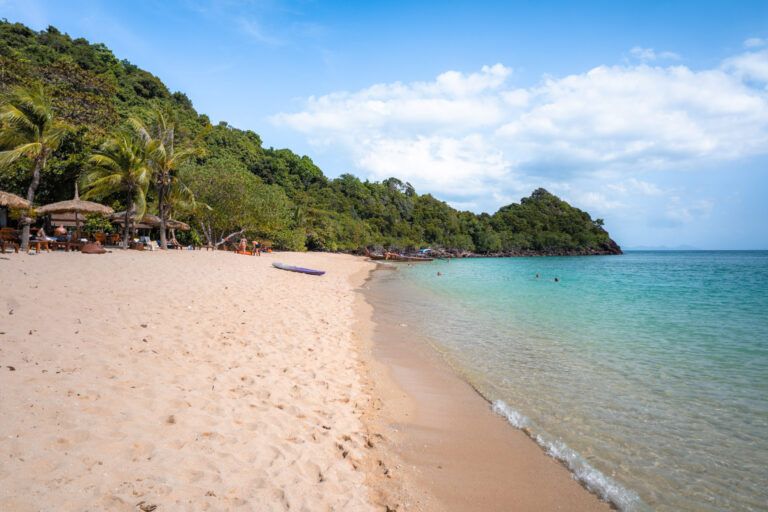
Soft sand and unreal water
When your last stop was just named the best beach in the world, the next island has some big shoes to fill.
Koh Ngai filled them, and then kicked them off. Because you don’t need shoes here at all!
We arrived on Koh Ngai, in southern Thailand’s Trang islands, by ferry from neighbouring Koh Kradan, and the water here is every bit as clear. The sand might even be softer.
Koh Ngai is (likewise) a tiny, car-free island with no village and no roads. But there’s a little more going on here than on Kradan, with more places to stay and eat, and a proper jungle hike to fill a morning with.
We visited Koh Ngai as a family of four (Alex, Victoria, Adrian at 2.5 and baby Zoe at 6 months), together with Victoria’s mother. We stayed two nights in late January 2026 on a longer Andaman island-hop.
In this guide, we share what the island is actually like, what to do on Koh Ngai (also known as Koh Hai) and what we found useful to know when visiting with small children.
Where to stay on Koh Ngai:
- Budget: Koh Ngai Camping – This is where to look if cheap is your main priority.
- Value for money: Mayalay Resort – Where we stayed. Green-certified cottages on the main beach with a good breakfast.
- Value for money: Koh Hai Fantasy Resort & Spa – The better family pick, with a pool, a playground and good food at fair prices.
- Luxury: Thanya Beach Resort – Polished teak bungalows and a pool at the southern end, where the jungle trail starts.
Search for the best hotels on Koh Ngai here.
Table of contents
- Why visit Koh Ngai
- Where is Koh Ngai?
- How many days to spend on Koh Ngai
- Best things to do on Koh Ngai
- Where to stay on Koh Ngai
- Where to eat on Koh Ngai
- Visiting Koh Ngai with kids
- How to get around Koh Ngai
- How to get to Koh Ngai
- When to visit Koh Ngai
- Where to go after Koh Ngai
- Tips for visiting Koh Ngai
- FAQ about Koh Ngai

Why visit Koh Ngai
Koh Ngai has the same clear, turquoise water as its famous neighbour Koh Kradan, and a long, east-facing beach of seriously soft sand.
The island itself stays wonderfully simple. There’s no village, no roads and no traffic, just a string of resorts along the beach and jungle behind them.
Compared to Kradan, though, Koh Ngai feels a bit more open and holiday-like.
There are more resorts, more restaurants and a bit more to do, including a surprisingly good jungle hike to beaches and viewpoints on the far side.
Ngai is a little less intimate than Kradan, but with small kids, we didn’t mind that one bit.


Where is Koh Ngai?
Koh Ngai (also spelled Ko Ngai or Koh Hai) is the northernmost of the Trang islands in southern Thailand, in the same cluster as Koh Kradan, Koh Mook and Koh Libong.
Kradan and Mook are just to the southeast, and Koh Lanta is to the northwest. The nearest mainland pier is Pak Meng, west of Trang.
Despite being a Trang island in every practical sense, Koh Ngai officially belongs to Krabi Province, and is within Mu Ko Lanta National Park.
Nobody asked us for a park fee on Koh Ngai, but the park’s map marks a fee point at the ranger station on the nature trail, so have some cash on you just in case.
Nearly all of the resorts line the long main beach on the east coast, with the pier tucked into its own small cove at the island’s southern end.

How many days to spend on Koh Ngai
Two nights worked well for us, the same as on Koh Kradan.
That gave us slow beach days, a pool afternoon, dinners by the water and time for the cross-island hike, without ever feeling rushed.
Since there’s slightly more to do here than on Kradan, three nights (or more if you really just want to chill) wouldn’t be hard to fill.
If Koh Ngai is one stop on a longer Andaman island-hop, one or two nights slot in easily. The boat connections are excellent in high season.

Best things to do on Koh Ngai
Koh Ngai is mostly about doing very little.
When you’re ready to move though, the island rewards you more than you might expect:
- Koh Ngai’s main beach – Long, soft and ridiculously photogenic
- Hike to Paradise Beach and the viewpoints – The island’s best adventure
- Go snorkelling – Reefs within paddling distance
- Walk north along the beach – The quiet end of an already quiet island
- Look for wildlife – A free aquarium and hornbills
- Take a boat trip – The Emerald Cave and island-hopping tours
- Get a massage on the beach – Thai massage with a sea view
1. Koh Ngai’s main beach – Long, soft and ridiculously photogenic
The main beach runs down most of Koh Ngai’s east coast, a long stretch of pale sand facing calm, glassy-clear water and the neighbouring islands.
We came here directly from the beach currently ranked best in the world, and Ngai didn’t feel like a step down at all.
The water is just as beautiful as Kradan’s. And the sand is even softer underfoot.
As elsewhere in the Trang islands, the tide sets the rhythm.
High tide means easy swimming straight off the sand, while low tide pulls the water out and sends the speedboats to the pier (more on that below).
The beach is east-facing, so mornings start with the sun rising straight out of the sea in front of your bungalow.


2. Hike to Paradise Beach and the viewpoints – The island’s best adventure
A marked trail crosses the island’s southern half, connecting hidden beaches and two viewpoints.
Alex walked the full route while the rest of the family held down the beach.
We’ve written a separate hiking guide to the Koh Ngai Nature Trail with the route stop by stop, a map and lots more photos.
In short, the trail starts at Thanya Beach Resort (adlink) at the southern end of the main beach and is well signposted the whole way.
The trail itself begins as a paved path, then come stairs, after them a rather steep and possibly slippery bit with ropes for help.
Paradise Beach is then reached after 1.8 kilometres (~ 1.1 miles), where you’ll find both the resort Koh Ngai Paradise Beach (adlink) and a cool little rustic beach bar.
Continuing means a short river crossing to reach the next two small beaches, and at the end 151 stair steps lead up to the final two viewpoints.
The whole round trip took Alex 1 hour 15 minutes at a brisk pace.
For most people, around 3 hours for the round trip is more realistic. The park’s board at the start says 3 kilometres (~ 1.9 miles) and about 1.5 hours each way.
In total, his watch logged 5.4 kilometres (~ 3.4 miles) and 50 flights of stairs, so bring water and decent footwear.
Tip: Time the river crossing with the tide if you’d rather keep your shorts dry, and bring mosquito repellent for the forest stretches.


3. Go snorkelling – Reefs within paddling distance
Snorkelling is one of the main reasons people come to the Trang islands, including to Koh Ngai.
The most talked-about spots are around the rocks near the southern end of the main beach before the pier, and off Paradise Beach on the other side of the island.
Several resorts lend out snorkelling gear (ours had free fins to borrow).
We didn’t snorkel on Koh Ngai ourselves (Alex had just done it on Koh Kradan). We did see lots of fish from the pier, though.
A sign at Paradise Beach warns of jellyfish and sea urchins, so watch where you put your feet around the rocks.
If you dive, there are also two dive shops at Koh Ngai, offering trips to deeper sites around nearby islands like Koh Rok and Koh Kradan.


4. Walk north along the beach – The quiet end of an already quiet island
One evening, we walked north along the main beach, away from our hotel, and just kept going.
The resorts thin out as you go and the beach gets quieter.


5. Look for wildlife – A free aquarium and hornbills
The pier at the southern end of the island, right by Koh Ngai Resort (adlink), is the island’s most reliable wildlife spot.
While we waited for our longtail, we stood looking down at swarms of fish in the clear water below. Adrian was thrilled, and so were the adults, if we’re honest.
If you arrive or leave by ferry, you’ll likely pass through here anyway.
A path also leads here from the main beach (called Snake Trail on Google Maps), apparently best done at low tide. It looks to be quite slippery though, with snakes not an uncommon sight…
Hornbills are the island’s other regulars. The staff at Koh Hai Fantasy Resort feed them, so the trees around the resort are the easiest place to see one.
There’s also a signposted hornbill viewing point 400 metres into the nature trail, though getting there includes the steep bit.


6. Take a boat trip – The Emerald Cave and island-hopping tours
Koh Ngai is a short longtail ride from the area’s most popular boat trips.
The most famous is the Emerald Cave on Koh Mook, where you swim through a dark limestone tunnel into a hidden lagoon.
We visited it on an earlier Thailand trip, and it’s every bit as surreal as it sounds. You can read more about how it works in our Koh Mook travel guide.
Resorts on Koh Ngai also arrange island-hopping and snorkelling tours to the small islands nearby, typically as half-day longtail trips. Ask at reception about routes and current prices.
The big day trip is Koh Rok. It’s part of the same national park, with white beaches, coral reefs and some of the best snorkelling in the area.


7. Get a massage on the beach – Thai massage with a sea view
As on Koh Kradan (and everywhere else in beach Thailand), a massage is the perfect way to fill an afternoon on Koh Ngai.
We passed a small massage place right on the main beach with fair prices.
400 baht* (~ 11 EUR / 12 USD) for an hour of Thai or oil massage, and 500 baht* for an hour with coconut oil or aloe vera.
*Prices are from 2026.


Where to stay on Koh Ngai
Koh Ngai has no towns and no real “areas”. Almost everything lines the long main beach on the east coast, with a couple of outliers at the pier cove and over on Paradise Beach.
Prices are somewhere between Koh Mook’s and Koh Kradan’s.
You’re still paying island-with-no-roads prices, but the sting is milder than on Kradan.


Where we stayed: Mayalay Resort
We spent two nights at Mayalay Resort (adlink) in a “Lay Maya” cottage, between the middle and the southern end of the main beach.
For 8,000 baht over two nights in January 2026 (~ 220 EUR / 250 USD), plus a small charge for an extra bed, we got a cottage that was bigger than our (pricier) bungalow on Koh Kradan, though older.
The bathroom is effectively outdoors. Not a huge deal, as we didn’t meet any bugs out there and no one can look in without climbing a nearby tree, but also not an obvious plus.
The service at reception was good, breakfast was too, and the restaurant has a lovely setting looking out over the water.
There’s even a little play corner for the kids with building blocks, Lego and drawing things, which bought us at least one peaceful meal.
Check prices and availability at Mayalay Resort here (adlink).


Where else should you stay on Koh Ngai?
- Budget: Koh Ngai Camping – Raised tents with small decks right on the beach.
- Budget: Koh Ngai Seafood – Simple, affordable rooms.
- Budget: Koh Ngai Resort – A big, older resort on its own cove by the pier.
- Value for money: Koh Hai Fantasy Resort & Spa – The family pick, with a pool, a playground and good food at fair prices.
- Luxury: Coco Cottage – Eco-chic cottages and a saltwater infinity pool at the quieter northern end of the beach.
- Luxury: Thanya Beach Resort – Polished teak bungalows and a pool at the southern end, where the jungle trail starts.
- Luxury: Koh Ngai Paradise Beach – Garden villas and a pool on the secluded Paradise Beach.
Search for the best hotels on Koh Ngai here (adlink).
For the full run-through of each of these, plus a couple of extra places and who each one likely suits, head over to our dedicated guide to where to stay on Koh Ngai.
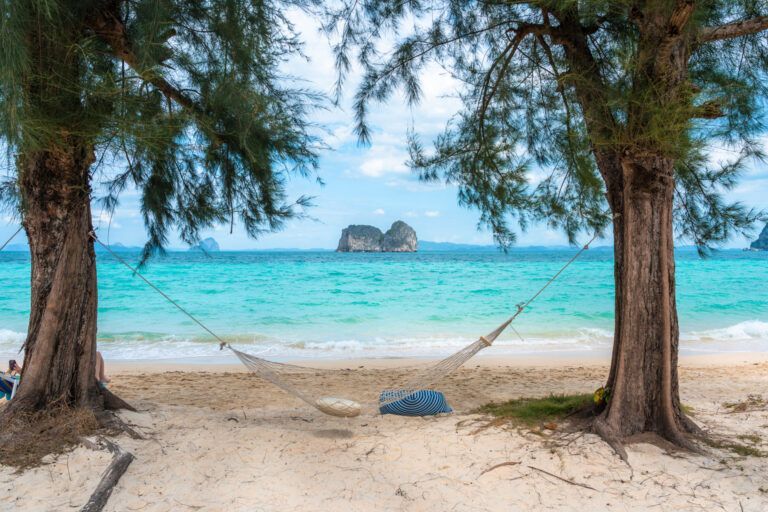
Our recommendations for the best places to stay from budget to luxury
Read moreWhere to eat on Koh Ngai
As on Koh Kradan, you’ll mostly be eating at the resort restaurants.
There’s no village, no street food and no 7-Eleven anywhere on the island.
Luckily, eating out here doesn’t have to be too expensive.
Our favourite meals were at Koh Hai Fantasy Resort (adlink), a short walk from our hotel and where Victoria’s mother stayed.
Here you eat right by the water at very fair prices for a small island. We paid under 200 baht* (~ 5.5 EUR / 6 USD) for a curry with tofu, 150 baht* for mango sticky rice and 120 baht* for a mango shake. Not mainland-cheap, but nowhere near resort-island robbery either.
Our own resort, Mayalay (adlink), was a bit pricier, but we had a nice lunch with a front-row view of the water, and it reportedly makes the best pizza on the island.
Further up the beach, Coco Cottage’s beachfront restaurant also has a good reputation.
*Prices are from 2026.


Visiting Koh Ngai with kids
Koh Ngai worked well for us with small children (2.5 years and 6 months).
There’s no traffic, and the beach has the same soft sand and calm, shallow water as Kradan. What Ngai adds is slightly better resort infrastructure.
At Koh Hai Fantasy Resort (adlink), we used the pool because Victoria’s mother stayed there, and it had a children’s section shallow enough for Adrian to stand in, plus shade from the afternoon onwards.
By the beach, the resort has a really good little playground.
Our own hotel Mayalay Resort (adlink) had a play corner with Lego, building blocks and things for drawing.
Koh Hai Fantasy Resort has a small minimart, open daily from 09:00-21:00, with nappies, basic medicine, snacks and drinks.
Getting on and off the boats means ladders and pier edges.
With a baby in arms, it takes a bit of agility and a spare pair of hands. It was all fine for us, and the crew was eager to help, but it’s still worth knowing if mobility is a concern.


How to get around Koh Ngai
You walk. Koh Ngai has no roads and no cars.
Everything along the main beach is within a barefoot stroll, and the cross-island trail covers the wilder half.
The only motorised transport you’ll likely use is a longtail boat, either between the pier and your resort or on a boat trip.


How to get to Koh Ngai
There’s no airport and no bridge, so it’s boats all the way.
The good news is that Koh Ngai is one of the best-connected small islands in the area during high season.
From Koh Kradan or Koh Mook
This is what we did. We took the morning ferry from Koh Kradan, and the whole crossing was easy and quick at around 30 minutes.
Expect around 300-400 baht per adult* (~ 8-11 EUR / 9.5-12 USD) for the ferry.
A couple of speedboats also pass through during the day at similar prices, and a private longtail between the islands costs around 2,200 baht* (~ 60 EUR / 70 USD).
From Koh Mook, it works the same way. The ferry and the speedboats stop there too, and the trip is still well under an hour.
*Prices are from 2026.

From the mainland (Trang)
The usual gateway is Pak Meng Pier, around a 40-minute drive from Trang town.
From there, it’s roughly 45 minutes to Koh Ngai by longtail, or around 20 minutes by speedboat.
A shared longtail from Koh Ngai to Pak Meng costs 350 baht per adult* (~ 9.5 EUR / 11 USD) and 250 baht* per child, and under-threes go free.
With the van to Trang town or the airport, it’s 850 baht* (~ 25 EUR/USD).
A private longtail for up to five people is 1,500 baht* (~ 40 EUR / 45 USD).
Booking through 12Go (adlink) is the easiest way to see current schedules and reserve tickets, including the van connection from Trang’s airport or train station.
*Prices are from 2026.
From Koh Lanta, Krabi, Phi Phi or Phuket
From roughly mid-October to April, speedboats on the Lanta-Lipe route call at Koh Ngai daily, so you can arrive straight from either island.
The speedboat to Koh Lanta takes only about 30 minutes. Phi Phi is around 2 hours away and Phuket around 3, while heading south to Koh Lipe takes around 2.5 hours.
We continued from Koh Ngai to Koh Lanta on the Petpailin ferry ourselves, and it even included a free transfer to our hotel on Lanta at the other end.
Again, 12Go (adlink) has the schedules.


Pier or beach? A quick word on tides
Ferries always dock at the pier on the island’s southern end, whatever the tide. It’s right by Koh Ngai Resort (adlink).
From there, a longtail shuttles you to the beach in front of your resort. We waited about 15 minutes for ours, watching the fish below the pier.
Speedboats and longtails can land right on the beach, speedboats only at high tide. That’s convenient, though it often comes with more waves at the beach landing. At low tide, the speedboats use the pier too.
Either way, expect wet feet and a little climbing. The ladder up to our ferry when we left Kradan was wet and slightly crooked, and boarding the longtail at the pier meant sitting down on the pier edge first.
Nothing dramatic, but it makes sense to pack so your hands are free. The boat crews will likely be able to help, too.
Which option should you choose?
If you’re already island-hopping the Trang trio, the morning ferry or a private longtail between Mook, Kradan and Ngai is easy.
From the mainland, Pak Meng is the shortest crossing. And if you’re arriving from Lanta, Krabi or further afield, the high-season speedboats drop you at the beach or the pier, depending on the tide.


When to visit Koh Ngai
Seasons and weather
Koh Ngai has a warm, tropical climate year-round, with temperatures usually somewhere between 24°C and 32°C (75-90°F).
Like the rest of the Andaman coast, the island has three main seasons: the cool dry season (the high season), the hot season and the rainy season.
Many hotels and restaurants close for parts of the rainy season, so options can be limited from around June to October.
That said, weather patterns can vary from year to year, so having a bit of flexibility is always good.
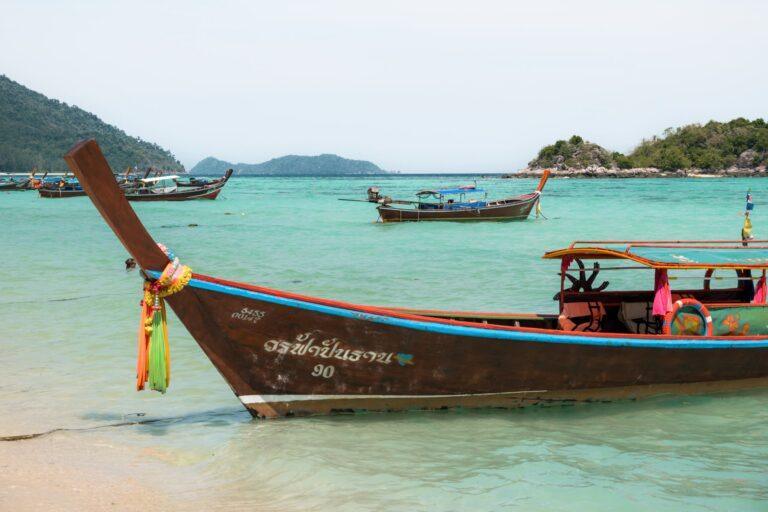
The best times to visit Thailand and what to expect – from the tropical islands to the northern hills
Read moreWhat is the best time of year to visit Koh Ngai?
The best time to visit Koh Ngai is generally from December to February, with cooler temperatures, plenty of sunshine and calm seas.
November can also be a great time to travel, with slightly lower prices than in the peak weeks of December and January.
November to February (Koh Ngai’s high season):
We visited Koh Ngai in late January 2026. It got a little windy at times, but we had plenty of sunshine and lovely temperatures.
This is Koh Ngai’s high season, with the most tourists and the most stable sunny weather.
Temperatures are slightly cooler, and hotel prices are higher, especially from around mid-December to mid-January.
If you’re planning to travel to Koh Ngai over Christmas or New Year, we highly recommend booking accommodation well in advance.
March to May (the hottest months):
Temperatures on Koh Ngai peak from March to May, with rainfall starting to pick up towards the end of this period.
If you’re planning to visit in March, April or May, it might be worth paying extra for a room with air conditioning, or picking one of the resorts with a pool.
June to October (the rainy season):
From June (or sometimes as early as May), the heat begins to subside as the southwest monsoon brings heavier rainfall to the Andaman coast.
The rain usually falls in intense showers and rarely lasts all day, so there are still plenty of sunny hours.
September and October are the wettest months, when the sea can be rougher and murkier, and boat trips aren’t always possible.
Many places close for all or parts of the rainy season, and the resorts that do stay open often run a reduced service.
If you’re eyeing a trip between June and October, check directly with your resort before booking boats or flights.
Reaching Koh Ngai in the wettest months can also be tricky, as boat crossings from the mainland or other islands are often cancelled when the seas are at their roughest.


Where to go after Koh Ngai
We treated Koh Ngai as the third stop of a Trang island-hop, arriving from Koh Kradan after nights on Koh Mook, and carrying on north to Koh Lanta.
That order worked beautifully, but the boats run in all directions:
Koh Kradan is the closest by boat and the natural comparison. It’s home to one of the best beaches in the world, and the island is even smaller and quieter than Ngai, with fewer places to stay and eat.
Koh Mook adds what both Ngai and Kradan lack, which is a real Thai village. Expect cheaper rooms, more local food and the famous Emerald Cave.
Koh Lanta is the big island to the northwest, and where we headed next. Here you’ll find weirdly wide but proper roads, long sunset beaches, plenty of restaurants and hotels at every price. After more than a week of tiny islands, it feels almost metropolitan (it really isn’t, though).
If you head south instead, Koh Lipe is the busiest and most developed of the small Andaman islands, with three beaches and a lively walking street. The high-season speedboats that stop at Koh Ngai continue all the way there.
For more inspiration on where to go on your Andaman island-hopping trip, check out our full Andaman islands itinerary here.
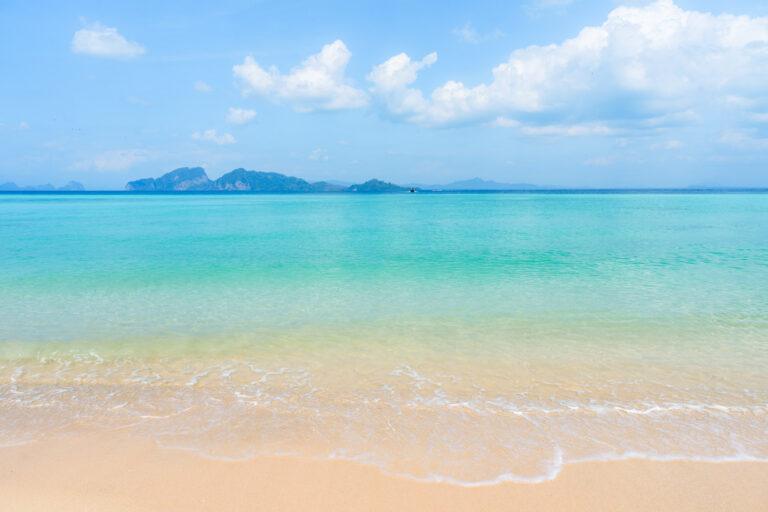
Everything you need to know, including what to do, when to visit and how to get there
Read more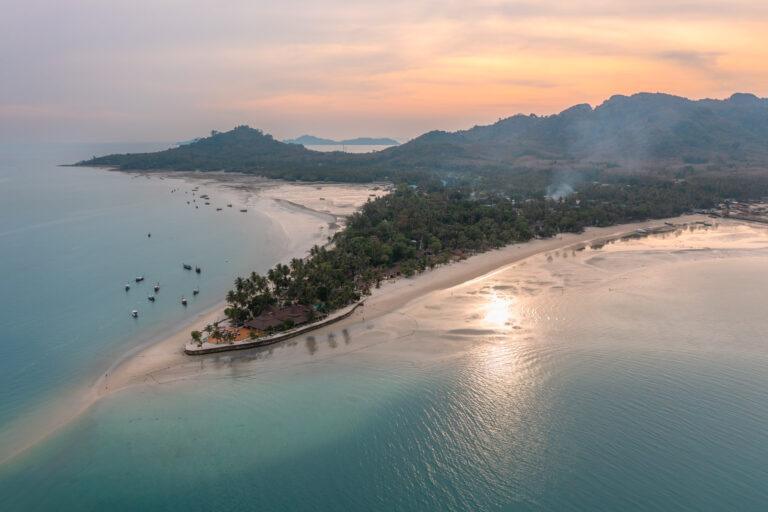
Everything you need to know, including what to do, when to visit and how to get there
Read more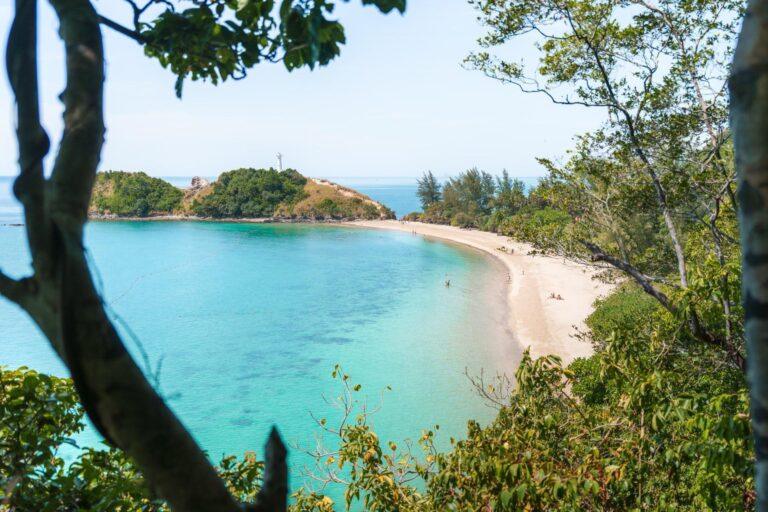
Everything you need to know about Koh Lanta, including the best beaches, what to do and our tips from two visits
Read more
Everything you need to know about one of Thailand’s most beautiful islands, including the best beaches, where to stay and what to do
Read moreTips for visiting Koh Ngai
- Bring cash. There’s no ATM on the island, and small purchases are easiest in baht.
- Pack mosquito repellent, especially for the jungle trail to Paradise Beach and the viewpoints.
- Keep your hands free when boarding boats. Between boat ladders, pier edges and beach landings, a backpack beats a suitcase here.
- Time your tides. They decide where the boats land and how good the swimming is. A quick look at a tide chart makes both easier.
- Koh Ngai is a beautiful island. Make sure to bring a good camera! Here’s our guide to lightweight photography gear for high-quality travel content.
- Bring your own water bottle and refill at your resort instead of buying plastic bottles.
- The sun is strong. Remember reef-safe sunscreen and seek out the shade in the middle of the day.
- Don’t forget travel insurance before you go. The nearest hospital is a boat ride away. We compare the best travel insurance for digital nomads and long-term travellers here.
- Pick up an eSIM. Mobile data is your safety net on a small island where wifi can be hit and miss. We’ve previously used Airalo (adlink) with great success.
- Travelling with little ones? Have a look at our guide to visiting Thailand with a baby for what worked (and didn’t) for us.

Essential Thailand travel tips covering costs, local customs, transport, safety and more.
Read more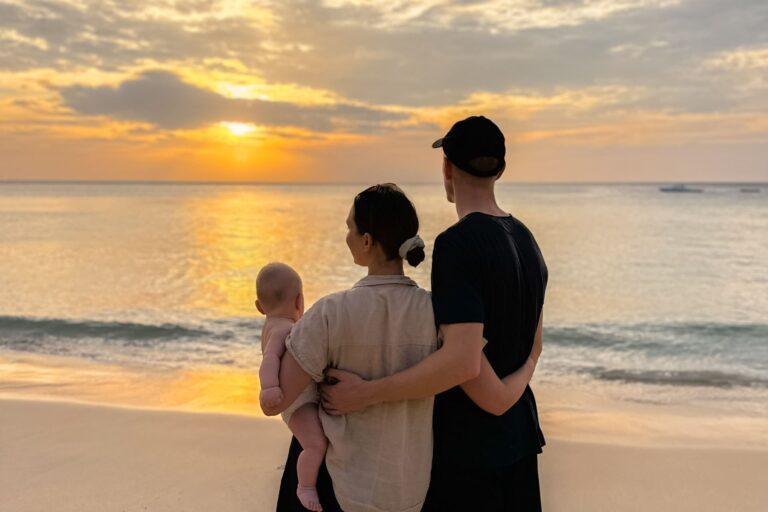
Everything we know about travelling in Thailand with a baby – including safety, packing, flights and where to stay
Read moreSustainable travel tips
Koh Ngai is a small island with fragile reefs, and it belongs to a national park. A few easy ways to tread lightly:
- Bring a refillable water bottle and fill it up at your resort.
- Avoid single-use plastics where you can. Everything brought to the island has to leave it, too.
- Use reef-safe sunscreen, especially if you snorkel.
- Respect the wildlife, from the fish at the pier to whatever rustles along the trail. Don’t feed anything.
- Take only photos and leave only footprints.
Planning a trip to Thailand? Don’t miss our guide with tips for visiting Thailand, packed with must-know travel advice, local customs and important things to avoid for a lovely holiday and a respectful visit.
How to behave ethically as a tourist in the country of smiles
Read moreFAQ about Koh Ngai
Is Koh Ngai worth visiting?
For a slow beach stay, yes. The water is as clear as on Koh Kradan next door and the long beach on the east coast has even softer sand.
With no roads or cars, nothing breaks the calm.
When you want more than a sunbed, a signposted jungle trail crosses the island to Paradise Beach and two viewpoints, and the reef starts a short paddle from the sand. The Emerald Cave on Koh Mook and the reefs of Koh Rok are both within reach by boat.
Koh Ngai or Koh Kradan: Which is better?
It depends on how quiet you want it. Both islands have the same clear water, and neither has a village or roads.
Koh Kradan is the smaller and more intimate of the two, with fewer places to stay and eat and one of the best beaches in the world.
Koh Ngai feels more open and holiday-like. It has more resorts and restaurants, a proper hike across the island, slightly better facilities for families and somewhat gentler room prices.
Travelling with two small kids, we found the extra activity no drawback at all.
Is Koh Ngai expensive?
It costs more than the mainland but less than Koh Kradan. Rooms are priced somewhere between Koh Mook and Koh Kradan, and since there’s no village or 7-Eleven, you’ll eat at resort restaurants.
These don’t have to be pricey. Koh Hai Fantasy Resort & Spa (adlink), right by the water, was our favourite and fairly priced for a small island.
There’s no ATM on Koh Ngai, so bring cash.
Is Koh Ngai in Trang or Krabi?
Both, in a way. On paper, Koh Ngai belongs to Krabi Province and lies within Mu Ko Lanta National Park.
In practice, it’s the northernmost of the Trang islands. Its nearest mainland pier is Pak Meng, west of Trang, and its closest neighbours are Koh Kradan and Koh Mook.
Do the tides matter on Koh Ngai?
More than you might think. At high tide, you can swim straight off the main beach, and speedboats land passengers on the sand.
When the tide goes out, the water pulls back and the speedboats switch to the pier at the southern tip.
The tide also matters on land. The river crossing on the nature trail is easier to keep dry if you time it right, and the path to the pier known as Snake Trail is said to be best walked at low tide.
A tide chart helps with all of these.
Can you visit Koh Ngai on a day trip from Koh Lanta?
Yes, a day trip works well. It’s about 30 minutes by speedboat from Koh Lanta.
Koh Ngai is at its most beautiful in the daytime at high tide, so if you time your visit for high tide, you’ll see the island at its best. You don’t have to stay the night for that.
Staying the night is still something special, though. The island gets even quieter once the day guests have left.
Thanks for reading our Koh Ngai guide
We hope our travel guide to Koh Ngai has been useful!
Have you been to Koh Ngai, or are you trying to choose between the Trang islands for your trip? Drop us a note in the comments. We love hearing from fellow travellers.
If you’re building a longer route through the area, don’t miss our guides to Koh Kradan, Koh Mook and Koh Lanta.
Our favourite travel resources:
- Booking.com for hotels and apartments.
- Momondo for the best flight deals.
- AirHelp for flight delay compensation.
- GetYourGuide for great tours everywhere.
- Airalo for reliable eSIM.
- Discover Cars for transparent car hire.
- SafetyWing for travel insurance. We also like True Traveller. Compared here.

Koh Ngai Nature Trail: Hiking Guide to Paradise Beach and the Viewpoints
All you need to know about the jungle hike on Koh Ngai, including the route, how hard it is and what to bring
-
Where to Stay on Koh Ngai: The Best Hotels in All Price Ranges
Our recommendations for the best places to stay from budget to luxury
-
Koh Lanta National Park: How to Visit & What to Expect
All you need to know about visiting Koh Lanta National Park, including the nature trail, the lighthouse, the beach and our best tips