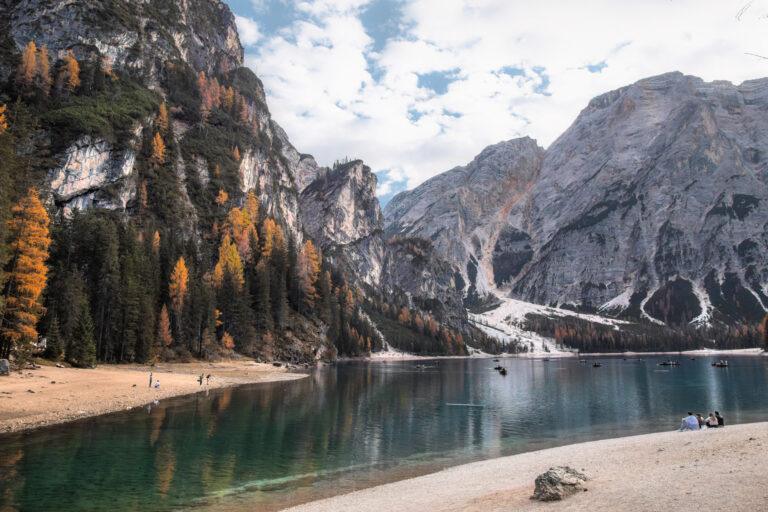
Prepare for your trip to the Dolomites
The Dolomites is one of Europe’s most stunning mountain areas – a place we keep returning to time and again.
Across five trips, we’ve navigated countless hairpin bends, tackled steep mountain trails, lived in charming small towns, and enjoyed everything from warm summer days to crisp autumn mornings.
Each visit brings new discoveries. We’re certain we’ll be back again.
Situated in northeastern Italy, the Dolomites form part of the Alps and are famed for their dramatic peaks, lush valleys, beautiful mountain lakes and striking rock formations.
The range stretches across the regions of Trentino-Alto Adige, Veneto, and Friuli Venezia Giulia, where a unique blend of Italian and German cultures makes the area truly special.
In this guide, we’ve gathered the best tips for visiting the Dolomites based on our own experiences.
When is the best time to visit? How do you get around? Can you explore the Dolomites with children? What should you pack? Is travelling to the Dolomites expensive?
We aim to answer all this and more, so your trip to the mountains goes as smoothly as possible.
Our guide covers everything from cable cars, gear, and transport to accommodation, prices and hiking etiquette.
Whether you’re planning your first hiking holiday or just need a refresher, we hope these travel tips will be useful!
Table of contents
- 1. Weather and seasons
- 2. Check the opening hours of the cable cars
- 3. Be prepared for all kinds of weather
- 4. Essential equipment for hiking
- 5. Watch out for the sun
- 6. Drink clean water from the tap
- 7. Setting realistic expectations
- 8. Public holidays in Italy
- 9. Choosing the right time of day
- 10. The mountains affect sunrise and sunset
- 11. Visa and entry rules
- 12. Airports near the Dolomites
- 13. Transport options
- 14. Driving in the mountains
- 15. Choose the right base
- 16. Book refuges well in advance
- 17. The currency is the euro
- 18. Remember cash
- 19. Price levels and examples
- 20. Tipping culture
- 21. Money-saving tips
- 22. Recommended trip duration
- 23. Hikes and viewpoints for all levels
- 24. Signage and navigation
- 25. Buy a local SIM card or eSIM
- 26. Power outlets and plugs
- 27. The Dolomites with children
- 28. Photo gear for the mountains
- 29. Drone regulations
- 30. Take care of nature
- 31. Swimming in lakes
- 32. Well-being as part of the experience
- 33. Distinctive mountain culture with German roots
- 34. Multiple place names
- 35. Language and translation
- 36. Hospitals and pharmacies
- 37. Travel insurance and coverage in the mountains
- Frequently asked questions about the Dolomites

1. Weather and seasons
The Dolomites are a classic seasonal destination, so it’s important to consider the time of year when planning your trip.
The best period for hiking, cycling and climbing is from June to September.
During these months, most mountain passes are open, the cable cars run, the valleys are lush, and the weather tends to be stable.
July and August are high season, bringing more visitors and higher prices.
On the plus side, hotels, refuges and restaurants are open, and even the smallest villages are bustling with life.
Spring and autumn are quieter, but the weather can be more unpredictable, and snow at higher elevations is not unusual – even in May or late September.
Mid-June or September often offer the best balance, with fewer tourists, open facilities and pleasant weather.
Winter is long, normally starting in November, with snow a lot of the time lasting until April (or even May).
The Dolomites offer well-developed ski resorts, as well as fantastic opportunities for snowshoe hikes and stunning winter landscapes without skis.
Many cable cars and mountain refuges close outside the high season, which can make reaching places like Seceda, Alpe di Siusi and Cinque Torri more challenging.
Walking or driving there instead is possible, but if you have a particular experience in mind, it’s best to check opening times in advance.
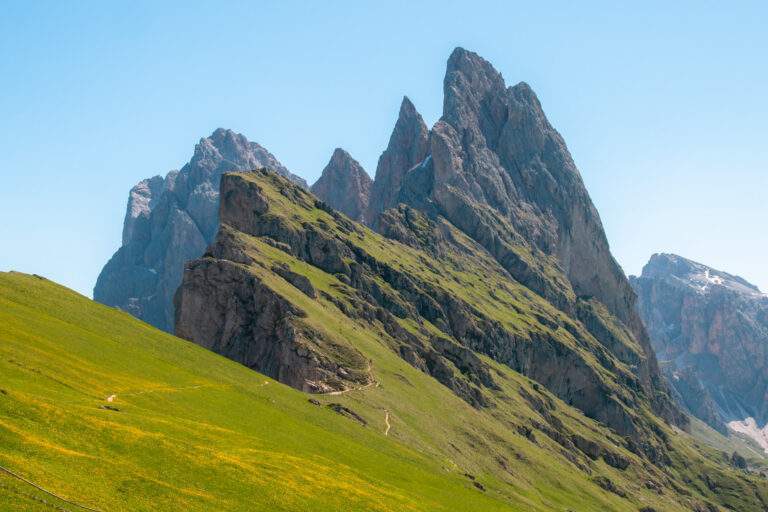
All you need to know about visiting Seceda – how to get there by cable car and our best tips
Read more
The weather is unpredictable
No matter the season, mountain weather can change quickly.
Always check the forecast before heading out on hikes or longer drives, and keep in mind the difference in altitude: it might be 25°C (~ 77°F) and sunny down in the valleys, while the peaks are still covered in snow.
In summer, afternoon thunderstorms and heavy showers are quite common as well.
Read our guide on the best time to visit the Dolomites here.
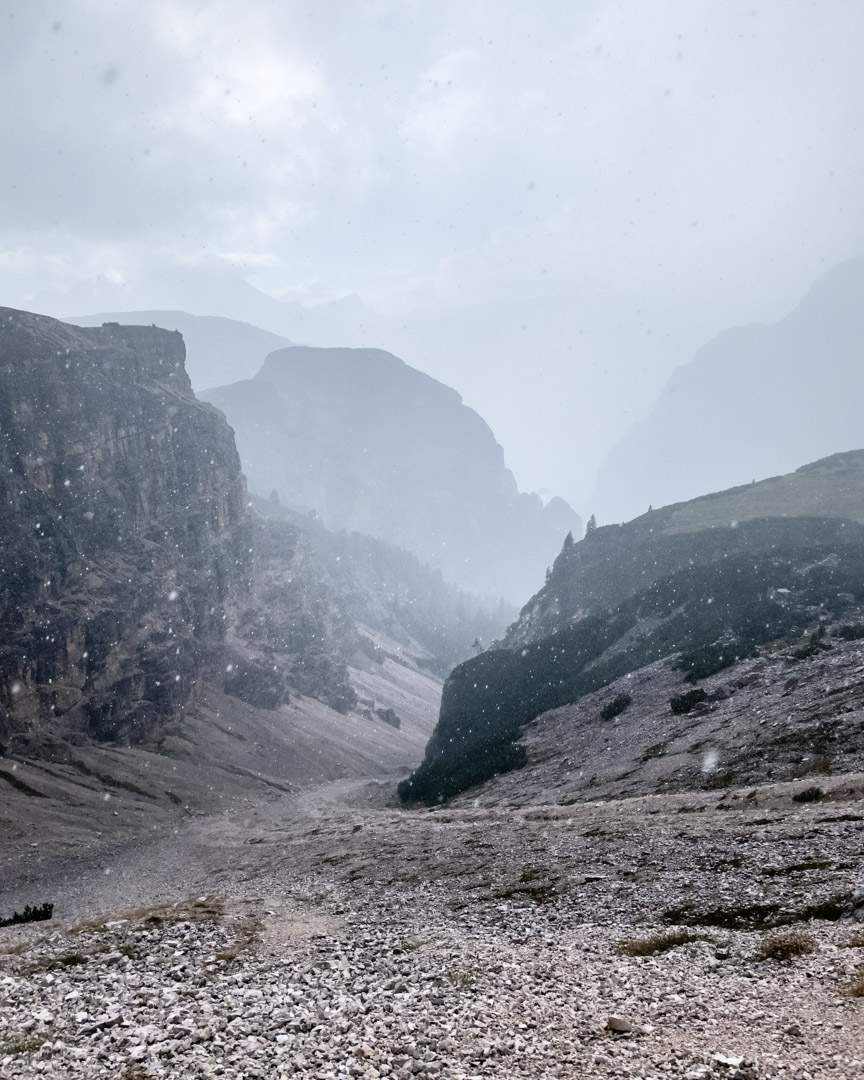
When to travel to the Dolomites and what to expect – whether you’re into skiing or hiking
Read more2. Check the opening hours of the cable cars
Cable cars are a great way to save your legs from climbing many metres of altitude, and they form an essential part of the Dolomites’ infrastructure.
You’ll find them in nearly all the larger valleys and ski areas, and they are used by hikers, mountain bikers and skiers alike to access the high terrain.
Many classic routes, such as Seceda, Alpe di Siusi, Cinque Torri and Lagazuoi start or finish with a cable car ride.
They make it possible to reach stunning views and high mountain trails without having to climb hundreds of metres on foot.
Prices vary, but expect to pay around 10-30 euros for a single trip (~ 12-35 USD), depending on distance and location. It’s not exactly cheap – notably at popular spots – but well worth it.
It’s wise to check the opening hours in advance, both for the season and for the first and last trips of the day.
It’s unfortunate to be stuck at the top if the last cable car has already left, and you don’t have a booked overnight stay at a refuge.
Note: Most cable cars don’t operate in the low season and close for breaks in spring and autumn.

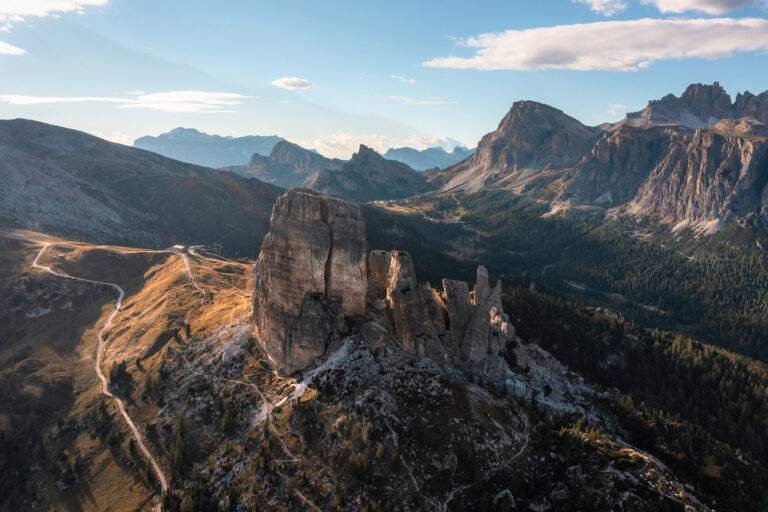
Guide to visiting Cinque Torri – walking routes, cable car, parking and our best tips
Read more3. Be prepared for all kinds of weather
As mentioned earlier, the temperature in the Dolomites can change quickly, and the weather is unpredictable.
That’s why it’s important to bring several layers of clothing that you can easily add or remove along the way, keeping you ready for rapidly shifting conditions.
This advice applies not only to your entire trip in the Dolomites but also to each individual hike, even the shorter ones.
It’s not unusual to experience hail, rain and 25°C (~ 77°F) all in the same day, while snow can still be found on the mountain paths at higher altitudes.
Layering lets you adjust your clothing as needed, so you stay comfortable whether you’re hiking under the sun or caught in a sudden storm.
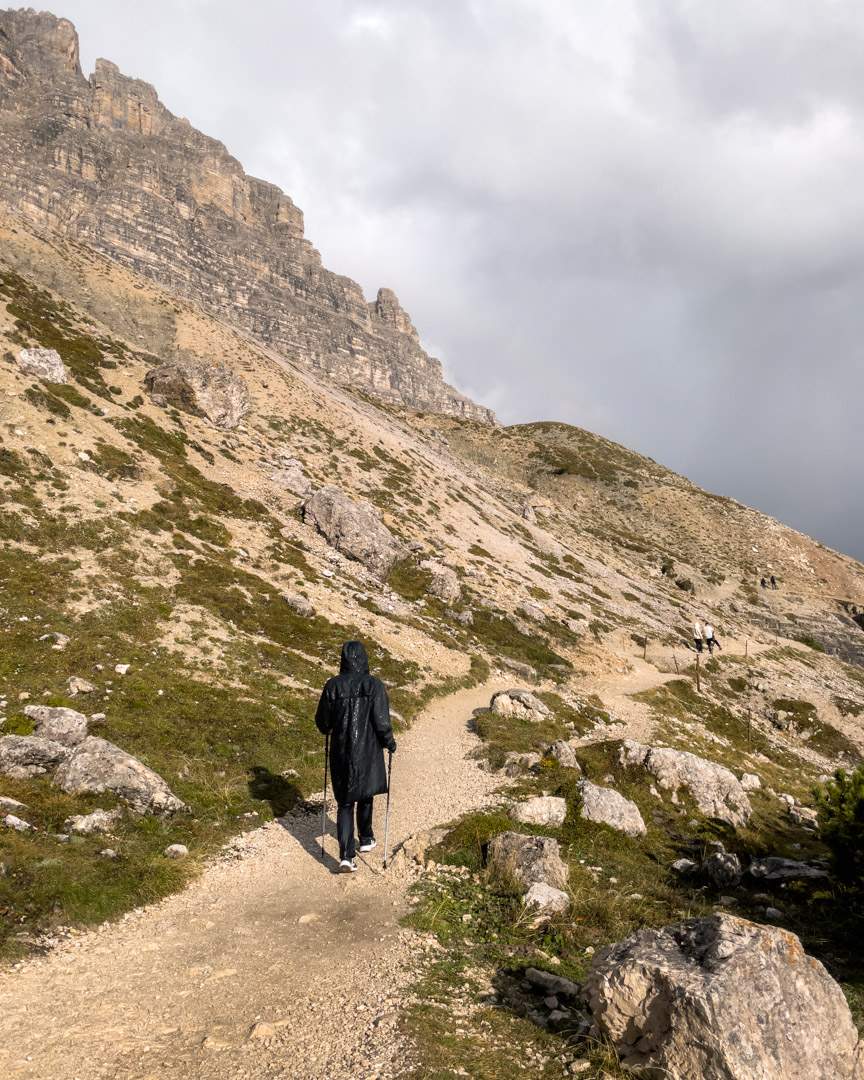
Don’t forget rainwear and possibly mittens, as it can get chilly up high, especially in the mornings and evenings, as well as in spring and autumn. Sometimes even in summer!
4. Essential equipment for hiking
Alongside layered clothing and rain gear (as we mentioned in the previous tip), having the right equipment can make a big difference to your comfort and safety in the Dolomites.
If you’re mainly doing day trips (like us), the most important thing is a good pair of hiking boots, sneakers or other sturdy shoes. Many trails are rough and rocky, so it’s worth avoiding blisters and sore feet.
Bringing a water bottle and some snacks is handy, particularly on longer walks or if the refuges happen to be closed.
Walking poles aren’t essential, but if you have them, it’s a good idea to bring them along. We’ve found them useful on steep terrain, where they take the strain off legs and knees.
A physical map or an offline hiking app is a smart backup in case you lose mobile signal.
You can also download Google Maps offline before you go, though it doesn’t always work perfectly in the mountains.
A headlamp or torch is useful to have in your bag in case you end up hiking until sunset or are delayed along the way.
If you plan to hike from hut to hut, a proper backpack is important. Many refuges also require a sheet bag, and in some places you’ll need to bring your own towel and slippers.

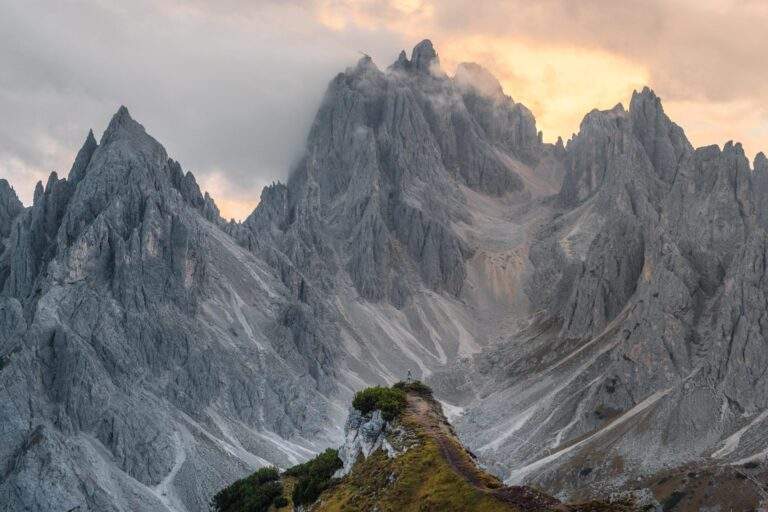
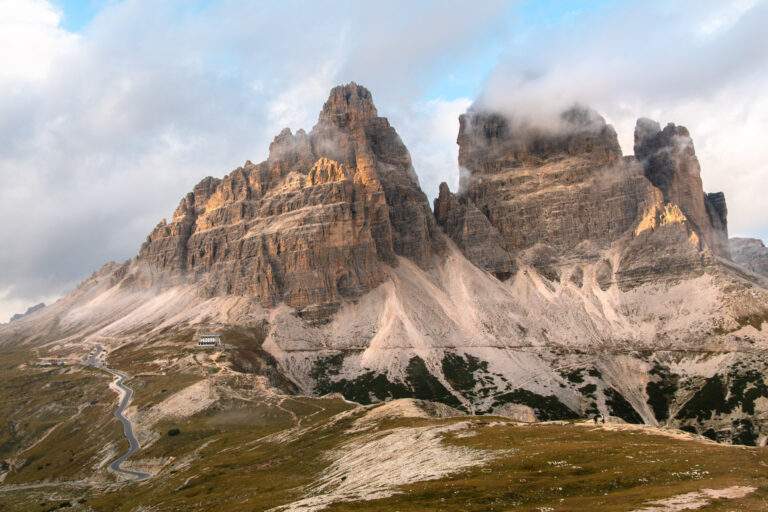
Travel guide to the dramatic viewpoint near Tre Cime di Lavaredo
Read more5. Watch out for the sun
This might seem like an obvious tip for the Dolomites, but when it comes to the weather, it’s worth remembering that the sun can be surprisingly strong at altitude.
This isn’t just in summer – spring and autumn can be quite sunny too, and in winter the snow can cause a strong glare.
The Dolomites are known for around 300 sunny days a year!
Even on cooler days, it’s easy to get sunburnt if you’re not careful.
Always have sunscreen with a high SPF in your bag. Sunglasses with UV protection and a cap or hat for shade are also useful.
If you’re hiking all day, a light, long-sleeved shirt can help protect your shoulders and arms.
Remember to reapply sunscreen several times during the day, and in particular if you’re sweating or wiping your face.

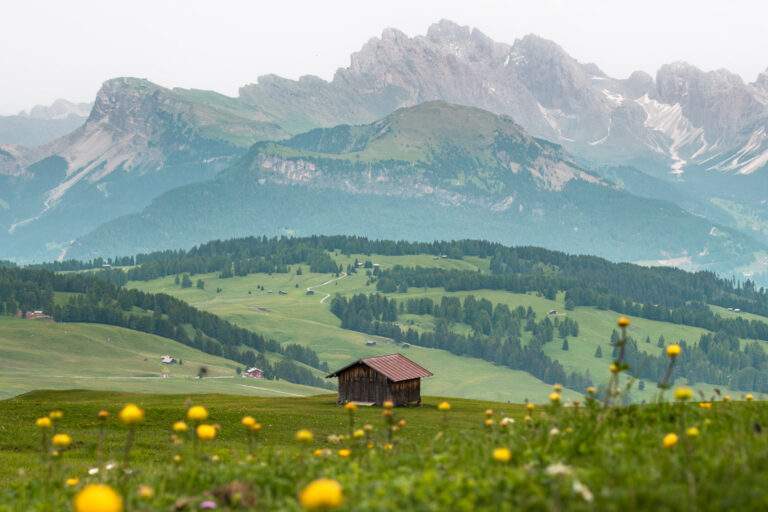
How to reach the alpine plateau of the Dolomites, hiking trails, best hotels, our top tips and more
Read more6. Drink clean water from the tap
The water in the Dolomites is generally of very high quality, and it’s completely safe to drink from the tap – it may even taste better than bottled water.
While hiking, there are also plenty of chances to fill your bottle along the way, for example at water stations with fresh mountain water.
Many refuges offer free refills (or sell water for a small fee).
In addition, most villages have public water points or fountains where you can drink – unless marked with “non potabile”, which means the water isn’t safe to drink.
Some natural mountain springs may be drinkable too, but be cautious and only use them if you have purification tablets or a filter with you. The water might look clear, but it could still contain bacteria or animal waste further upstream.
So do both nature (and your wallet) a favour and bring a refillable bottle for your drinking water.
Water filter
We always travel with our water filter from Tappwater (adlink), which fits onto taps wherever we’re staying.
It gives us clean water, saves money on plastic bottles, and is a more sustainable option. Win-win!
The water filter is a simple way to get clean water while protecting the environment, and we’ve really appreciated it in other parts of Southern Europe (like Sardinia and Corsica), where the tap water is safe to drink but doesn’t quite match the taste of fresh mountain water.
We even use it at home in Copenhagen to reduce heavy metals, microplastics and other pollutants – even though the water tastes just fine.
7. Setting realistic expectations
If you visit the Dolomites during high season, you should be ready for the fact that you definitely won’t be alone.
This is most of all true in July and August, when tourists from all over the world head off on summer holidays and the conditions for hiking are at their best.
Italians themselves mainly take holidays in August.
The popular areas and hiking trails will be busy, which can affect the experience, if you’re hoping for peace and quiet.
Some of the most accessible spots, like Lago di Braies, Lago di Carezza and various viewpoints reached by cable car, can be extremely crowded – including the car parks.
Accommodation prices are higher, and the best hotels and mountain huts often need to be booked well in advance.
If you want to avoid the crowds, we highly recommend visiting outside the peak season or choosing lesser-known areas and hiking routes.

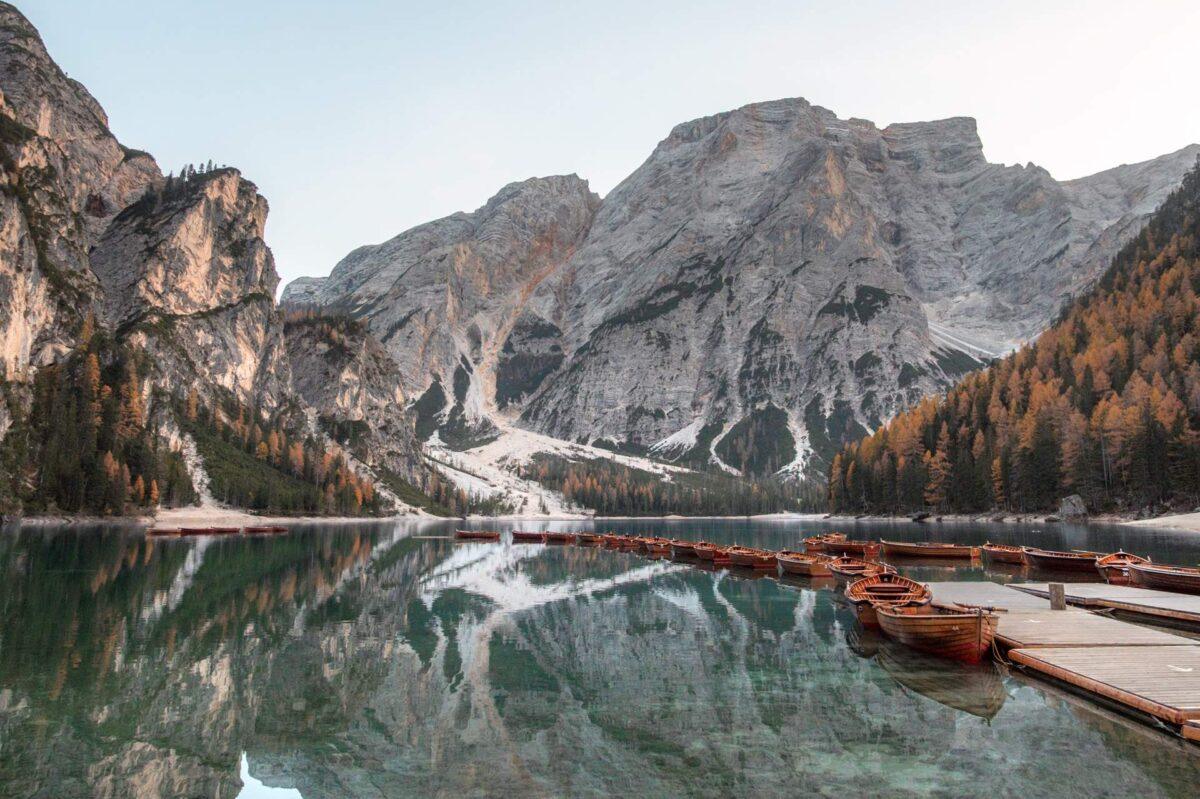
What to know before you go to Lago di Braies – including parking, the lake walk and our best tips
Read more8. Public holidays in Italy
It’s useful to be aware of Italian public holidays when planning your trip to the Dolomites, as they can mean more visitors and changes in opening hours.
Here are some of the most important public holidays:
- Capodanno (New Year’s Day, 1 January): National holiday. Many restaurants and shops are closed in smaller towns.
- Epifania (Epiphany, 6 January): National holiday that’s typically celebrated with the family.
- Pasqua (Easter): The Easter holiday usually falls in March or April and is a popular time for Italians to travel. Many attractions will be open, but it can be busy. Some local shops and small businesses close on Easter Day itself (Pasqua).
- Festa della Liberazione (Liberation Day, 25 April): Public holiday marking the liberation of Italy from the Nazis in 1945. Many restaurants and shops may have different opening hours.
- Festa dei Lavoratori (Labour Day, 1 May): Public holiday when many shops and restaurants are closed, though most tourist sites remain open.
- Festa della Repubblica (Italy’s National Day, 2 June): Many places are closed or have reduced opening hours on Republic Day.
- Pentecoste (Pentecost): Falls on the seventh Sunday after Easter.
- Ferragosto (15 August): One of the biggest holidays in Italy, when many Italians go on holiday. Several shops and restaurants close – especially in the cities. In the countryside and mountain areas, however, it is still possible to find open restaurants and hotels, as many tourists visit these places during this period.
- Ognissanti (All Saints’ Day, 1 November): Major tourist attractions normally stay open, but small shops and restaurants may close.
- Immacolata Concezione (8 December): Shops, banks and offices may be closed or have reduced opening hours, but tourist spots and restaurants often remain open.
- Natale and Santo Stefano (Christmas and Boxing Day, 25-26 December): Many places are closed, though tourist-oriented businesses may remain open.
Many Italians take these days off and head to the mountains for excursions, in particular when the holiday falls near a weekend.
9. Choosing the right time of day
When visiting popular hikes and viewpoints, the time you arrive can make a big difference.
Midday sees the highest number of visitors, especially during high season and public holidays, when avoiding crowds can be tough no matter when you go.
If you want a quieter experience, try going early in the morning or later in the afternoon, when many others are on their way onwards or heading home.
For example, we visited the stunning yet very busy Lago di Braies at sunrise in autumn, and even then, we weren’t completely alone…
Some roads have restricted access during certain periods and may be closed to normal traffic in the middle of the day. If you want to avoid shuttle buses or walking long distances, it’s best to arrive early or late.
This applies to places like Alpe di Siusi, Cinque Torri, Tre Cime di Lavaredo, Lago di Braies and Monte Specie.
On the other hand, catching the sunrise is tricky if you rely on cable cars, as most don’t open until later.
Still, taking the first trip up can give you a calmer experience than arriving in the middle of the day.

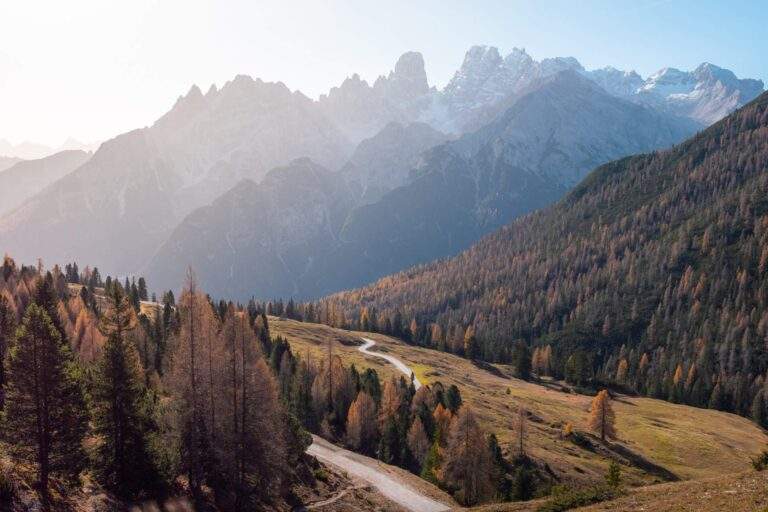
Hiking guide with everything you need to know about Monte Specie, including parking, route and our best tips
Read more10. The mountains affect sunrise and sunset
Getting up early to catch the beautiful light for your photos or to enjoy some quiet before the day begins can be really rewarding.
Likewise, wandering until sunset to see the magical colours at the end of the day is a special experience. But!
In the Dolomites, you can’t always rely on the official sunrise and sunset times you find online.
The high mountains can cause the sun to rise later and set earlier than expected – notably in deep valleys and on cliff tops.
If you want to hike in the best light or watch the sunrise from a viewpoint, it’s a good idea to check the local heights and angles and plan your timing accordingly.

11. Visa and entry rules
Italy is part of the Schengen area, so EU/EEA citizens can travel without a visa using a valid passport or national ID card.
Travellers from many other countries (including the US, UK, Australia and Canada) can enter Italy for up to 90 days without a visa for tourism purposes.
If you need a visa or plan to stay longer, make sure to check the rules well in advance.
12. Airports near the Dolomites
There are several airports near the Dolomites, though none right in the middle of the area.
The largest and most commonly used airports close to the Dolomites are:
From these airports, it’s roughly a 2-3 hour drive to popular destinations like Val Gardena, Alta Badia or Cortina d’Ampezzo.
You can use our adlink to find the best flight deals on Momondo (adlink).
It’s also sometimes possible to fly to Bolzano (Bozen), which, along with Trento and Merano (Meran), are the largest cities in the Trentino-Alto Adige region.
All three lie to the west of the Dolomites themselves.
Within the mountain area, towns tend to be much smaller and separated by steep mountain passes.
Here, Cortina d’Ampezzo (adlink) is the largest and offers the widest range of accommodation.
If you’re travelling by public transport from the airport, it’s a good idea to check connections in advance, as some routes require several changes by train and bus.

13. Transport options
You can either drive or use public transport when getting around the Dolomites.
Car
We’ve always had a car on our trips – either our own, when driving through Europe, or a rental after flying to a nearby airport.
Having a car gives you full freedom to travel at your own pace and reach places that can be tricky by public transport.
Driving all the way from Denmark (like we’ve done) or other European countries can be a long haul and not for everyone.
It’s manageable if you break it up with overnight stays in places like Germany or Austria, where there are plenty of good stopovers.
Renting a car after arriving at a nearby airport is a practical middle ground for many.
You avoid the long drive but still have the flexibility to move between towns, hiking trails and valleys – especially helpful if you’re staying off the beaten path or want to combine different areas. Just be aware that car hire isn’t exactly cheap.
We usually compare car rental prices on DiscoverCars (adlink), where the prices shown include all mandatory fees, taxes and basic cover, so there are no surprises at pickup.
Whether you’re driving your own car or a rental, remember to budget for tolls and parking, which are common throughout the region.
Bus and train
Public transport works well between the larger towns and some valleys, but it takes more time and planning.
It’s a good option if you’re travelling light, staying somewhere with decent connections, want to avoid mountain driving or prioritise sustainable transport.
Useful sites for planning your route:
- Südtirolmobil – local buses and trains in South Tyrol.
- Dolomiti Bus – buses in the Belluno area and eastern Dolomites.
- Trenitalia – trains across Italy, including to cities near the Dolomites like Bolzano, Trento and Belluno.

14. Driving in the mountains
If you choose to drive in the mountains, be prepared – it’s not like driving on regular roads…
Although the Dolomites aren’t a huge area, the distances can be deceptive.
A 20-kilometre drive (~ 12 miles) can easily take an hour if the route crosses a mountain pass with steep climbs, narrow stretches and a long series of hairpin bends.
Some passes have more than 30 bends (which are marked with the word tornante), and the constant turning can make you a little motion sick.
It’s a good idea to check the route in detail on Google Maps before you go, if you’re not just going between two large towns.
Street View can also help you get a feel for the road in advance. Some stretches suddenly become very narrow or steep, and it’s nice to know what you’re getting into.
There are speed cameras even high up in the mountains, so it pays to follow the speed limits (even if the locals don’t). On narrow, winding roads, that’s safest anyway.
In spring and autumn, you may encounter snow on the roads.
If it’s heavy, winter tyres or snow chains are necessary.
We haven’t driven there in winter ourselves, but we would definitely check road conditions and vehicle requirements thoroughly before doing so.
Driving in the Dolomites is definitely beautiful, but can be challenging.

15. Choose the right base
One of the best tips for a successful trip to the Dolomites is to think carefully about where you stay.
The mountains are spread out over a relatively large geographical area, and as mentioned earlier, getting around takes time.
Therefore, it really matters where you choose to stay in the Dolomites.
If you end up staying “on the edge” of the area, you might face a two-hour drive each way just to get to the start of a particular hike.
Even if you’re comfortable driving in the mountains (and the roads are mostly in great condition), it still feels like a waste to spend so much of your holiday behind the wheel.
If you want to avoid spending too much time on transport each day, we suggest starting by thinking about which hikes, viewpoints, lakes and areas you’d like to experience – and then finding accommodation nearby.
It’s also worth considering a few nights in different towns if you want to see several parts of the Dolomites without spending too much time on transport. We’ve done that ourselves on many trips.
Popular bases for hiking holidays include Cortina d’Ampezzo, Canazei, Corvara, the eastern Val Gardena and Alleghe (adlinks).
The best areas to stay in the Dolomites:
- Cortina d’Ampezzo: Definitely the most popular and liveliest town in the Dolomites. Ideally located for a wide range of hikes and cable cars, including Tre Cime, Cinque Torri, Lago di Sorapis, Monte Specie, Passo Giau and Lago di Limides. Has an exclusive feel.
- Canazei: Well located and quite central, especially in relation to the Sella, Sassolungo and Marmolada massifs, as well as Lago di Carezza.
- Corvara: Another great central base in the Dolomites. Fun fact: Around 90% of the locals here still speak Ladin, the ancient Romance language.
- Eastern Val Gardena: The towns of Ortisei, Santa Cristina and Selva are perfectly placed for visiting Seceda, Alpe di Siusi/Seiser Alm, the church in Val di Funes and Vallunga.
- Alleghe: We stayed here on our most recent trip to the Dolomites. A lovely lake town with good access to Civetta and the eastern Dolomites (such as Lago di Coldai and several scenic mountain passes). It also offers relatively easy, mountain-free driving to several supermarkets.
Search for the best and cheapest places to stay in the Dolomites here.
You can also read our comprehensive guide to where to stay in the Dolomites.
Map of the best areas to stay in the Dolomites
On the map below, we’ve marked the best places to stay in the Dolomites with green house icons, so you can see how they’re located in relation to the well-known hikes and viewpoints from our big guide to the Dolomites.


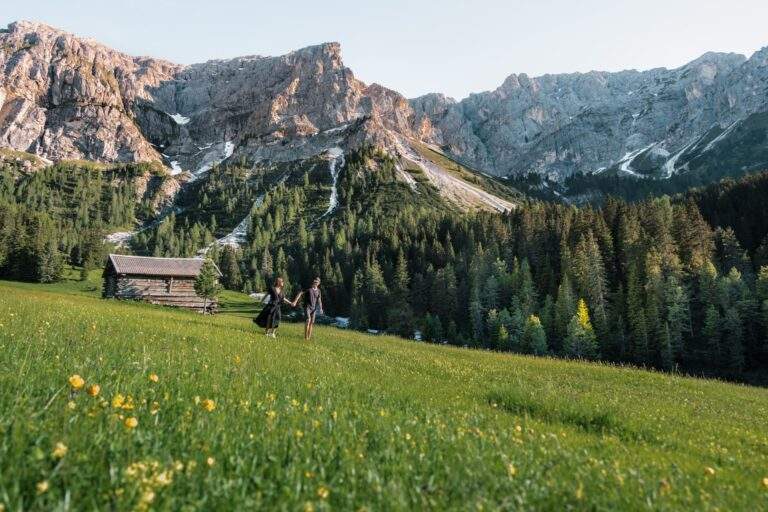
Our recommendations for the best places to stay in the Dolomites, Italy
Read more16. Book refuges well in advance
The mountain huts (called rifugi in Italian) are a key part of hiking in the Dolomites.
They offer a simple but special way to stay right in the middle of the mountains, often far from roads and villages.
These huts are aimed at hikers and mountaineers and are really popular among those planning multi-day treks from hut to hut.
You can sleep and eat there, and some of them have truly stunning locations.
If you’re thinking of staying in one, make sure to book early.
There aren’t that many huts, and the available beds are booked out quickly – particularly the best-located ones.
Most refuges offer shared dorms, but some also have private rooms (these are limited and tend to be more expensive).
Prices can vary depending on the season and the standard of the hut, and while it’s not always cheap, you do get to sleep in the heart of the mountains.
In many cases, meals are included or available at an extra cost, but not always, so check the details before you book.
You’ll normally need to bring a sleeping bag liner, and sometimes also a towel and slippers.
Showers are not always included and can come with an extra charge.
Note that camping is not allowed in most areas of the Dolomites, so if you want to stay overnight in nature, refuges are usually the best legal and practical option.

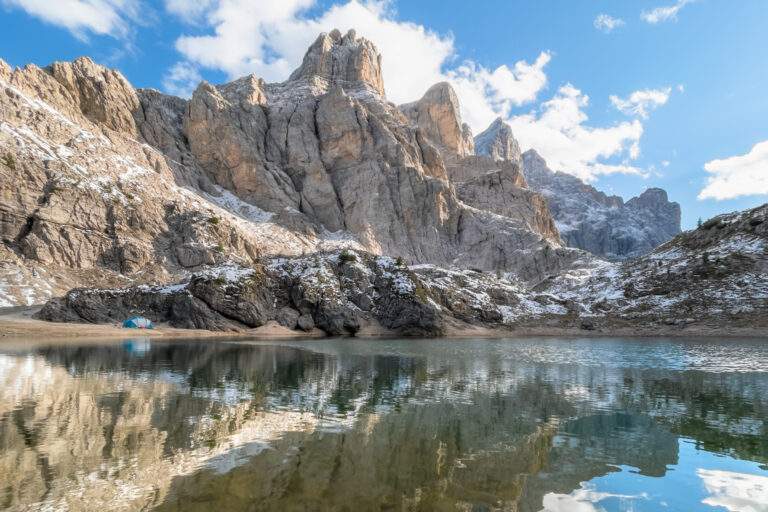
All you need to know about hiking to Lago di Coldai – parking, the route and our best tips
Read more17. The currency is the euro
The currency in Italy is the euro (€ or EUR), and there are 100 cents in one euro.
At the time of writing, 1 euro is about 1.16 USD (2025), but the exchange rate can vary depending on your bank or exchange office.
ATMs are widely available, though fees may apply depending on your bank.
18. Remember cash
Card payments are accepted almost everywhere, but it’s wise to carry some cash for smaller shops, mountain huts and parking machines.
For instance, some refuges only accept cash, so it’s handy to have some on you.
You might also find cafés or huts charging around 1 euro to use the toilet if you’re not buying anything else.
In addition, certain parking areas or toll roads (such as at Monte Specie) often require cash payment, as the Italian systems can be a bit old-fashioned. The toll road up to Tre Cime is the exception, since it has to be booked and paid online in advance.
Small local shops and market stalls sometimes only take cash as well.
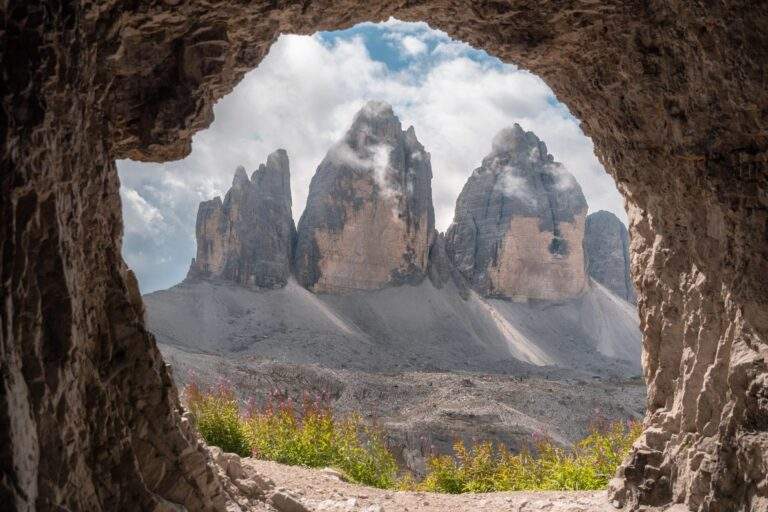
Travel guide to one of the best hikes in the Dolomites – route, highlights, facilities and our top tips
Read more19. Price levels and examples
The Dolomites are not a cheap destination, with costs rising notably in high season.
In fact, we would argue that it’s a relatively expensive holiday destination – even though hiking, one of the main activities, doesn’t cost anything.
To give you a sense of the overall Dolomites travel budget, here are some typical costs.
Accommodation is the main reason. Prices are high, and even a basic hotel room can easily cost around 100 euro per night (~ 116 USD).
If you’re staying in one of the popular towns with breakfast included and amenities like a sauna or spa, prices may land between 130 and 200 euro per night (~ 150-230 USD).
Restaurant prices are roughly the same as in many other places in Europe (sometimes a little cheaper):
- Main course: 12-20 euro (~ 14-23 USD)
- Pizza: 8-12 euro (~ 9-14 USD)
- Beer: 4-6 euro (~ 5-7 USD)
- Cappuccino: from 2 euro (~ 2.3 USD)
Cable car rides typically cost 10-30 euro per trip (~ 12-35 USD), depending on length and location.
Car hire ranges from 30-70 euro per day (~ 35-81 USD) in low season and up to 80-120 euro (~ 93-140 USD) in high season for a small car.
Prices naturally vary depending on the car type, insurance, pick-up location and how far in advance you book. It can be significantly more expensive if you drop the car off at a different location from where you collected it.
To find the best deal, it’s a good idea to compare car rental prices on DiscoverCars (adlink). The price shown includes all mandatory fees, taxes and basic surcharges.
Parking is free at some mountain passes and hiking spots, but in towns and near popular attractions it typically costs 1-2 euro per hour.
20. Tipping culture
Tipping in Italy is generally less expected than in countries like the United States and isn’t a strong part of the local culture.
The idea of tipping as a fixed percentage of the bill is not standard, and locals simply round up or leave a small token of appreciation.
Like in many other European countries, tipping is not obligatory but appreciated, of course.
In restaurants, it’s common to leave a small tip of around 5-10% if the service has been good, though no one will mind if you don’t.
Some places include a “coperto” (cover charge) on the bill, which covers bread and service, so check before tipping extra.
For taxis and other services, rounding up the fare or leaving a euro or two is usual.
21. Money-saving tips
There are several ways to keep costs down when travelling in the Dolomites. Here are some of our best tips.
1. Time of year
First of all, travelling outside the high season can make a big difference.
June and mid-September are good options, with lower prices, fewer crowds and generally pleasant weather, and most facilities are still open.
2. Cook your own food
Book an apartment with a kitchen and save by cooking your own meals.
You can find places like that on Airbnb, Hotels.com and Booking.com (adlinks).
You might also swap a restaurant lunch for a homemade picnic – fresh bread, hummus, fruit and snacks from a supermarket can go a long way.
3. Shuttle buses and transport passes
Check whether your hotel offers free shuttle buses.
Many hotels in the Dolomites provide transport to popular hiking trails, ski areas or nearby towns.
You can also save by using transport passes like the Südtirol Guest Pass in South Tyrol or the Dolomiti Mobil Card, which give unlimited access to most buses and trains in the region.
In some cases, the pass is included in the price of your stay.
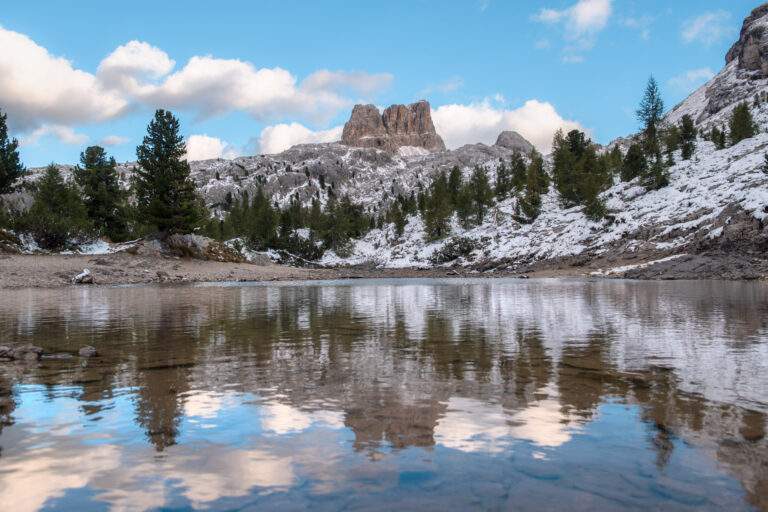
All you need to know about hiking to Lago di Limides – route, parking and our best tips
Read more4. Buy a multi-day cable car pass
If you plan to use the cable cars several times during your stay, it might be worth getting a day or week pass (for example, the Dolomiti Supersummer Card), rather than paying for single tickets.
The cable cars are still pricey, but you can save a fair bit if you’re planning multiple rides.
And of course, you’ll save the most by skipping the lift altogether and hiking to the top!
5. Look for alternative parking
If you’re planning a longer stop at an attraction or a hike, it can pay off to park a bit further away.
The most “obvious” parking areas are generally the most expensive, so check for cheaper or free options nearby.
22. Recommended trip duration
How many days do you need in the Dolomites?
Well, that’s a tricky one!
We’ve visited five times (so far) and spent anywhere from 3 to 10 days on each trip.
If it’s your first time, we’d recommend staying at least 4-5 days – ideally a full week.
That gives you time to go on a few hikes, visit some of the famous viewpoints and settle into the slower pace of the mountains.
With a week or more, you can take on longer hikes or space out your plans a bit, so you’re not cramming everything into one day.
It also makes more sense to stay in different areas, giving you the chance to reach several of the best viewpoints and hikes, which are quite spread out.
If you only have a few days, it’s still worth going, but we’d suggest picking one area and focusing on what’s close by, so you don’t spend too much time on transport.

23. Hikes and viewpoints for all levels
The Dolomites aren’t just for seasoned mountain hikers – there’s something here for everyone!
You can take a cable car up and follow gentle trails with hardly any ascent, wander through flat valleys with easy paths or challenge yourself with full-day hikes over rocky fields and mountain passes.
It’s a great destination whether you’re a beginner, a family with kids, or someone who wants to experience the mountains without walking for hours.
Try a classic route like Tre Cime di Lavaredo or ride the cable car to Seceda and stroll along the meadows and hillsides.
You can also spend a quiet day at one of the beautiful lakes. Lago di Braies and Lago di Carezza are among the most famous and photogenic.
If you prefer to enjoy the view from the car, there are stunning mountain passes like Passo Gardena, Passo Sella and Passo Giau where you can stop and take it all in.
For the extra active, there are great options for climbing, via ferrata, mountain biking and paragliding in summer.
And once the snow falls, the landscape shifts and becomes perfect for skiing, cross-country and snowshoeing.
See our full guide for the best hikes and viewpoints in the Dolomites.

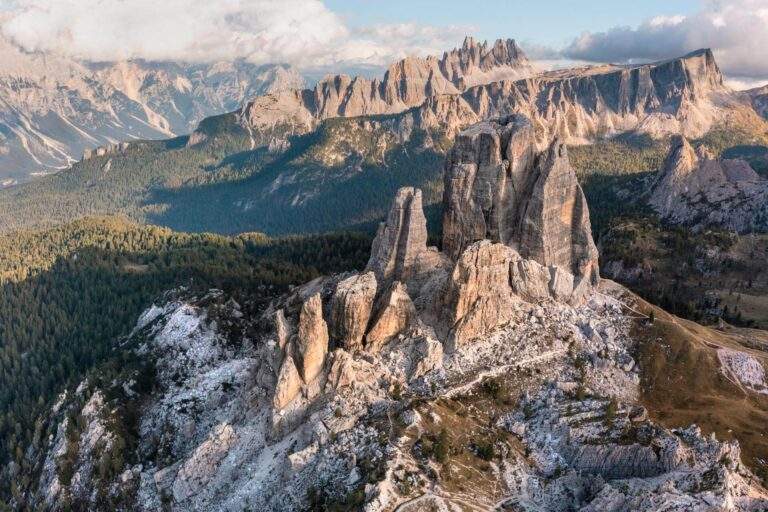
A travel guide to our favourite hikes in the Dolomites – from short walks to full-day adventures
Read moreThe hiking trails in the Dolomites are generally well signposted with colour codes, signs and route numbers, making it easy to stay on track.
Look out for the red and white markers that display the route number. Bear in mind, though, that the estimated times on signs don’t always match reality…
It’s a good idea to carry a map (digital or physical), if you plan to combine several routes or want to check the length and difficulty.
Many trailheads have maps showing the most popular hikes and refuges. Taking a photo of these maps can be useful for reference if you get uncertain later.
Apps like Komoot or AllTrails are also handy for downloading routes offline, as mobile signal can be patchy in the mountains.

25. Buy a local SIM card or eSIM
Speaking of mobile signal and data in the mountains, it’s a good idea to have reliable internet access while in the Dolomites.
Many hotels and restaurants offer wifi, but if you want consistent coverage on the go, consider buying a local SIM card or an eSIM.
If your phone supports eSIM (like iPhone XS or later), this can be a convenient way to get connected without swapping physical cards.
We’ve used Airalo (adlink) in other countries with great success, and love that you can activate it as soon as you arrive – no need to hunt for shops or wait in line.
26. Power outlets and plugs
The electrical outlets in Italy, including the Dolomites, typically have two round prongs and use a standard voltage of 230 volts.
This setup is compatible with most European appliances, but if you’re coming from countries with different plug types or voltages, you may need an adapter or converter.
27. The Dolomites with children
We haven’t tried it ourselves (yet!), but visiting the Dolomites with children is definitely doable. We’ve met many families out on the trails.
If you want an active family holiday, the northern Italian mountains are a great option, even with smaller kids.
Many areas offer short, child-friendly hikes (some even stroller-friendly), playgrounds along the way, and cable cars that make reaching the heights easier without having to walk the whole way.
Several hotels and refuges have family rooms and children’s menus, so kids are very welcome in the mountains.
When travelling with children, it’s wise to plan carefully and pick an area with easy access and short distances to sights and activities.
Check out our guide to child-friendly experiences in the Dolomites for ideas on lakes, short hikes and viewpoints.
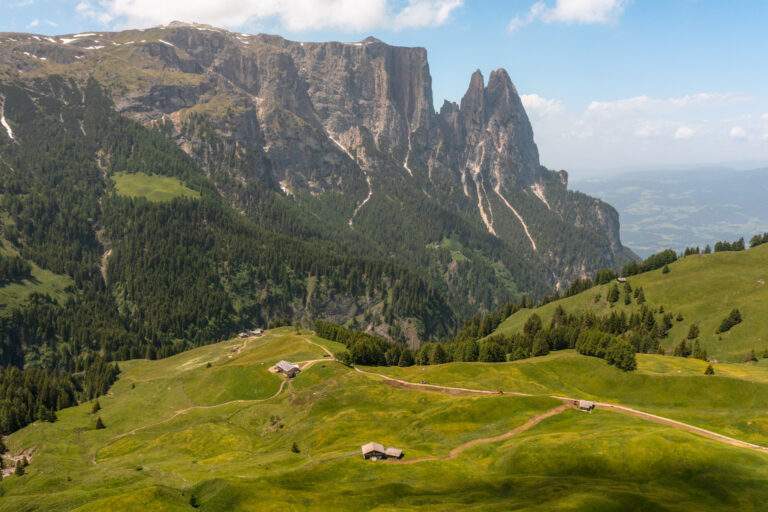
Child-friendly hikes, viewpoints, playgrounds, climbing parks and lakes for the whole family
Read more28. Photo gear for the mountains
The Dolomites are a paradise for photographers!
Whether you carry heavy gear with multiple lenses or “simply” use your phone’s camera.
If you enjoy capturing light, fog and mountain silhouettes, bringing a proper camera can pay off.
The landscape looks extra stunning at sunrise and sunset, and here, better image quality and manual control make a difference.
We also suggest packing a zoom lens.
While many viewpoints offer breathtaking panoramas, some of the finest details, like a small church on a peak, dramatic rock formations, or alpine huts far away, really shine when you can zoom in.
A zoom lens also helps capture wildlife from a distance and lets you experiment with compositions that bring mountain ranges closer together in the frame.
It adds some weight to your backpack, but it’s worth it if photography is a passion.
Here’s a guide with the camera gear we use ourselves.
No big camera needed
A big, fancy camera is by no means a must.
Modern smartphones take excellent photos, and the most important thing is to catch the moment when you’re standing in a beautiful spot – which happens a lot in the Dolomites, if we are honest.
And phone cameras have gotten surprisingly good!
If you want to avoid carrying too much on a hike, the phone is the most practical and realistic choice for most people.
Tip: Make sure your phone is fully charged and has enough space – chances are you’ll come home with plenty of pictures.

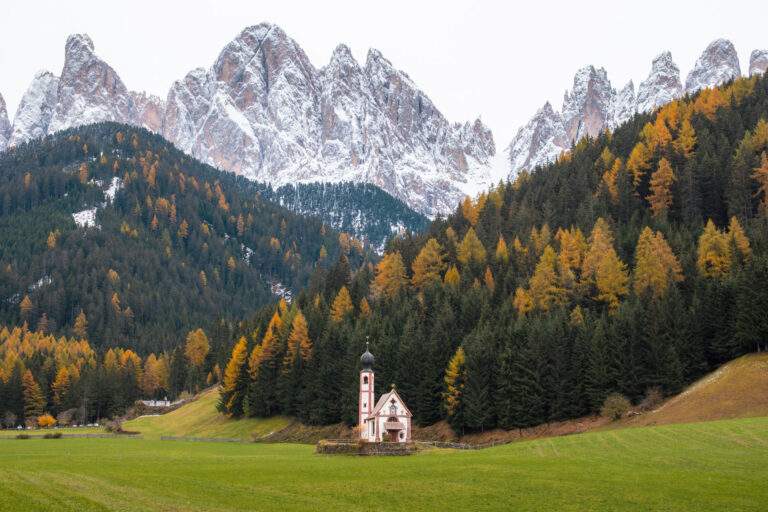
All you need to know about the Church of San Giovanni – how to get there, viewpoints and our top tips
Read more29. Drone regulations
In addition to a camera and a few lenses, we usually travel with a drone.
The Dolomites, however, are an area where you need to pay extra attention to drone regulations.
In general, it’s possible to fly a drone, but there are several areas where it’s restricted or completely prohibited due to nature conservation, flight safety or privacy concerns.
It’s important to respect nature, avoid disturbing wildlife and show consideration for other visitors – so make sure to follow the rules.

General drone rules
First of all, you must follow both Italian and EU drone regulations.
This means registering your drone if it weighs more than 250 grams or has a camera, having valid insurance, and respecting the rules for flying near populated areas.
Always keep a safe distance from people and buildings, and never fly directly over others.
Flying near airports (within 5 kilometres/3.1 miles) or military areas is not allowed, and you must always keep the drone within your line of sight.
National parks and protected areas
The Dolomites are part of the UNESCO World Heritage and include both national parks, like Dolomiti Bellunesi, and protected nature reserves such as Fanes-Senes-Braies, Puez-Odle (Puez-Geisler), and Sciliar-Catinaccio (Schlern-Rosengarten).
National parks are automatically no-fly zones.
Many of the most scenic spots in the Dolomites have strict drone restrictions – including Tre Cime di Lavaredo and popular mountain lakes like Lago di Braies and Lago di Carezza.
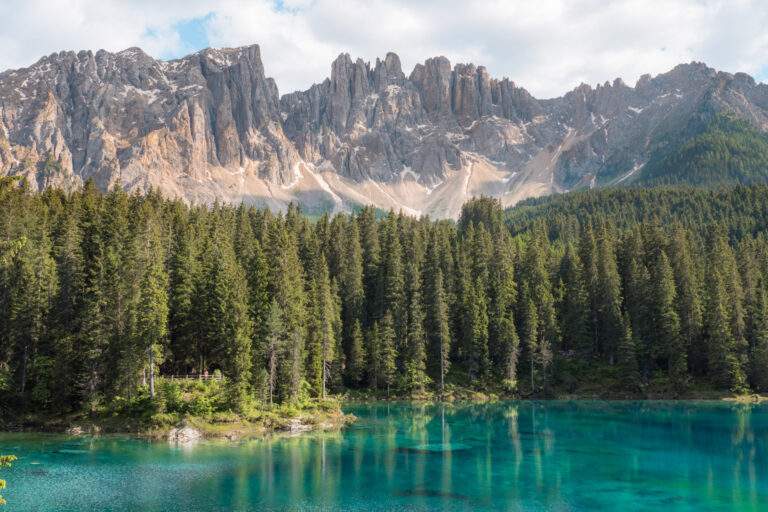
All you need to know about Lago di Carezza – parking, walking routes and our best tips
Read moreAltitude limits
There are also limits on how high you can fly a drone.
The general maximum is 120 metres (~ 394 feet), but in some areas it’s restricted to 70 metres (~ 230 feet).
If you fly…
Fortunately, there are still places where drone flying is allowed – typically in open, unpopulated areas away from towns and villages.
Be sure to have the necessary permits and always check local restrictions before flying.
Keep in mind that the rules may vary depending on the season or special events.
Read more about drone rules in the Dolomites here.

30. Take care of nature
This tip for the Dolomites should go without saying, but it’s important to follow the rules when you’re out in nature – even when chasing the perfect photo.
Don’t cross fences, swim in lakes where it’s not allowed, or fly drones in prohibited areas.
Sadly, many still do, and it affects both wildlife and others’ chances to experience the Dolomites in a respectful way.
Good hiking etiquette
A good starting point: Take only pictures, leave only footprints.
Sort your rubbish properly and never throw anything on the ground – not even food scraps.
Don’t pick flowers, and leave stones, branches and other natural materials where they are.
Always stay on marked trails, both for nature’s sake and your own safety.
Be mindful of others. Keep noise to a minimum and let the natural sounds come through.
On the trails, keep to the right and give way to those walking uphill.
If you cross a pasture, close the gates behind you and make space for any cows or horses on the path.
Respect wildlife, don’t feed animals, and never get too close.
And if you bring a dog, keep it on a lead.

31. Swimming in lakes
Not all lakes in the Dolomites permit swimming.
Some are protected natural areas where bathing is banned to preserve the environment, wildlife or drinking water supplies.
Signs normally indicate if swimming is prohibited, but even without signs, it’s wise to use common sense.
These lakes are in general fed by melting snow, making the water ice cold even in summer. Be cautious of the cold and avoid swimming alone.
In popular and scenic lakes like Lago di Braies, Lago di Carezza and Lago di Sorapis, swimming is not allowed to protect their fragile ecosystems and prevent erosion and pollution.
However, swimming is allowed in several other lakes, such as Lago di Caldaro and Lago di Molveno.

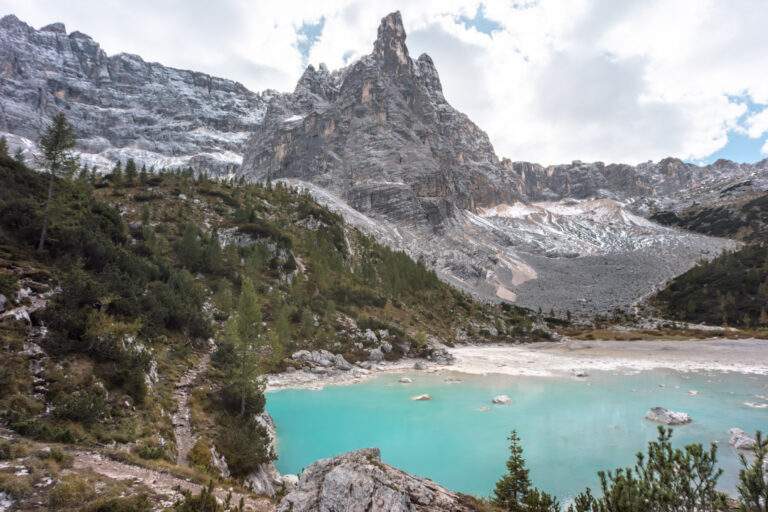
All you need to know about hiking to Lago di Sorapis, including parking, hiking route and our best tips
Read more32. Well-being as part of the experience
The Dolomites offer a perfect blend of adventure and relaxation.
Wellness is deeply rooted in the local culture, with many hotels featuring spa facilities such as saunas, steam rooms, and outdoor pools framed by stunning mountain views.
If you want to treat yourself, massages and yoga classes are offered in many places.
After a day spent hiking or skiing, unwinding and recovering feels natural – something both locals and visitors highly value.
Many wellness spaces use natural materials in their design, creating an atmosphere that reflects the calm and pace of the mountains.

33. Distinctive mountain culture with German roots
The Dolomites offer a unique experience within Italy.
This region feels significantly different from the northern Italian lakes like Como and Garda, the rolling hills of Tuscany, or the bustling cities like Rome.
Particularly in South Tyrol, it’s like stepping into a German-speaking mountain world, shaped by its history as part of Austria-Hungary.
In the official language census, about 69% of South Tyrol’s population identify as German speakers, 27% as Italian speakers and 4% as Ladin speakers (Ladin is an ancient Romance language), and many people speak both German and Italian.
Here you’ll find green hills dotted with wooden cabins, locals dressed in traditional alpine outfits, and menus featuring knödel, schnitzel and strudel.
Many hotels reflect the wooden architectural style known from Austria and Southern Germany (such as Garmisch-Partenkirchen).
This blend of Italian and German-Alpine influences gives the area a distinctive atmosphere you won’t find anywhere else.

34. Multiple place names
Reflecting the German and Austrian influence, the Dolomites can be a little confusing when it comes to place names.
Many towns have two or even three different names – one in German, one in Italian, and sometimes one in the old Romance language Ladin.
Examples include Bolzano/Bozen, Bressanone/Brixen, Brunico/Bruneck, Chiusa/Klausen, Dobbiaco/Toblach, Ortisei/St. Ulrich, and many more!
This dual (or triple) naming originates from the fact that the Dolomites were annexed by Italy from Austria after the First World War.
Following this, an effort was made to translate over 16,000 place names into Italian, though the multiple names still coexist today.
It can feel confusing at times, but it’s part of the region’s rich cultural tapestry.

35. Language and translation
Most people in the Dolomites speak Italian, but in many areas – especially in South Tyrol – German is also widely used.
South Tyrol was once part of Austria, and today the majority of the population speaks German as their first language.
A handy tip for quick translations from Italian, German, or other languages to English (or whatever you speak!) is to have the Google Translate app on your phone.
You can type text for translation, but the app also lets you use your camera.
Simply take a photo or hold the camera over text you want translated, and the app will scan and translate it instantly.
This is great for reading product ingredients in supermarkets, menus or signs – even if they’re in Italian or German.
There’s also a feature where you hold down the microphone button and speak a sentence you want translated; Google Translate then writes and pronounces it in the chosen language.
We’ve found this useful when trying to communicate with someone who doesn’t speak much English.
Note: You need to be connected to wifi or data for these features to work.
36. Hospitals and pharmacies
Most major towns and ski areas in the Dolomites have a hospital within reasonable reach – for example, in Brunico, Bressanone, Cortina d’Ampezzo, Bolzano and San Candido (Innichen).
In popular areas such as Val Gardena (Gröden) and Alta Badia, there is also access to tourist doctors in high season.
Some clinics and doctors are open daily at fixed times, where you can drop by without prior appointment or at short notice, while others are only available during the high season in summer and winter, when there are many tourists.
Pharmacies (called farmacia) can be recognised by the green cross out front, and they are found in almost every town.
Many pharmacies are siesta-closed in the middle of the day (typically around 12:30-15:30) and are usually closed on Sundays.
If you need medicine outside opening hours, you can search for “farmacia di turno”, which are open 24 hours a day.
You can check where the nearest hospitals and pharmacies are in relation to your base in advance, if you want to feel prepared.
In mountain areas, where the distance to the nearest medical aid can be longer than in the cities, it can provide reassurance to know where you can get help if an accident occurs.
Should something urgent happen, the emergency number throughout Italy is 112.
This applies both in the case of illness, accidents and other emergency situations.
If you’re from a European country, it’s always a good idea to bring the blue EU health insurance card and keep your travel insurance handy. It gives you the right to the same public healthcare treatment as residents of the country you are visiting.

37. Travel insurance and coverage in the mountains
Our final tip for the Dolomites may not be the most exciting, but it’s important.
Make sure you have travel insurance that covers mountain activities.
Standard travel insurance often excludes hikes above certain altitudes or accidents linked to climbing, skiing, or other adventurous sports.
For more “extreme activities” like paragliding, via ferrata hiking, climbing or skiing, basic policies rarely provide automatic coverage.
Helicopter rescues can be very costly without proper insurance…
If you plan more demanding or risky activities in the Dolomites, pay close attention to the details of your policy and consider purchasing additional coverage if needed.
Look into height limits, whether rescue costs are included, and whether your planned activities require additional cover.
Also, don’t forget to bring your blue EU health insurance card if you’re from a European country.
Frequently asked questions about the Dolomites
Is the Dolomites worth visiting?
Yes, absolutely! There’s something for everyone – from dramatic mountain scenery and scenic hikes to family-friendly activities and cosy alpine villages.
What is the difference between the Alps and the Dolomites?
The Alps are a vast mountain range stretching across seven or eight countries in Central Europe: France, Switzerland, Italy, Liechtenstein, Germany, Austria, Slovenia, and sometimes Monaco, too.
The Dolomites are a smaller section of the Alps, situated in northern Italy.
They stand out due to their distinctive pale dolomite rock formations, giving the landscape a unique, dramatic appearance.
When is the best time to travel to the Dolomites?
Summer (June to September) is ideal for hiking and outdoor activities, while winter (December to March) is best for skiing.
If possible, try to avoid the peak months of July and August, when the area is busiest.
Read our guide on when to visit the Dolomites for more details.
What is the best way to get to the Dolomites?
The easiest way to reach the Dolomites from most places is to fly into a nearby airport and then rent a car or use public transport to get to the mountains.
If you live in a nearby European country and don’t mind a long drive, you can also drive your own car, which offers more flexibility to explore the region.
We have done both with great success.
What airport do you fly into for the Dolomites?
There are no airports directly in the Dolomites, but the closest major airports are Venice, Milan/Bergamo, Verona and Innsbruck.
From these airports, you can take public transport or rent a car to reach the mountain areas.
Where is the best place to stay in the Dolomites?
Some of the most popular towns are Cortina d’Ampezzo, Canazei, Corvara, eastern Val Gardena (Ortisei, Santa Cristina and Selva) as well as Alleghe (adlinks).
Your choice will naturally depend on the sights you want to visit and your preferred way of getting around.
Read our comprehensive guide to where to stay in the Dolomites for more details about these towns and areas.
What are the most popular hikes in the Dolomites?
Tre Cime di Lavaredo, Seceda and Alpe di Siusi are among the most famous walking routes, but there are many iconic spots.
See our comprehensive guide to the best viewpoints and hikes in the Dolomites for more ideas.
Are there activities for non-hikers?
Absolutely!
You can take cable car rides up to stunning viewpoints, visit lakes like Lago di Braies and Lago di Carezza, or explore cultural spots in towns such as Bolzano and Bressanone, where you’ll find museums, charming old towns and great food.
Many places also offer wellness hotels with spas and saunas, while several mountain towns host markets, wine tastings and small festivals throughout the summer months.
Thank you for reading our Dolomites tips
Thank you for reading our guide with travel tips for the Dolomites.
Phew, it was quite a read, but we hope you found our advice helpful!
What do you think of the Dolomites? Feeling ready for a mountain trip?
If you want to explore more, you can find all our guides to the Dolomites here.
Feel free to ask any questions in the comments below if you haven’t been yet. We’re happy to help.
And if you’ve already visited, we’d love to hear your best tips and recommendations!

More from the Dolomites
We absolutely love the Dolomites. Here are all our guides to the stunning mountains in northeastern Italy, with our best tips for hiking, viewpoints, where to stay, transportation and more.
Overview:
Hiking guides:
Our favourite travel resources:
- Booking.com for hotels and apartments.
- Momondo for the best flight deals.
- AirHelp for flight delay compensation.
- GetYourGuide for great tours everywhere.
- Airalo for reliable eSIM.
- Discover Cars for transparent car hire.
- SafetyWing for travel insurance. We also like True Traveller. Compared here.

Where to Stay in the Dolomites with Children: Best Family Hotels & Areas
Our recommendations for the best family-friendly hotels and areas in the Dolomites, Italy
-
Where to Stay in the Dolomites: Best Hotels & Areas for Hiking and Skiing Holidays
Our recommendations for the best places to stay in the Dolomites, Italy
-
When to Visit the Dolomites? Weather, Seasons & Best Time to Go
When to travel to the Dolomites and what to expect – whether you're into skiing or hiking