
The world’s most beautiful mountains
Some mountains just stand out – and the Dolomites are without doubt among the most beautiful in the world.
At least if you ask us.
We’re not the only ones who’ve fallen for Northern Italy’s dramatic peaks, deep valleys and endless views.
The Dolomites have definitely made their way to the top of many nature photographers’ bucket lists.
And of course, they’re all over Instagram – whether it’s Lago di Braies, Seceda, Lago di Carezza, Alpe di Siusi (Seiser Alm), the church in Val di Funes or one of the many other jaw-dropping views in the Dolomites.
The Dolomites will make your head spin
The Dolomites cover around 15,942 km², so it’s actually not an exceptionally vast area.
But the number of hiking trails and viewpoints is surely dizzying! And that’s before you’ve even tackled the endless hairpin bends.
The mountains somehow feel both accessible and wild at the same time, which is part of why hiking holidays in the Dolomites are so popular.
You can easily enjoy a lot by driving between mountain passes and stopping at scenic viewpoints.
Even so, things get even better when you grab your walking poles and headlamp, set off early and reach the summit just in time for sunrise – with the whole mountain world quietly unfolding in front of you.
In this travel guide, we share our favourite viewpoints and best hikes in the Dolomites.
We cover short walks, mountain lakes and full-day routes as well as tips on what to see, transport, practical things that are good to know before you go and much more.
Table of contents

Where are the Dolomites?
In short, the Dolomites are a mountain area in northeastern Italy, just south of Austria.
The mountain range stretches across the Italian regions of Veneto, Trentino-Alto Adige and Friuli Venezia Giulia – from the Brenta Dolomites and the Adige Valley in the west (home to cities like Bolzano/Bozen and Trento) to the Piave Valley in the east.
The Dolomites form part of the Alps – more precisely, the Southern Calcareous Alps, and are listed as a UNESCO World Heritage Site.
Here’s a map of the Dolomites:
Multiple place names in the Dolomites
The Dolomites can be a little confusing when it comes to place names.
Many towns have two or even three different names – usually one in German, one in Italian, and sometimes one in the old Romance language Ladin.
This dual (or triple) naming originates from the fact that the Dolomites were annexed by Italy from Austria after the First World War.
Following this, an effort was made to translate over 16,000 place names into Italian, though the multiple names still coexist today.
It can feel confusing at times, but it’s part of the region’s rich cultural tapestry.
In this guide to the best hikes in the Dolomites, we sometimes use both the Italian and German names, though mostly just the Italian.

Practical tips + helpful advice to plan your Dolomites trip and enjoy every moment
Read moreWhere to stay in the Dolomites
Where you choose to stay in the Dolomites really matters.
If you base yourself on the “outer edge”, you might end up driving around two hours each way just to reach your hike’s starting point.
Even if you don’t mind winding mountain roads (which, thankfully, are usually in good condition), it’s a bit of a waste to spend so much time behind the wheel.
We suggest thinking carefully about which hikes and viewpoints you want to prioritise on your trip, and then try to choose accommodation that makes those easily accessible.
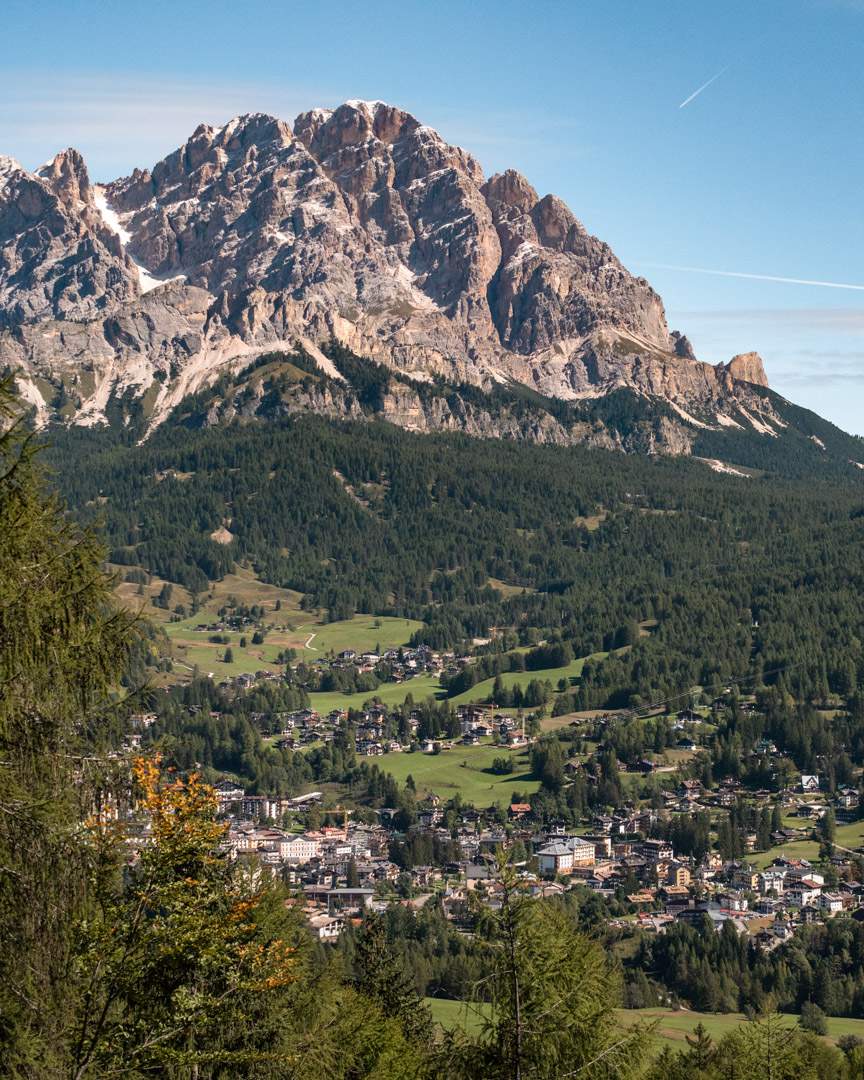
For most visitors, popular places to stay include Cortina d’Ampezzo, Canazei, Corvara, eastern Val Gardena or Alleghe.
The best areas to stay in the Dolomites:
- Cortina d’Ampezzo: The liveliest and most popular town in the Dolomites. It’s perfectly located for a wide range of hikes, cable cars and ski lifts. There’s a touch of exclusivity here, too – and the town co-hosted the 2026 Winter Olympics with Milan.
- Canazei: Another central spot when it comes to where to stay in the Dolomites, especially if you want to be close to the Sella, Sassolungo and Marmolada massifs.
- Corvara: A super-central town in the Dolomites, great for both hiking and skiing. You get direct access to the Sella Ronda circuit, with 500 kilometres of interconnected ski slopes.
- Eastern Val Gardena: The towns of Ortisei, Santa Cristina and Selva are ideally located for both summer and winter visits to Seceda and Alpe di Siusi. Selva is particularly well-placed for skiing, with direct access to the slopes and lifts.
- Alleghe: We stayed here on our last trip to the Dolomites. There’s a beautiful lake, good access to Civetta and the eastern part of the region + easy, mountain-free drives to a few supermarkets, which was a bonus.
Read our comprehensive guide to where to stay in the Dolomites here or search for the best and cheapest places to stay in the Dolomites here (adlink).
Map of the best areas to stay in the Dolomites
On the map below, we’ve marked the best places to stay with green house icons, so you can see how they’re positioned in relation to the viewpoints and hikes in the Dolomites featured in this guide.


Our recommendations for the best places to stay in the Dolomites, Italy
Read moreThe best hikes and viewpoints in the Dolomites
Any list of the “best” hikes, sights and things to do in the Dolomites is bound to miss a few – there really are so many incredible options.
Still, some favourites come up again and again.
Sometimes it’s because the view is easily reached, needing little more than a drive and a short stroll.
Other times, the reward lies in stunning views along the way, a wonderful panorama at the summit – or both.
We haven’t seen everything the Dolomites have to offer (yet!), but after five trips to these northern Italian mountains, we’ve given it a good go.
Whether you’re looking for easy hikes in the Dolomites or full-day adventures, this list covers the best.
Here are the 18 best hikes and viewpoints in the Dolomites:
- Seceda – Sloping ridge in the clouds
- Lago di Braies – World-famous alpine lake
- Monte Specie (Strudelkopf) – Easy summit with wide views
- Lago di Carezza (Karersee) – Reflective lake with mountain backdrop
- Alpe di Siusi – Hike on Europe’s largest high alpine meadow
- The church in Val di Funes – Iconic Dolomites photo spot
- Tre Cime di Lavaredo – Classic hike around the popular three peaks
- Cadini di Misurina – Ridge path to epic viewpoint
- Lago di Sorapis – Turquoise lake in rugged setting
- Lago di Limides – Short walk to small alpine lake
- Vallunga – Easy valley hike below cliffs
- Cinque Torri – Mountains and WWI history
- Lago di Coldai – Quiet mountain lake below Monte Civetta
- Passo Giau – High mountain pass with big views
- Passo Sella – Mountain pass at the foot of the Sella massif
- Passo Gardena – Winding pass with sweeping views
- Passo Fedaia – Reservoir beneath the Marmolada glacier
- Lake Misurina – Easy lake walk with views
1. Seceda – Sloping ridge in the clouds
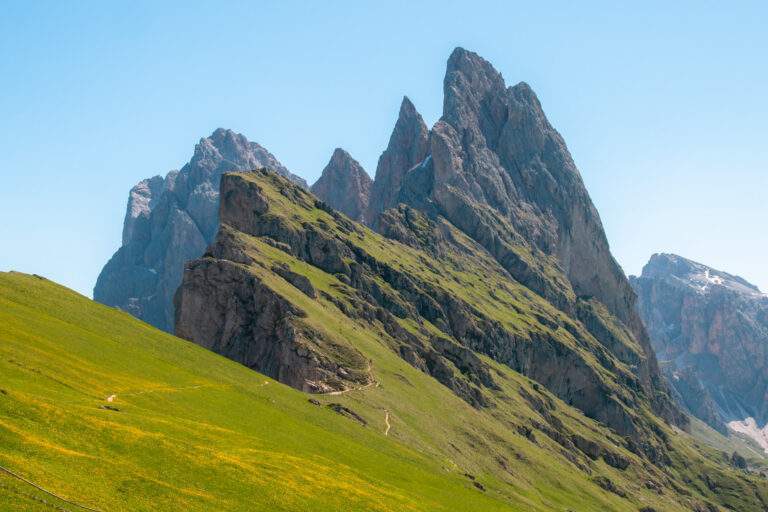
Many of the Dolomites’ peaks are recognisable in their own way, and Seceda in the Puez-Odle Natural Park is definitely one of the most distinctive.
The Ortisei-Furnes-Seceda cable car makes it easy to reach, starting right from the town of Ortisei in Val Gardena.
It takes you almost directly to the most photographed viewpoint. Such an epic place!
But if you have time, we really recommend hiking a bit further – the sloping peaks are even more impressive from different angles.
If cable cars feel a bit too easy (or if you want to get up there before they start running), you can hike the whole way up.
There are several possible routes. One of the best begins at the Praplan car park above Santa Cristina.
Read our full guide to visiting Seceda by cable car here.


All you need to know about visiting Seceda – how to get there by cable car and our best tips
Read more2. Lago di Braies – World-famous alpine lake
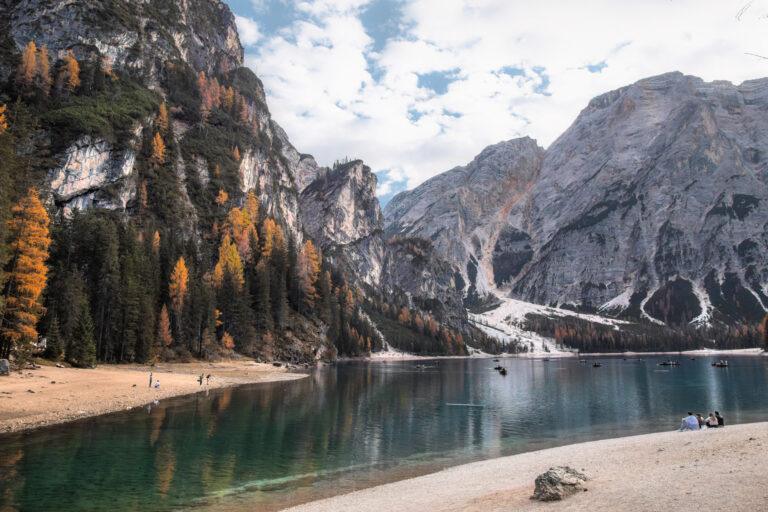
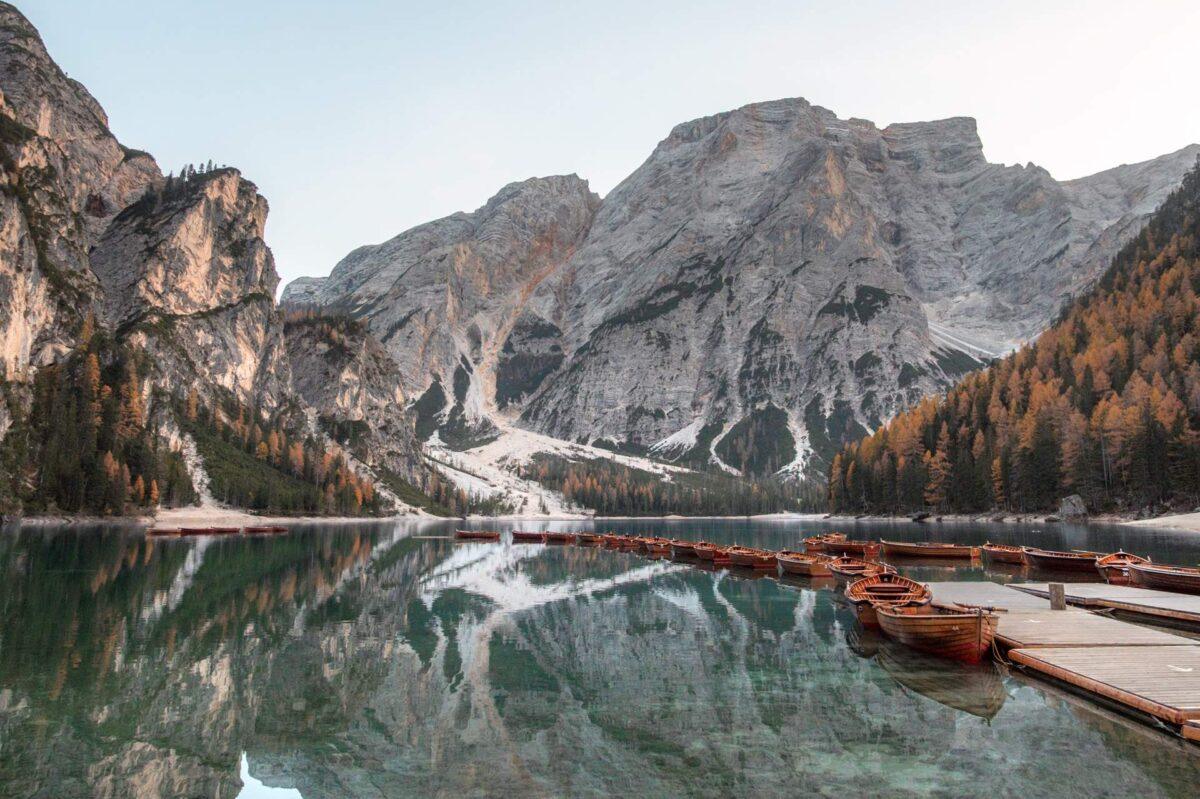
Lago di Braies (Pragser Wildsee in German) is one of the most visited places in the Dolomites, and with good reason.
It’s hands down one of the most beautiful lakes in the world!
The combination of mirror-clear water and the dramatic peaks surrounding it is nothing short of magical – especially at sunrise or sunset.
If you’re lucky, you might catch the lake wrapped in a light morning mist, slowly broken by the first rays of the sun.
It’s worth planning your visit outside the busiest hours of the day. Lago di Braies is extremely popular, not least because it’s so easy to reach.
Walk around Lago di Braies
You can simply wander a few metres from the car park to enjoy the iconic view, but we really recommend taking the time to walk the full loop around the lake.
The trail is around 3.5 kilometres (~ 2.2 miles) and takes about 1-1.5 hours at a relaxed pace.
It’s mostly flat with only minor elevation changes, and the path is in good condition with plenty of scenic spots along the way.
If you’re walking with a pushchair or prefer an easier stretch, the western side is flatter and more accessible than the eastern side.


What to know before you go to Lago di Braies – including parking, the lake walk and our best tips
Read more3. Monte Specie – Easy summit with wide views
This is how Monte Specie can be summed up:
- One of the easiest mountain peaks to reach in the Dolomites.
- Accessible all year round.
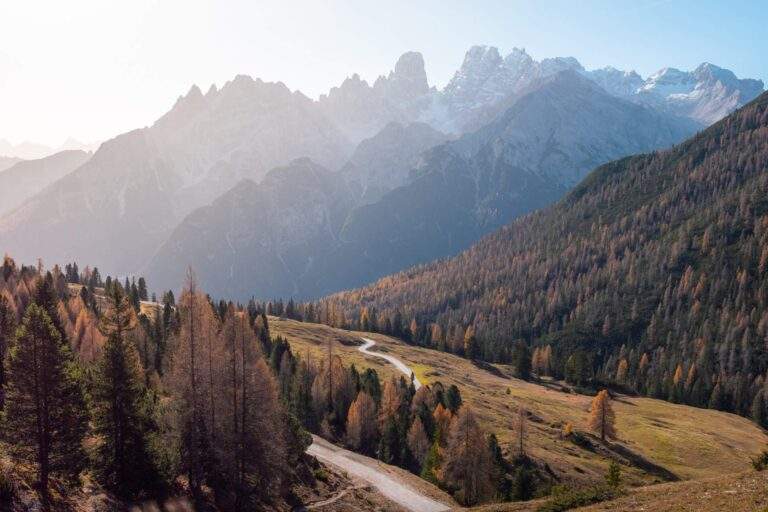
- Offers a beautiful 360-degree panoramic view of several of the Dolomites’ most prominent peaks (including the iconic Tre Cime di Lavaredo).
- Good paths that aren’t too steep.
- Easy parking.
- Mountain huts along the way with toilets and refreshments.
- Only about an hour and a half hike each way.
Sounds almost too good to be true, right?
The hike to the top of Monte Specie is one of the best cable car-free hikes in the Dolomites in terms of effort versus reward.
The route is “only” around 4-5 kilometres (~ 3 miles) each way with about 400 metres of altitude gain (~ 1,300 feet).
We spent just over three hours in total, as we made the hike a loop.
We started by heading to Rifugio Vallandro (Dürrensteinhütte), then took a steep path almost straight up from there. On the way down, we followed the slightly longer, but much less steep, route 40A.
In 2026, it costs 10 euros (~ 11.5 USD) to drive up the toll road to Prato Piazza, where parking is then free.
In the high season (from 1 July to 15 September), driving up is only allowed before 9:00 and from 16:00.
Read more about the hike to Monte Specie in our full travel guide.


Hiking guide with everything you need to know about Monte Specie, including parking, route and our best tips
Read more4. Lago di Carezza – Reflective lake with mountain backdrop
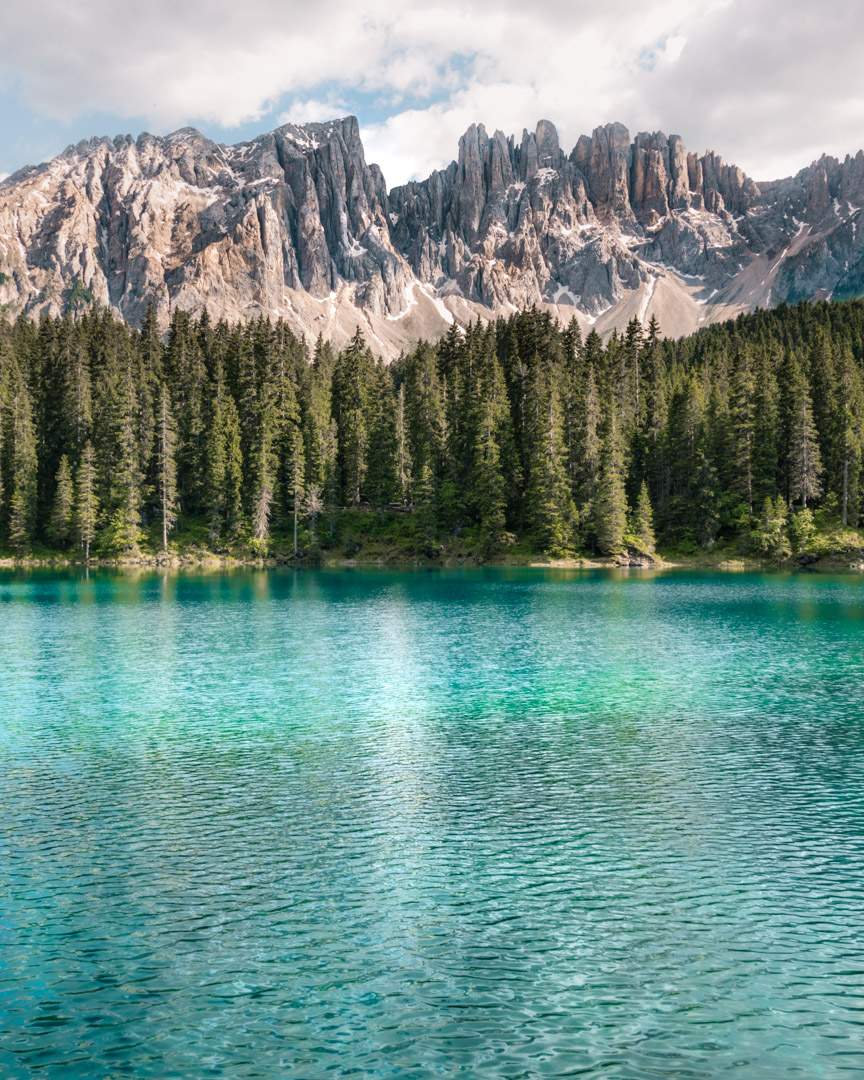
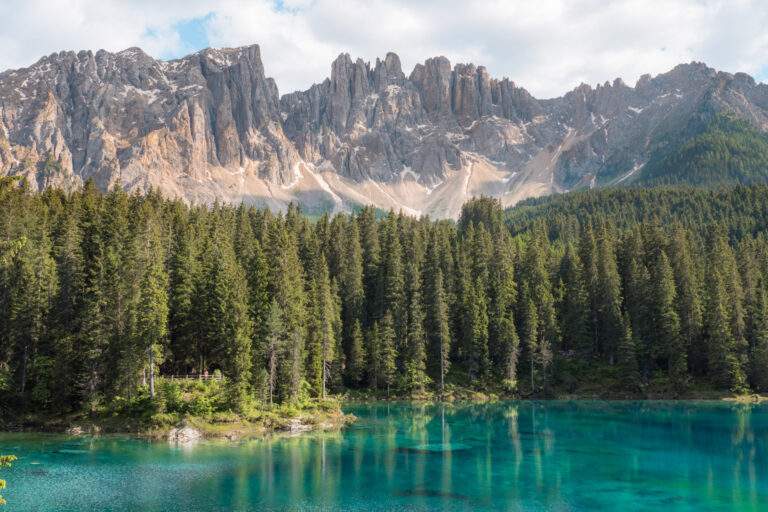
Like Lago di Braies, Lago di Carezza is one of the clear highlights of the Dolomites.
It’s easy to visit and doesn’t require much more than:
- Typing “Lago di Carezza” into your GPS.
- Finding a parking spot.
- Paying for it.
- Walking a few steps from the car.
- Taking in the view!
Lago di Carezza is understandably popular, so if you want to avoid traffic and queues (both on the road and at the classic photo spots), it’s best to arrive early or later in the day.
There’s an easy path around the lake that takes about 20 minutes to walk.
Tip: Don’t jump the railing – no matter how Instagram-friendly the rocks may look. It’s not allowed.
You’ll find more tips for visiting Lago di Carezza in our full travel guide.
All you need to know about Lago di Carezza – parking, walking routes and our best tips
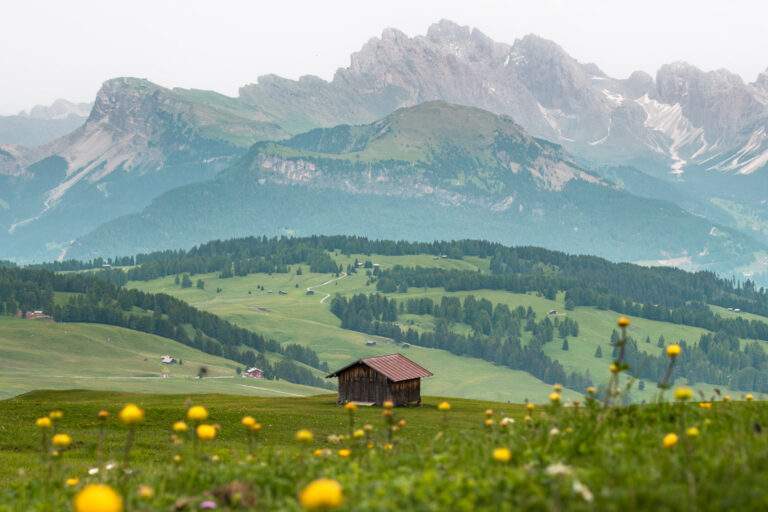
Read more5. Alpe di Siusi – Hike on Europe’s largest high alpine meadow
In summer, Alpe di Siusi is a paradise for hiking and cycling.
In winter, the slopes turn into a large ski area with some of the best views in the Dolomites.
We’ve visited both at the beginning of November, when the snow had just started to settle, and in June, when we had a mix of rain and sunshine.
You can only drive up if you’re staying there (like we did at Hotel Paradiso Pure.Living (adlink) in the summer) or outside the restricted hours.
The easiest option is to take the cable car – either from Siusi (Seis am Schlern) or Ortisei in Val Gardena.
There are plenty of hiking routes to choose from, both short and easy, and longer, more demanding ones, and you can more or less put your trip together as you like.
You’ll find lots of mountain huts along the way, and the views keep changing as you move around.
In our guide to Alpe di Siusi, you’ll find more photos, hiking inspiration and tips.
You can also read our review of Paradiso Pure.Living.


How to reach the alpine plateau of the Dolomites, hiking trails, best hotels, our top tips and more
Read more6. The church in Val di Funes – Iconic Dolomites photo spot
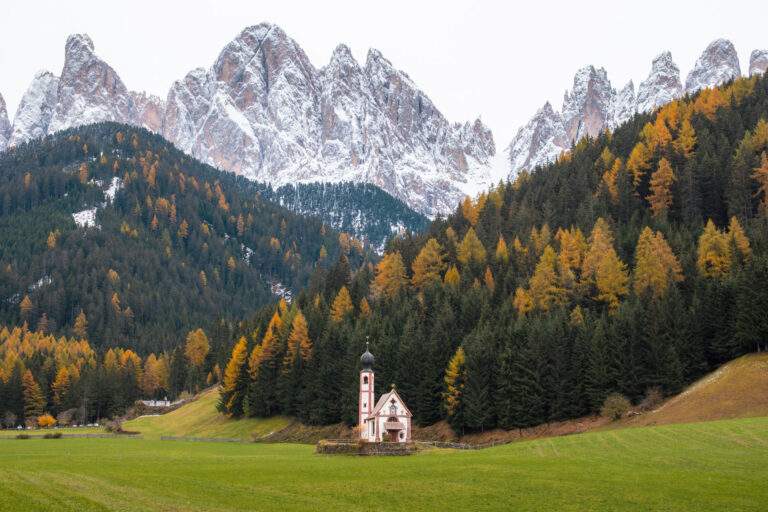
The Church of San Giovanni in Val di Funes (known as Chiesetta di San Giovanni in Italian, Kapelle St. Johann in German or the Church of St. John in English) is undoubtedly one of the most beloved sights in the Dolomites.
The mountain peaks behind it (including the famous Seceda) create a stunning contrast with the small, charming church.
The local authorities know this spot is popular on Instagram, so there’s a small fee for parking.
There’s also a charge to get up close to the church, but viewing it from outside is completely free. As far as we know, the church itself isn’t open to visitors.
Please be careful not to step on vegetation or off marked paths. Sadly, many tourists don’t respect this, which damages the delicate plant life.
Read more about the Church of San Giovanni in Val di Funes in our travel guide here.


All you need to know about the Church of San Giovanni – how to get there, viewpoints and our top tips
Read more7. Tre Cime di Lavaredo – Classic hike around the popular three peaks
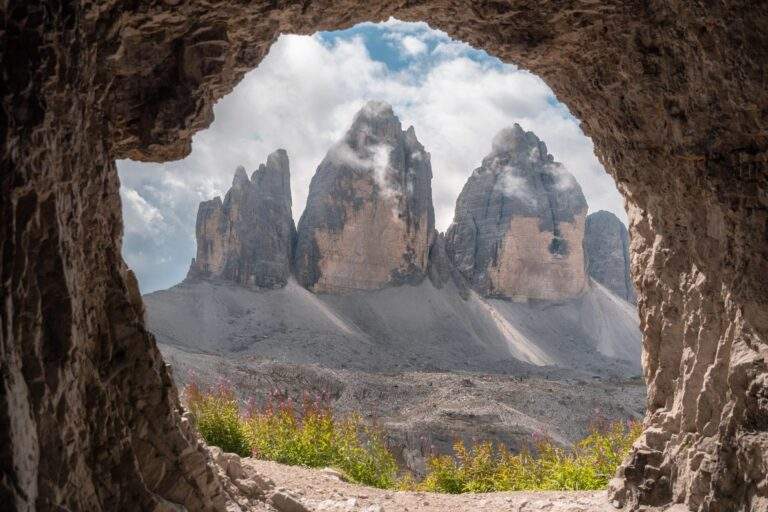
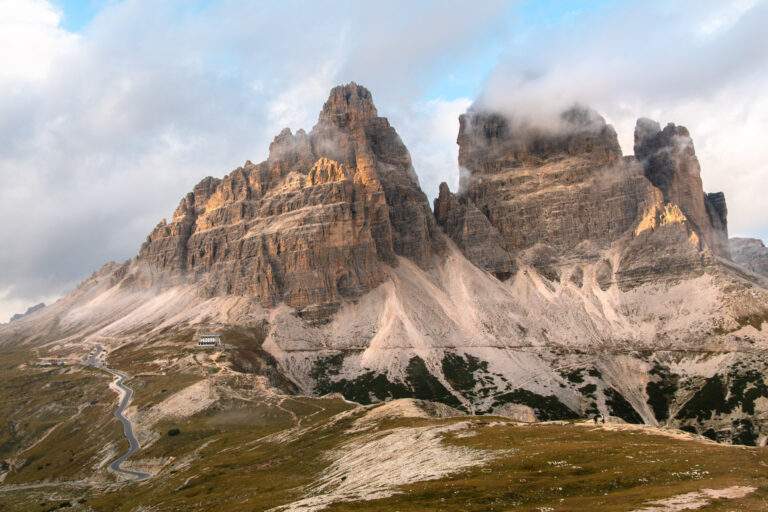
The Three Peaks of Lavaredo (Tre Cime di Lavaredo in Italian or Drei Zinnen in German) are some of the Dolomites’ most iconic mountains – a must-see on any hiking holiday here.
There are plenty of options for half-day or full-day hikes, and whichever way you approach Tre Cime di Lavaredo, you’ll be rewarded with incredible views all around.
For the best vantage point, we recommend hiking to Rifugio Locatelli (Dreizinnenhütte).
The full circular route around the peaks is just under 10 kilometres (~ 6.2 miles) and takes roughly 3-4 hours without stops. Allow 5-6 hours if you plan to take photos and rest along the way.
In high season, it’s best to arrive early or late to secure a parking space, as this is one of the most popular hikes in the Dolomites.
The steep toll road up to the car park costs around 40 euros (~ 47 USD) in 2026, including parking. Alternatively, buses are available.
We’ve written a full guide to visiting Tre Cime di Lavaredo, which you can read here.


Travel guide to one of the best hikes in the Dolomites – route, highlights, facilities and our top tips
Read more8. Cadini di Misurina – Ridge path to epic viewpoint
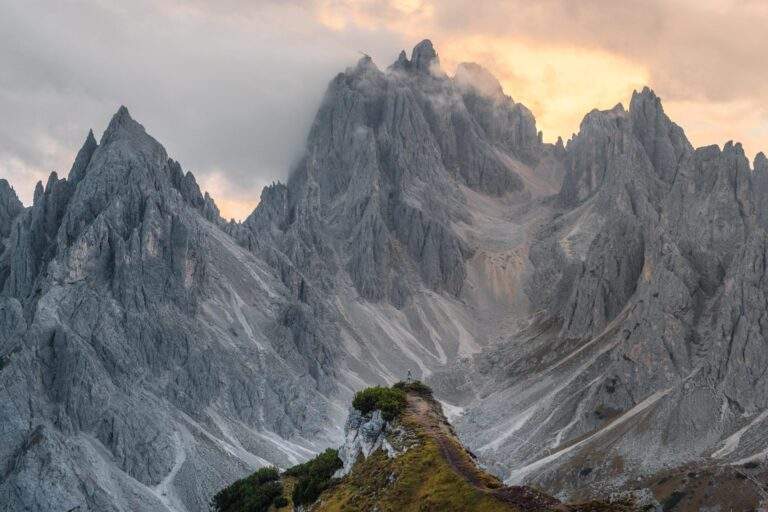
Right next to Tre Cime di Lavaredo is the (still) lesser-known viewpoint Cadini di Misurina, which for many brings to mind Sauron’s Mordor from The Lord of the Rings.
The peaks look both lethal and beautiful.
The walk from the car park at Rifugio Auronzo (where the Tre Cime circuit also starts) takes about 30-45 minutes each way.
The trail is around 4 kilometres long (~ 2.5 miles) with about 112 metres (~ 367 feet) of elevation gain and some exposed sections, so it’s not ideal for unsteady walkers or those with a strong fear of heights.
The reward for the relatively modest effort is, however, phenomenal!
Read all the practical details for the Cadini di Misurina hike in our full travel guide here.


Travel guide to the dramatic viewpoint near Tre Cime di Lavaredo
Read more9. Lago di Sorapis – Turquoise lake in rugged setting
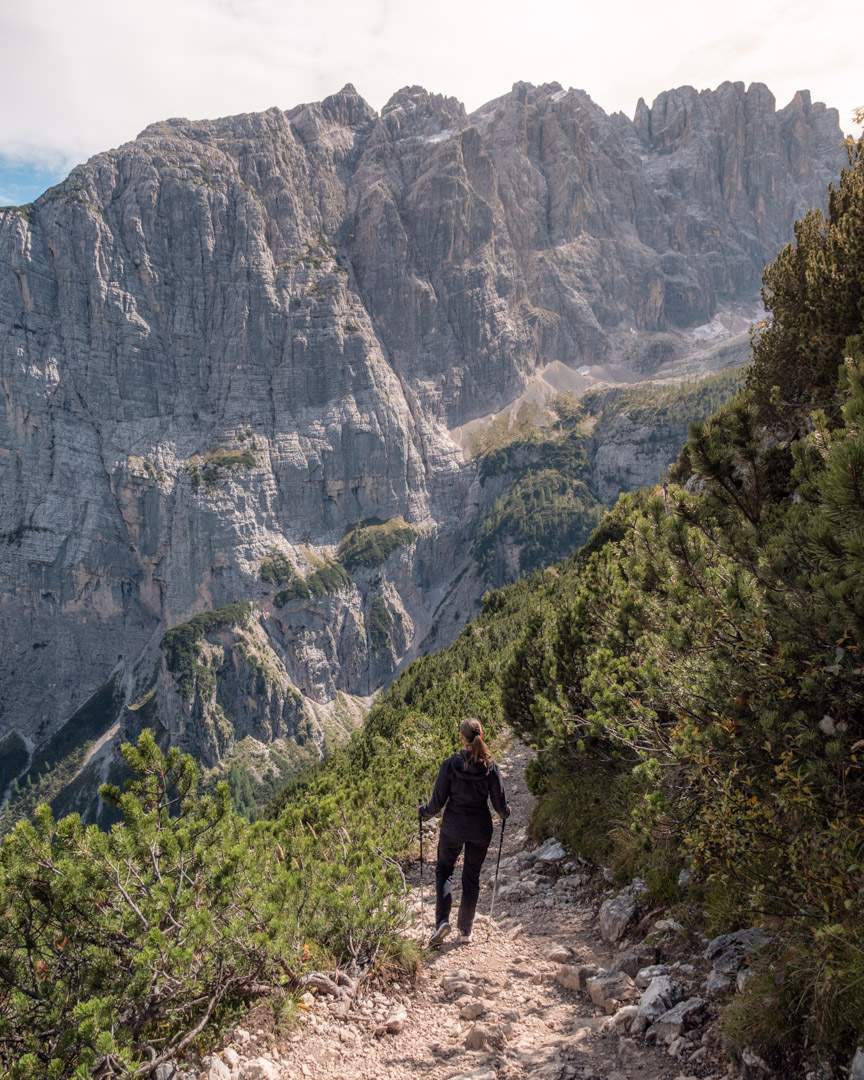
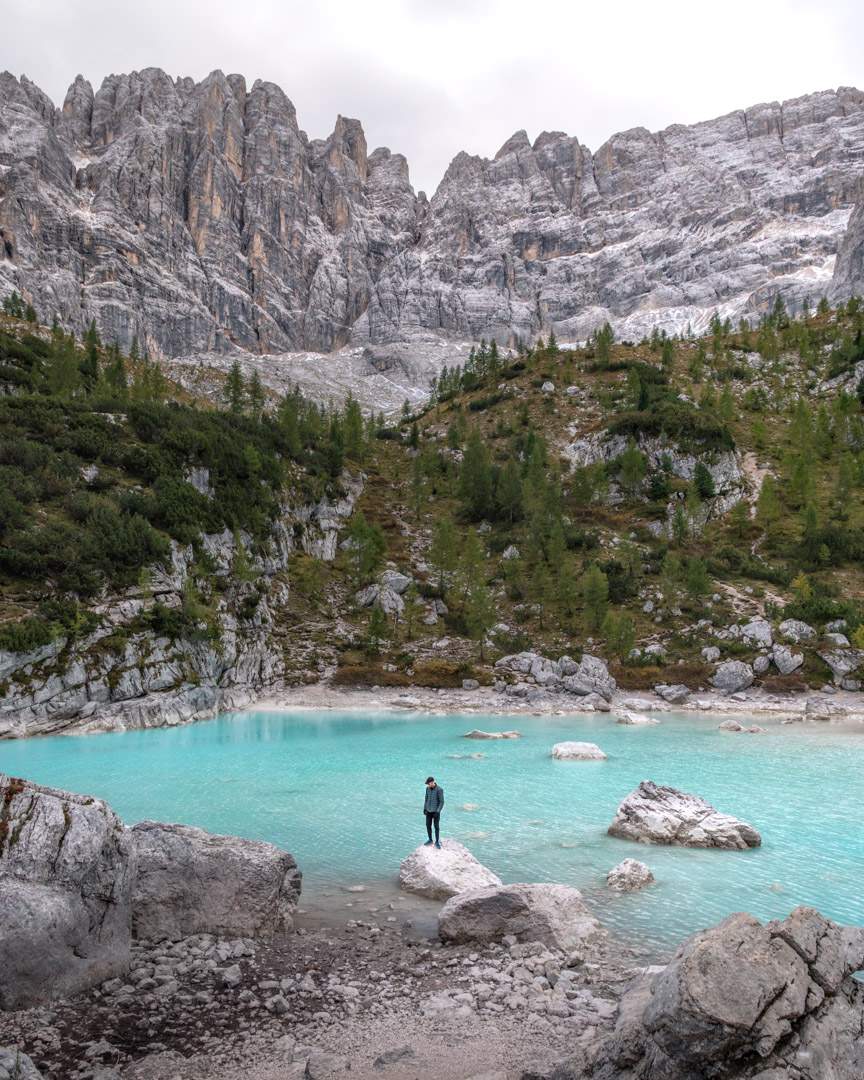
Visiting Lago di Sorapis isn’t nearly as popular as heading to Lago di Braies or Lago di Carezza.
That might be because it takes around two hours of relatively steep hiking to reach it from the road.
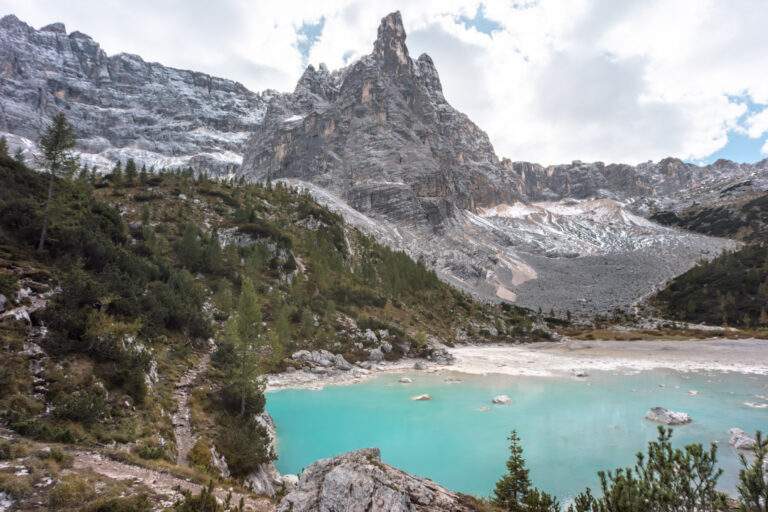
Still, it’s one of the most beautiful lakes in the Dolomites.
Parking is available along the roadside, and from there you just follow trail 215 to Rifugio Vandelli.
The hike to Lago di Sorapis and back is about 12 kilometres (~ 7.5 miles) with 460 metres (~ 1,510 feet) of elevation gain.
There’s a mountain hut (rifugio) by the lake, but since it’s located on the popular L’Alta Via delle Dolomiti n. 3, it can be tricky to find a bed for the night.
Around the lake, there are plenty of good picnic and photo spots on the rocks.
You can read more about the beautiful turquoise lake in our travel guide to Lago di Sorapis.



All you need to know about hiking to Lago di Sorapis, including parking, hiking route and our best tips
Read more10. Lago di Limides – Short walk to small alpine lake
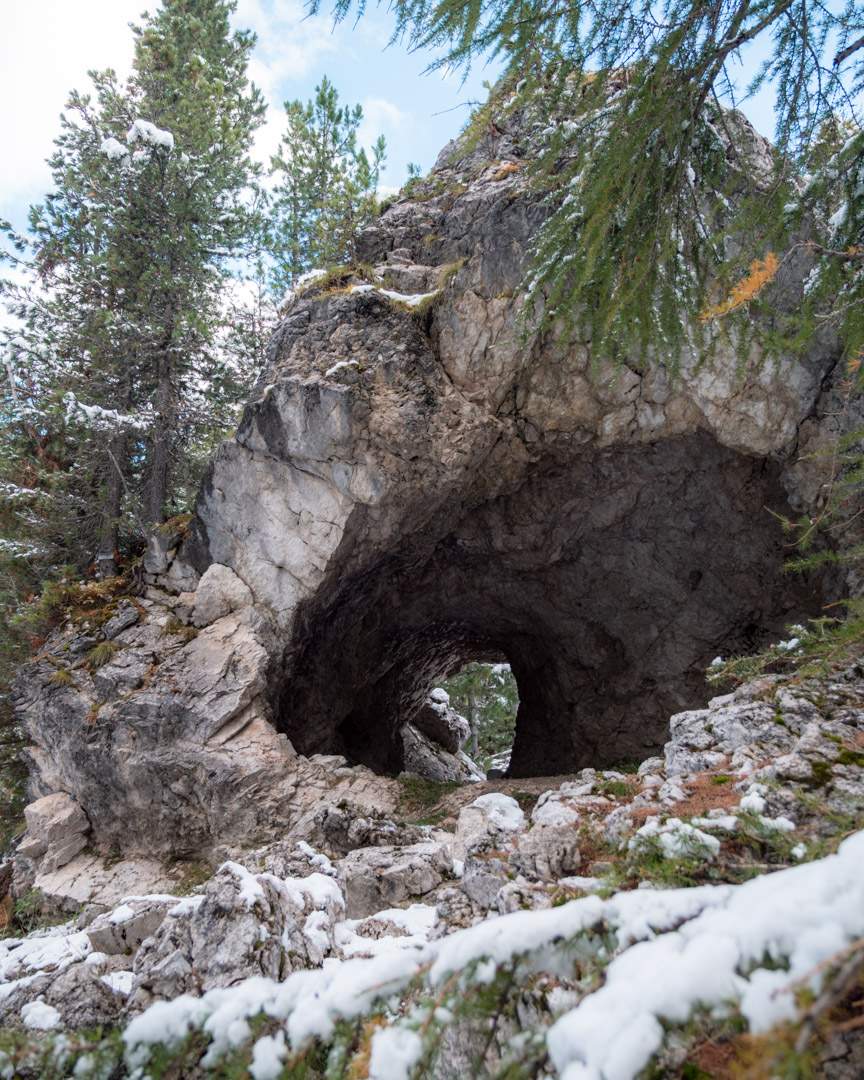
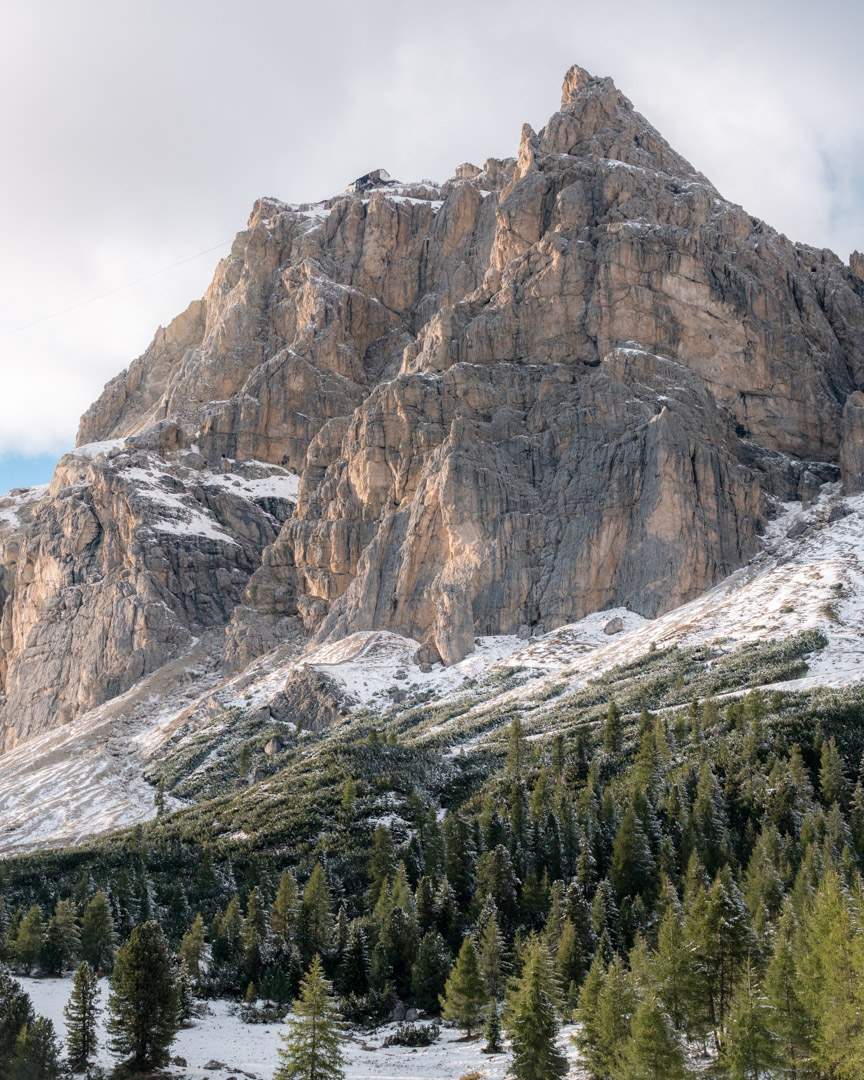
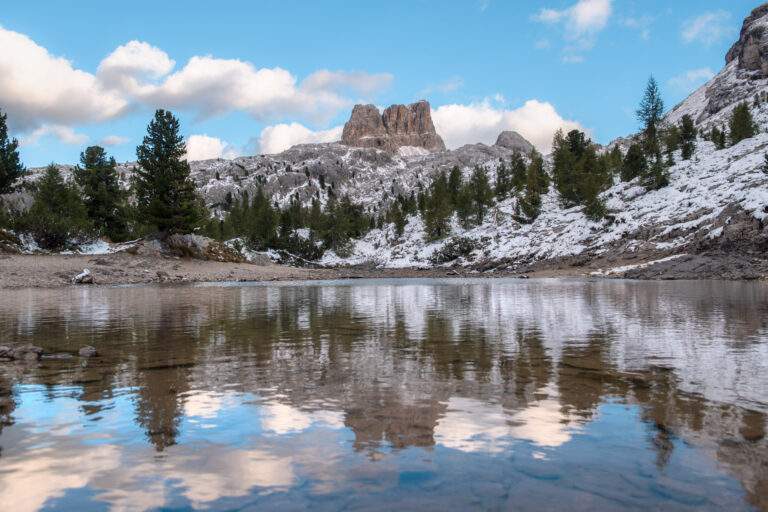
Lago di Limides is much smaller than Lago di Braies, Lago di Carezza and Lago di Sorapis, but its setting is truly lovely.
The hike from Rifugio Col Gallina, just east of Passo Falzarego, is only about 1 kilometre (~ 0.6 miles) with around 120 metres (~ 393 feet) of elevation gain. For most, it takes just over 20 minutes each way.
On Google Maps, you can start the hike at the “Lago Limides Hike Trailhead” point.
Read our full travel guide to Lago di Limides here.

All you need to know about hiking to Lago di Limides – route, parking and our best tips
Read more11. Vallunga – Easy valley hike below cliffs
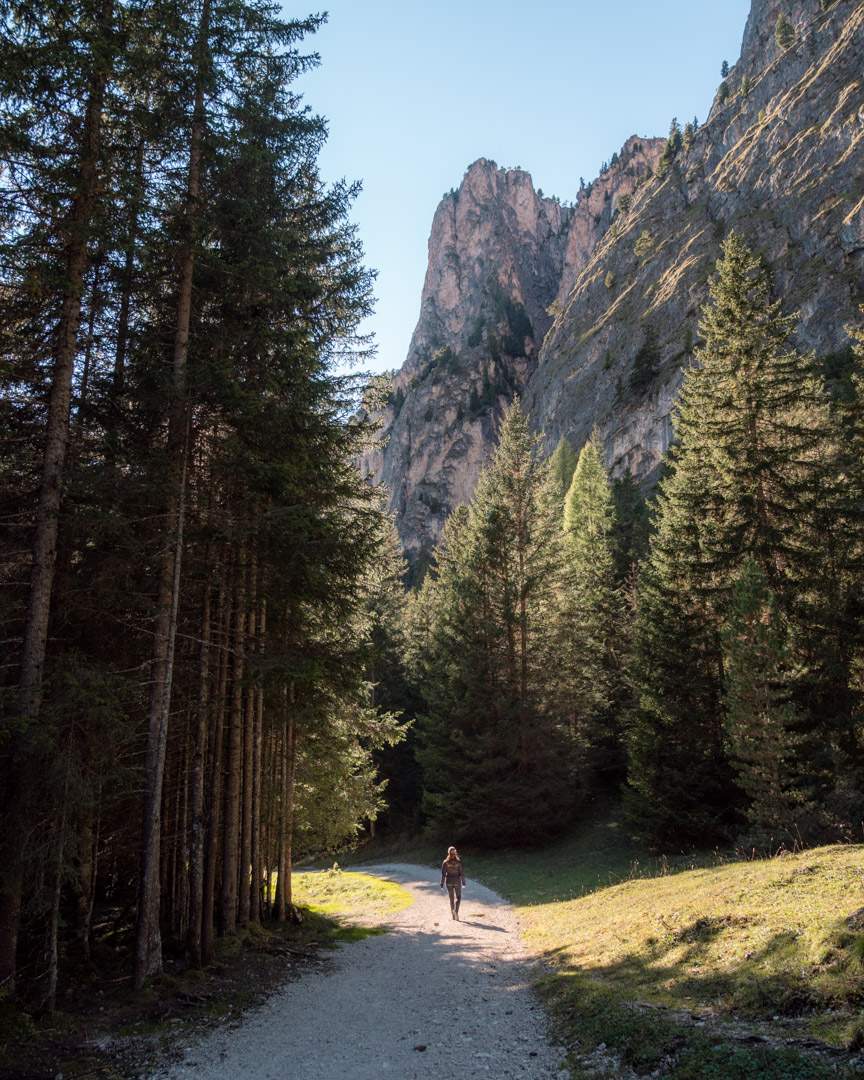
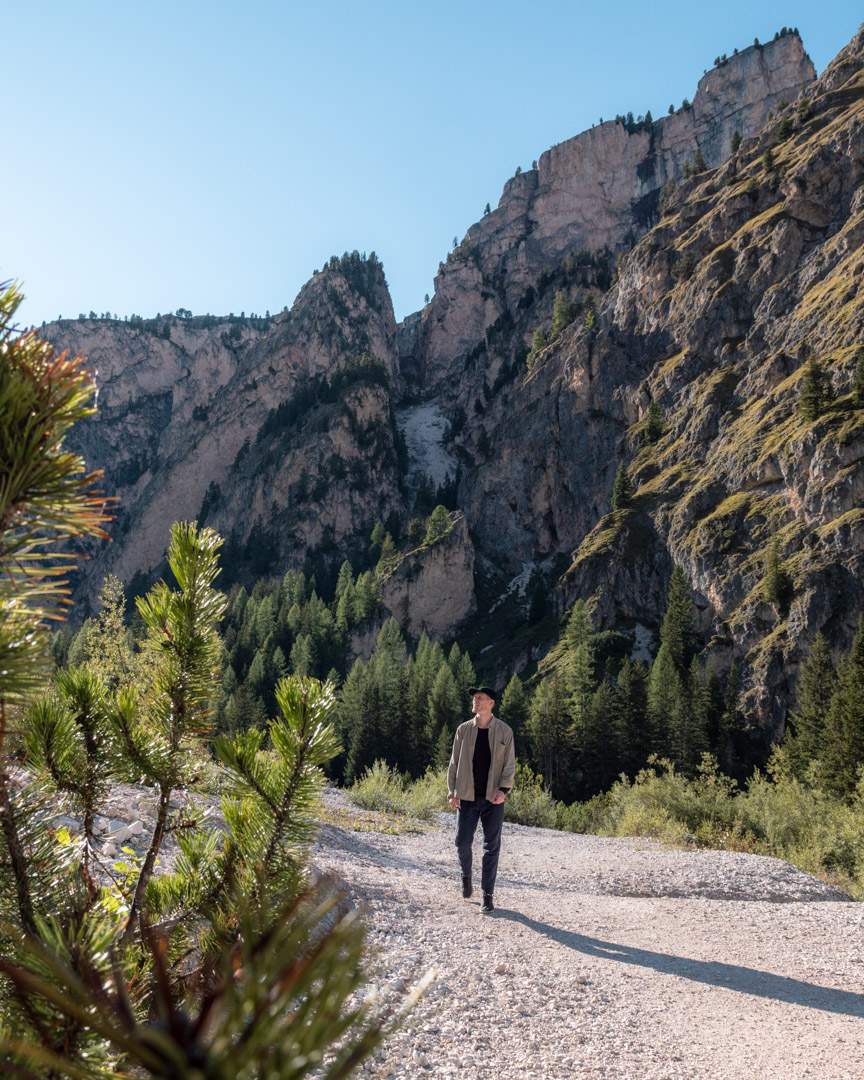
Vallunga (Langental) means “the long valley”.
It’s one of the best flat, easy hikes in the Dolomites and clearly popular with locals for walking dogs and exercising.
Since the valley sits relatively low at around 1,600 metres above sea level (~ 5,250 feet), it tends to stay snow-free later into autumn, making it a good choice for a warmer hike.
There’s basically just one trail running through the valley, which is about 9 kilometres in total (~ 5.6 miles), with “only” around 200 metres (~ 656 feet) of elevation gain.
We didn’t hike all the way to the end (where you can head up towards Rifugio Puez), but simply returned the way we came.
Note: Parking here costs a small fee.



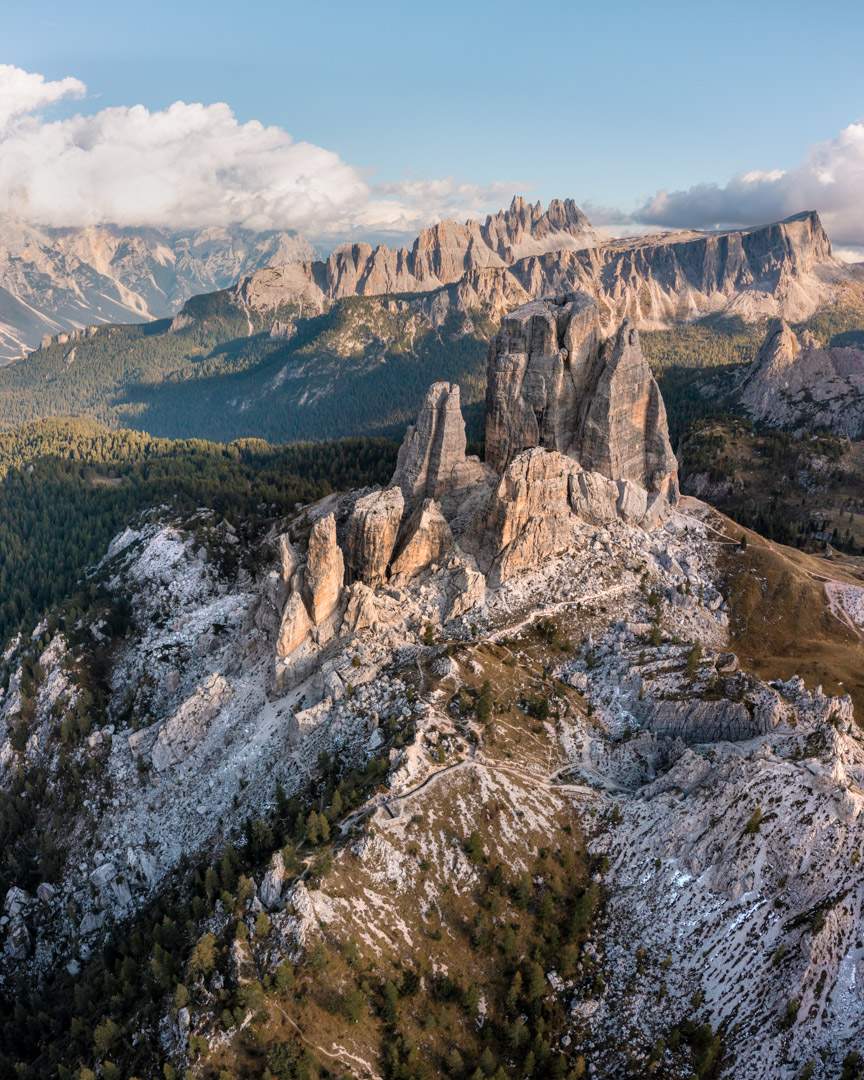
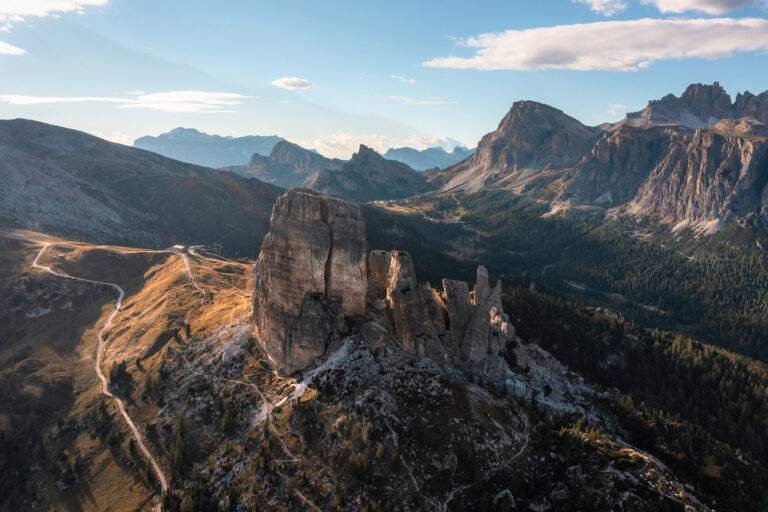
12. Cinque Torri – Mountains and WWI history
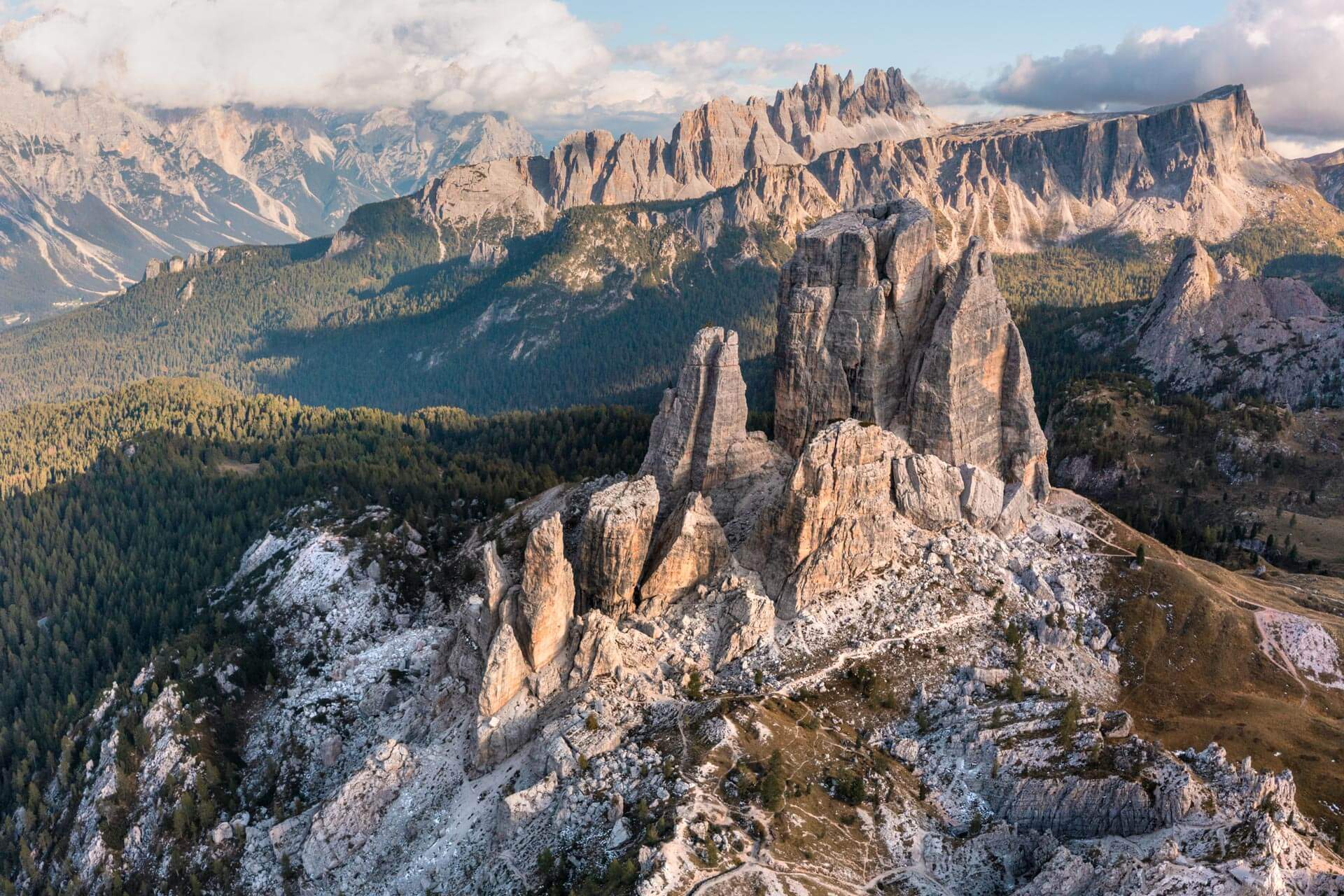
We took a bit of a detour from Passo Giau, passing Rifugio Averau to reach Cinque Torri (which we can definitely recommend for an interesting hike).
However, the easiest way to get to Cinque Torri is from Passo Falzarego on the other side.
From there, you can either hike up (with limited views) or, more commonly, take the cable car.
At the top, you’ll find plenty of hiking routes in various lengths, plus several mountain huts where you can stop for food and drink.
The Cinque Torri area is rich with fascinating information about its role in the First World War, which adds an interesting layer to your visit.
That said, wandering around the striking peaks is beautiful in itself, whether or not you’re into history.
Read more about Cinque Torri, hiking routes and tips in our full travel guide.


Guide to visiting Cinque Torri – walking routes, cable car, parking and our best tips
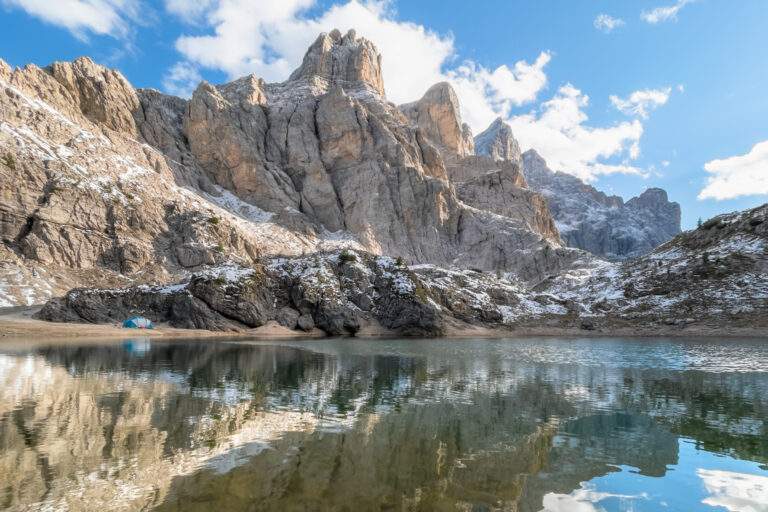
Read more13. Lago di Coldai – Quiet mountain lake below Monte Civetta
Although Civetta (3,220 metres/10,564 feet) isn’t the highest mountain in the Dolomites, its massif is one of the most impressive for many.
We hiked to Lago di Coldai from Rifugio Palafavera in the underrated Val di Zoldo.
The hike is moderately challenging – there’s no technical climbing or scrambling, but some sections are steep, rocky, and uneven.
The return trip covers around 11-12 kilometres (~ 6.8-7.5 miles), with approximately 600-700 metres (~ 1,970-2,300 feet) of ascent and descent, so plan to spend most of the day on the trail.
There aren’t many tourists here, and you get plenty of stunning views, including of Monte Pelmo – another wild and impressive peak.
First, you need to find Rifugio Adolfo Sonino Al Coldai, which isn’t far from the lake.
If you want to extend your adventure, you can continue along Civetta to Rifugio Tissi or head to Piani de Pezze, where a cable car takes you down to Alleghe (adlink), where we stayed during our 2022 trip to the Dolomites.
Read more about the route and see more photos in our travel guide to Lago di Coldai.


All you need to know about hiking to Lago di Coldai – parking, the route and our best tips
Read more14. Passo Giau – High mountain pass with big views
Passo Giau is one of the most spectacular mountain passes in the Dolomites, and it’s well worth a visit, even if you only plan to walk a few metres from the car.
It features some of the most scenic hairpin bends in the region, and several hiking routes start here (including the one we took to Cinque Torri).


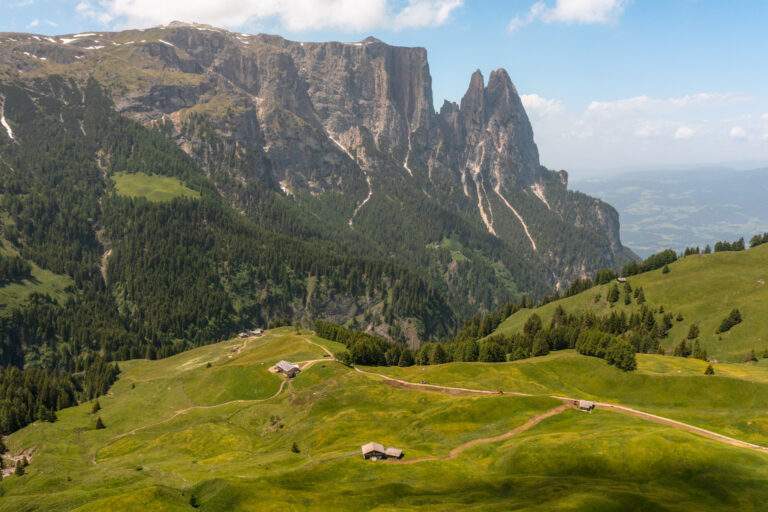
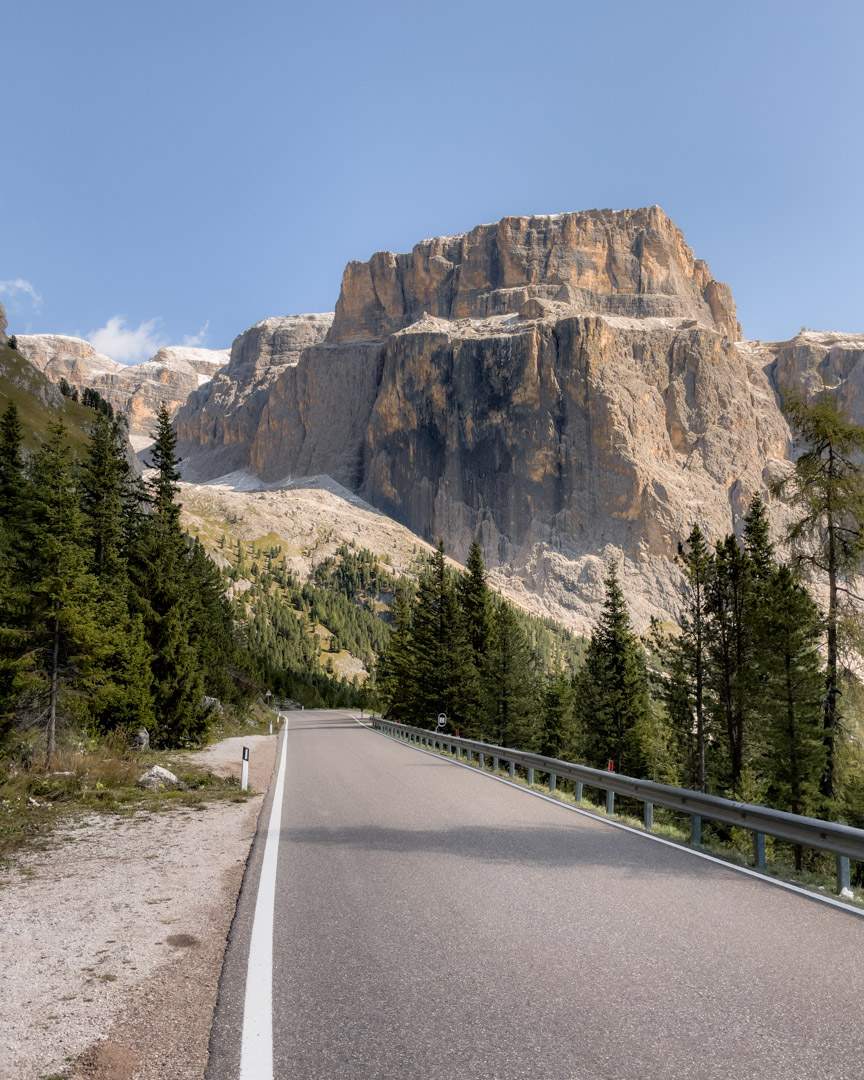
15. Passo Sella – Mountain pass at the foot of the Sella massif
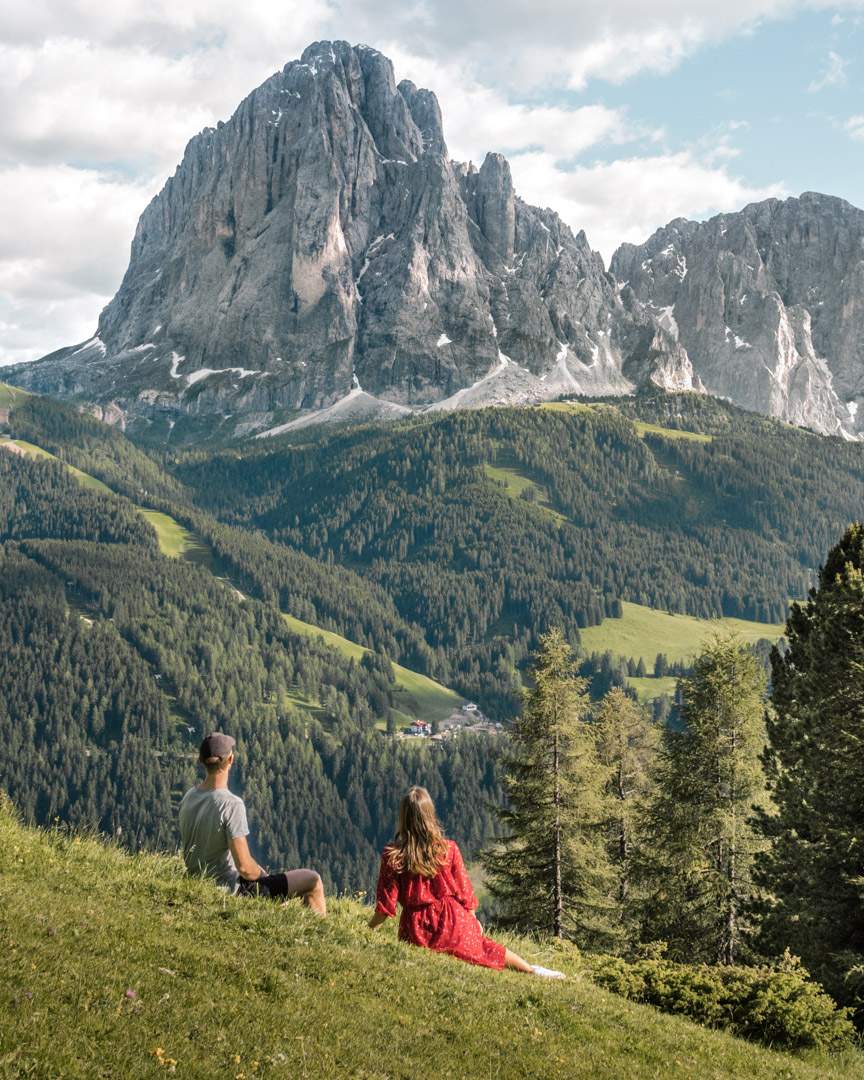
At Passo Sella, you’re right up close to the beautiful Sella group, with Sassolungo (also known as Langkofel or Saslonch) standing out as the most prominent peak.
Parking is easy to find at the pass.


Child-friendly hikes, viewpoints, playgrounds, climbing parks and lakes for the whole family
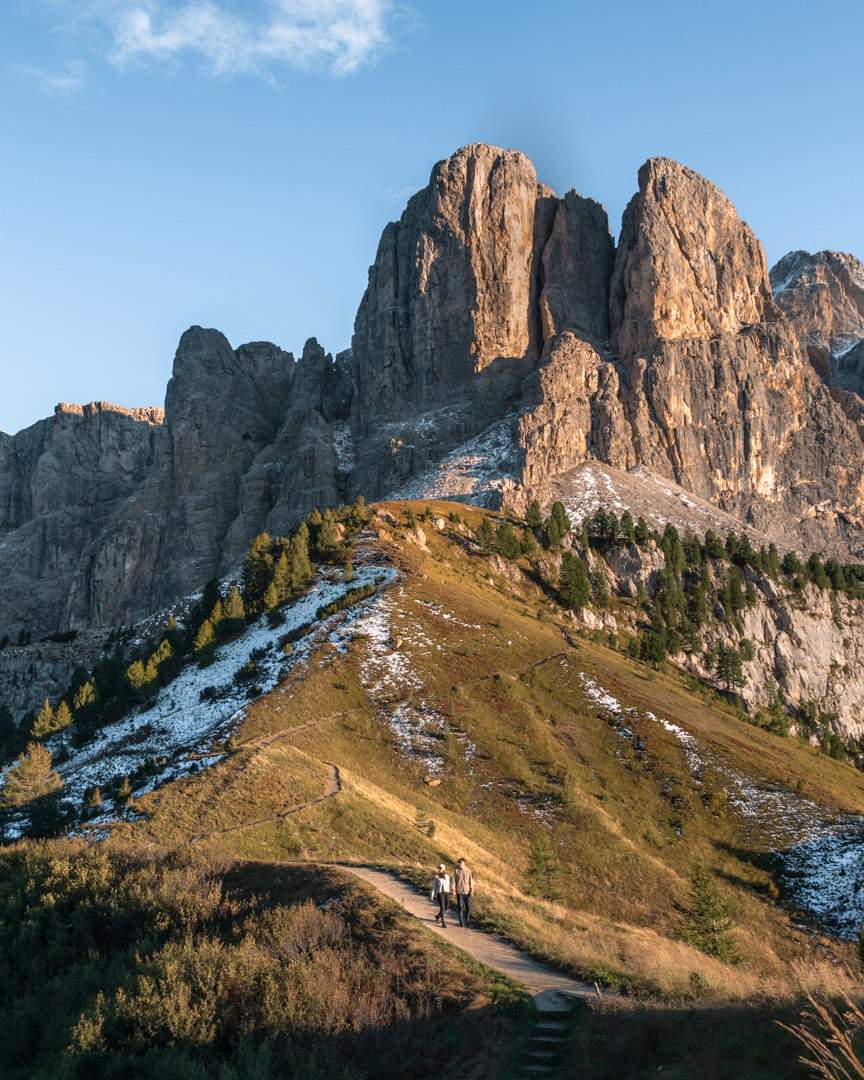
Read more16. Passo Gardena – Winding pass with sweeping views
Passo Gardena is hard to avoid when driving around the Dolomites.
Connecting the valleys of Val Gardena and Val Badia, it’s one of the region’s most famous mountain passes – and well worth a stop.
From here, several trailheads lead off, offering everything from short walks to full-day hikes.
The sunset is particularly beautiful.


17. Passo Fedaia – Reservoir beneath the Marmolada glacier
At Passo Fedaia, beneath Marmolada (the highest mountain in the Dolomites), you’ll find the man-made lake Lago di Fedaia.
It’s a perfect spot to stop at Rifugio Castiglioni Marmolada and take in the view.

18. Lago di Misurina – Easy lake walk with views
You’ll naturally pass Lago di Misurina on your way to Tre Cime di Lavaredo, and we think it’s well worth stopping for a break.
This is the largest natural lake in the Cadore area of the Dolomites, and from Grand Hotel Misurina (adlink) there’s a beautiful view to the south.
An easy path circles the lake, making it a pleasant place for a short walk while taking in the water, mountains and trees.
You’ll find restaurants, ice cream shops and hotels nearby, and if you’re travelling with children in the Dolomites, there’s a playground at the northern end.

Child-friendly hikes, viewpoints, playgrounds, climbing parks and lakes for the whole family
Read moreMap of the best hikes and viewpoints in the Dolomites
Here’s a map showing all the wonderful viewpoints and best hikes in the Dolomites mentioned in this guide.
In some cases, we’ve marked the mountain peak, viewpoint, or lake itself – in others, the nearest parking area or starting point, depending on what made most sense.
We’ve also included some of the best places to stay in the Dolomites (the green house icons).
How to get around the Dolomites
The Dolomites are in northern Italy and are easiest to reach by car – either your own or a rental.
If we’re not driving our own car, we usually compare car rental prices on DiscoverCars (adlink), where the prices shown include all mandatory fees, taxes and basic cover, so there are no surprises at pickup.
The largest airports near the Dolomites are:
- Innsbruck in Austria (1.5 hours)
- Venice (2 hours)
- Milano (3 hours)
You can use our adlink to find the best flight offers on Momondo.
In some cases, you can also fly to Bolzano (adlink), which, together with Trento and Merano/Meran, are the largest towns in Italy’s northernmost part.
These three towns lie just west of the core Dolomite area. Within the Dolomites themselves, towns tend to be smaller and often separated by winding mountain roads.
Here, Cortina d’Ampezzo (adlink) is the biggest town within the Dolomites and has the widest range of places to stay.
If you’re not renting a car, it’s possible to travel by bus from, for example, Bolzano to Cortina d’Ampezzo and continue from there by local buses to various trailheads or ski lifts.

When to visit the Dolomites
The Dolomites are a classic seasonal destination, and the time of year plays a big part in shaping your holiday.
The best period for activities like hiking, cycling and climbing is usually from June to September.
During these months, the cable cars run, the mountain passes are open, and both nature and weather tend to be at their best.
July and August are high season, with more tourists and higher prices, but the villages are lively and almost everything is open – from restaurants to mountain huts and lifts.
Mid-June or September can be ideal if you prefer a quieter atmosphere but still want access to most facilities.
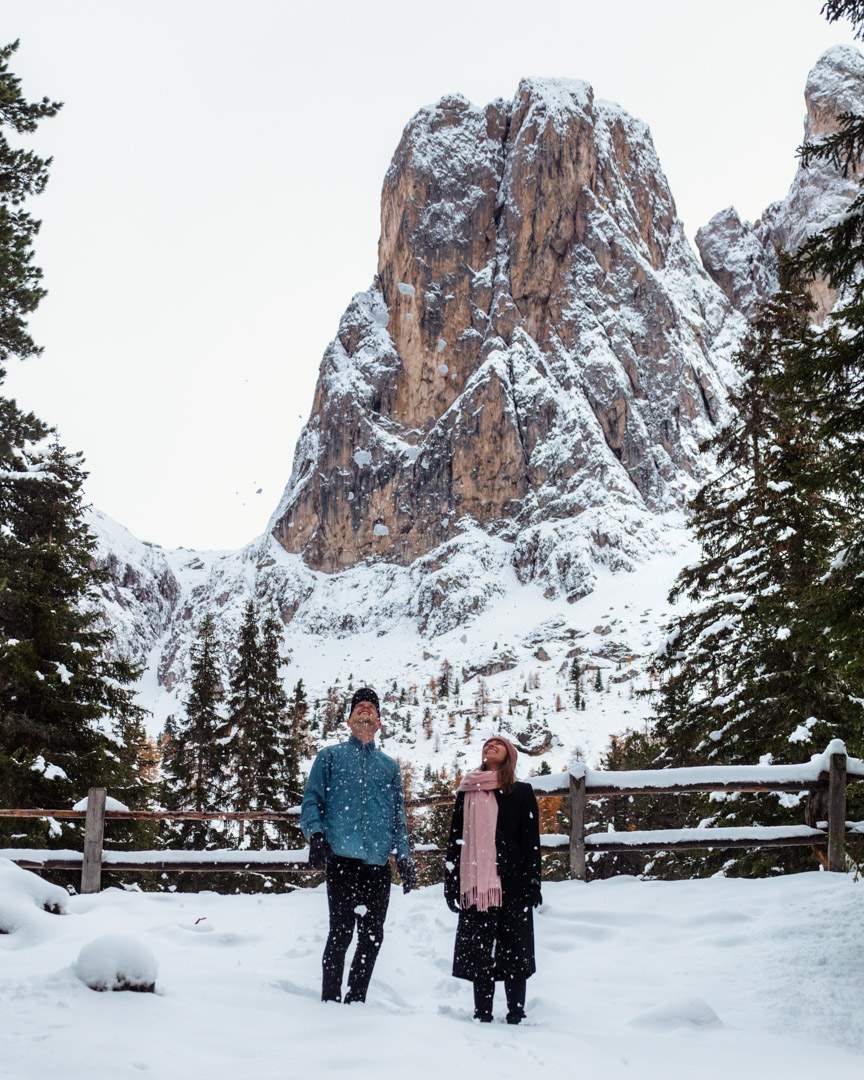
Outside the high season, the weather can be less stable, and snow in the higher areas is not unusual, even in May or as early as October.
Many cable cars and attractions close during these months, which can make it harder to reach some of the most popular spots, such as Seceda, Alpe di Siusi and Cinque Torri.
In winter (usually November to April), the Dolomites offer excellent skiing and opportunities for snowshoeing.
Read our guide on when to visit the Dolomites for more details.
When to travel to the Dolomites and what to expect – whether you’re into skiing or hiking
Read moreHow long to stay in the Dolomites
How long to spend in the Dolomites is a tough question – but our answer is simple: as long as possible!
We’ve visited five times (so far) and spent anywhere from 3 to 10 days on each trip.
If it’s your first time, we’d recommend staying at least 4-5 days – ideally a full week.
That gives you time to go on a few hikes, visit some of the famous viewpoints and settle into the slower pace of the mountains.
With a week or more, you can take on longer hikes or space out your plans a bit, so you’re not cramming everything into one day.
It also makes more sense to stay in different areas, giving you the chance to reach several of the best hikes and viewpoints in this guide, which are quite spread out.
If you only have a few days, it’s still worth going, but we’d suggest picking one area and focusing on what’s close by, so you don’t spend too much time on transport.
Remember to check out our guide to where to stay in the Dolomites here.

Our best tips for the Dolomites
- Think about the season. Spring and autumn are quieter and often more colourful, while summer brings open mountain huts, stable weather, more people and traffic restrictions. In winter, many places are snow-covered, so you’ll need the right gear.
- Allow plenty of time for travel. Even 20 kilometres (~ 12 miles) between towns can take around an hour due to winding mountain roads and hairpin bends.
- Overtake with extreme caution. Steep, narrow roads mean passing other vehicles is risky – only do so when absolutely safe.
- Use cable cars to save energy. They help you skip many metres of climbing on hikes. Just double-check they’re open for the season before you go.
- The sun rises late and sets early. Because of the high mountains, daylight hours feel shorter than the “official times”.
- Bring a good camera. The Dolomites are stunning! Here is a guide to the gear we use.
- Be prepared for changing weather. Conditions can shift quickly and be very unreliable in the mountains. It often rains in the afternoon, but you never know in the Dolomites, so always check the forecast before setting off.
- Dress in layers. That way, you’ll be ready for both sunshine and wind.
- Wear comfortable footwear. Sneakers or hiking shoes with a good grip are ideal.
- Walking poles aren’t essential, but handy if you already have them.
- Bring food, drinks and snacks on hikes. It makes it easier to enjoy breaks with a view and on many hiking routes, and at mountain huts, you’ll also find places to refill your water.
- Don’t forget sun protection. Sunscreen and a hat are useful, especially in summer. The sun can be intense at higher altitudes.
- Pack a torch or headlamp. It’s handy if you’re planning to watch the sunset from the summit and walk down in the dark.
- Remember to bring cash. Some refuges and parking areas don’t accept cards.
Check out all of our best tips for the Dolomites in this comprehensive guide.

When to travel to the Dolomites and what to expect – whether you’re into skiing or hiking
Read moreSustainable travel tips
To travel as sustainably as possible, we recommend the following:
- Bring your own drinking water in a refillable bottle.
- Avoid disposable plastics.
- Dispose of waste properly and don’t leave anything behind.
- Take only photos and leave only footprints. Avoid picking flowers or taking anything from nature with you.
- Stick to the marked paths.
- Show consideration towards other visitors.
- Respect the local wildlife.

Thank you for reading along
Thank you for reading our travel guide to the many viewpoints and best hikes in the Dolomites. We hope you found it helpful!
Do you have a favourite hike in the Italian mountains?
If so, we’d love to hear your best tips and recommendations.
And if you haven’t been to the Dolomites yet, feel free to ask us any questions in the comments. We’re happy to help.

More from the Dolomites
We absolutely love the Dolomites. Here are all our guides to the stunning mountains in northeastern Italy, with our best tips for hiking, viewpoints, where to stay, transportation and more.
Overview:
Hiking guides:
Our favourite travel resources:
- Booking.com for hotels and apartments.
- Momondo for the best flight deals.
- AirHelp for flight delay compensation.
- GetYourGuide for great tours everywhere.
- Airalo for reliable eSIM.
- Discover Cars for transparent car hire.
- SafetyWing for travel insurance. We also like True Traveller. Compared here.

Where to Stay in the Dolomites with Children: Best Family Hotels & Areas
Our recommendations for the best family-friendly hotels and areas in the Dolomites, Italy
-
Where to Stay in the Dolomites: Best Hotels & Areas for Hiking and Skiing Holidays
Our recommendations for the best places to stay in the Dolomites, Italy
-
When to Visit the Dolomites? Weather, Seasons & Best Time to Go
When to travel to the Dolomites and what to expect – whether you're into skiing or hiking