Five towers with a dramatic history
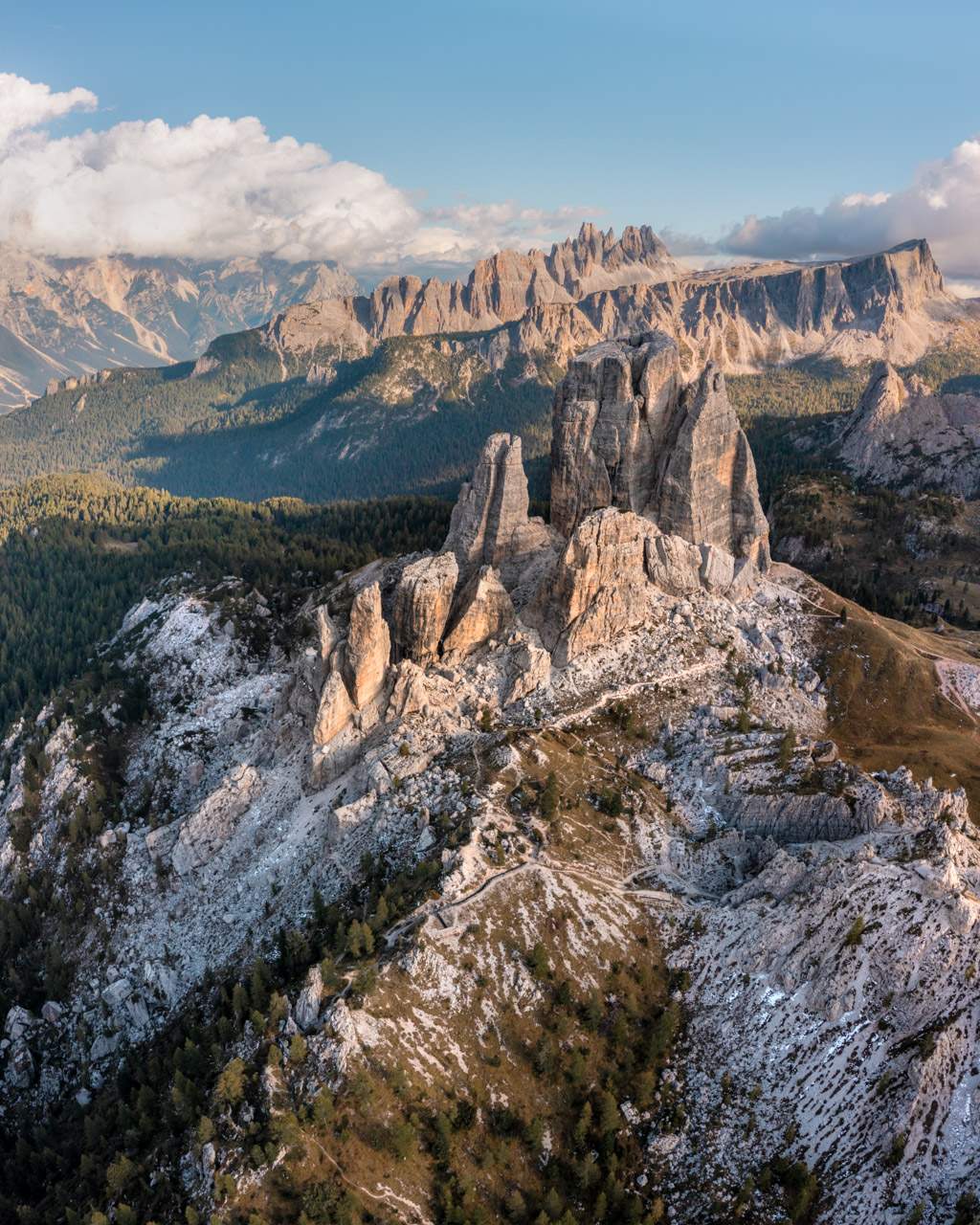
Cinque Torri is one of those places in the Dolomites that really makes an impression, both with its dramatic rock formations and the wide-open mountain views.
It’s an easy choice whether you’re into long hikes, short walks, or just fancy taking the cable car up to soak up the atmosphere and enjoy a sunny lunch.
The area is well laid out and family-friendly, and it’s a great spot to combine nature with culture and history.
Up here, you’ll still find visible traces from the First World War – including old trenches and soldiers’ barracks.
We hiked up to Cinque Torri ourselves at the end of September, had lunch at a mountain refuge, and explored the wild cliffs and the open-air museum.
In this travel guide to Cinque Torri, we share why the peaks are worth visiting, how to get there on foot or by cable car, practical info like opening hours and parking, when to go, and our best tips for making the most of your visit.
Where to stay near Cinque Torri
- Budget: Hotel Serena – Good budget hotels in Cortina d’Ampezzo are rare to find, but here’s a nice one.
- Budget: Garnì Astor – Simple double rooms in Alleghe at a family-run B&B at a low price.
- Value for money: Hotel Sorapiss – 3-star hotel by Lake Misurina, close to both Lago di Sorapis, Tre Cime and Cinque Torri
- Luxury: Grand Hotel Savoia Cortina d’Ampezzo, A Radisson Collection Hotel – One of the most spectacular 5-star hotels in Cortina d’Ampezzo, approximately 20 minutes away.
Search for the best hotels in Cortina d’Ampezzo here or read our comprehensive guide to where to stay in the Dolomites.
Table of contents

What is Cinque Torri?
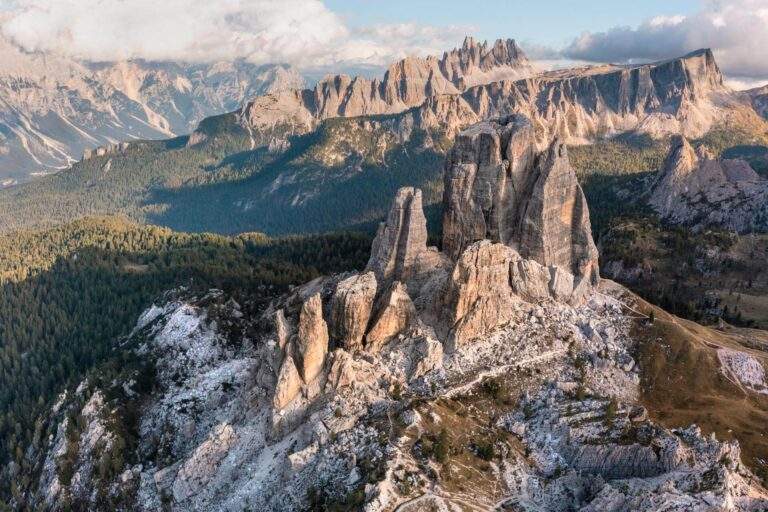
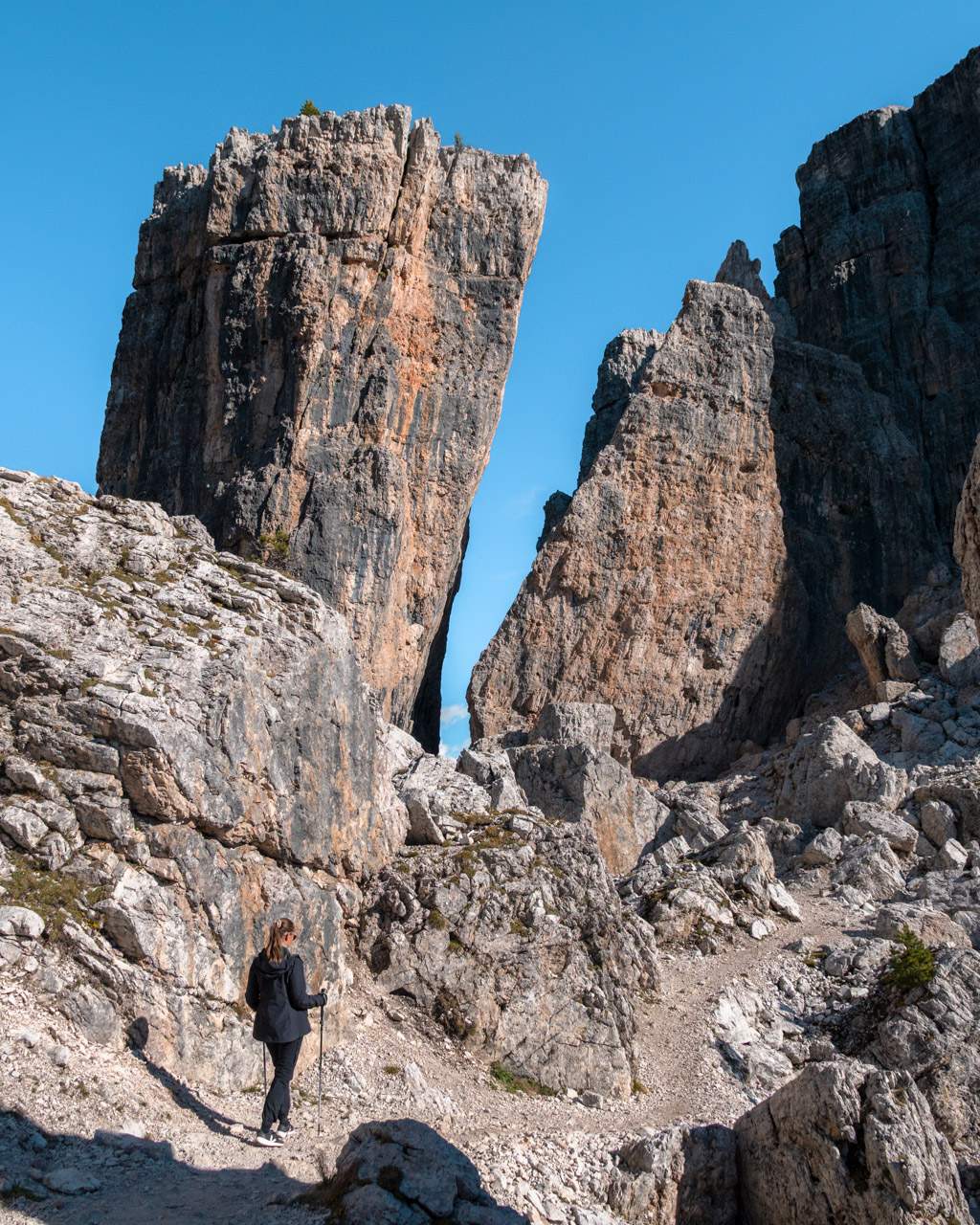
The impressive freestanding rock formations known as Cinque Torri (the Five Towers) are located in the Dolomites in northern Italy.
In English, the name means “the five towers”, and each one has its own name:
- Torre Grande
- Torre Seconda (also called Torre del Barancio or Torre Romana)
- Torre Latina (also called Terza Torre)
- Fourth Tower
- Torre Inglese (also called Quinta Torre)
Even though it’s not always obvious that there are exactly five towers, it’s still a truly special place – and the views are incredible!
The dramatic cliffs are surrounded by green meadows and majestic mountains in every direction.
Alongside well-marked hiking trails of varying difficulty and great opportunities for climbing, the area is also home to fascinating remnants from the First World War.


Map of Cinque Torri
Cinque Torri is situated in the eastern Dolomites, in Italy‘s Veneto region, between Passo Falzarego and Passo Giau.
The rock formations lie just north of Mount Averau (of which they are considered a part) and belong to the Nuvolau group in the Dolomiti d’Ampezzo.
The nearest major town is Cortina d’Ampezzo, which is a popular base for exploring the Dolomites.
All you need to know about visiting Seceda – how to get there by cable car and our best tips
Read moreWhy visit Cinque Torri
There are plenty of impressive mountains and viewpoints in the Dolomites, but Cinque Torri still stands out as one you shouldn’t miss.
The striking rock towers soaring into the sky are a sight worth seeing on their own, and beyond that, the surrounding views of the mountains are simply magnificent.
We chose a longer hike to get there ourselves, but it’s actually easy to reach the area by cable car if you’d prefer to save your energy.
At the top, you’ll find walking routes of varying difficulty, making it a great experience for families with children, too.
You can also explore well-preserved First World War trenches, which add a fascinating layer of history.
Whether you’re visiting for the scenery, the history, or a gentle hike in the heights, we reckon Cinque Torri is well worth your time.
A travel guide to our favourite hikes in the Dolomites – from short walks to full-day adventures
Read moreOpen-air museum from the First World War
The Dolomites were part of the frontline between Italy and Austria-Hungary during the First World War, and traces of the conflict remain visible at Cinque Torri.
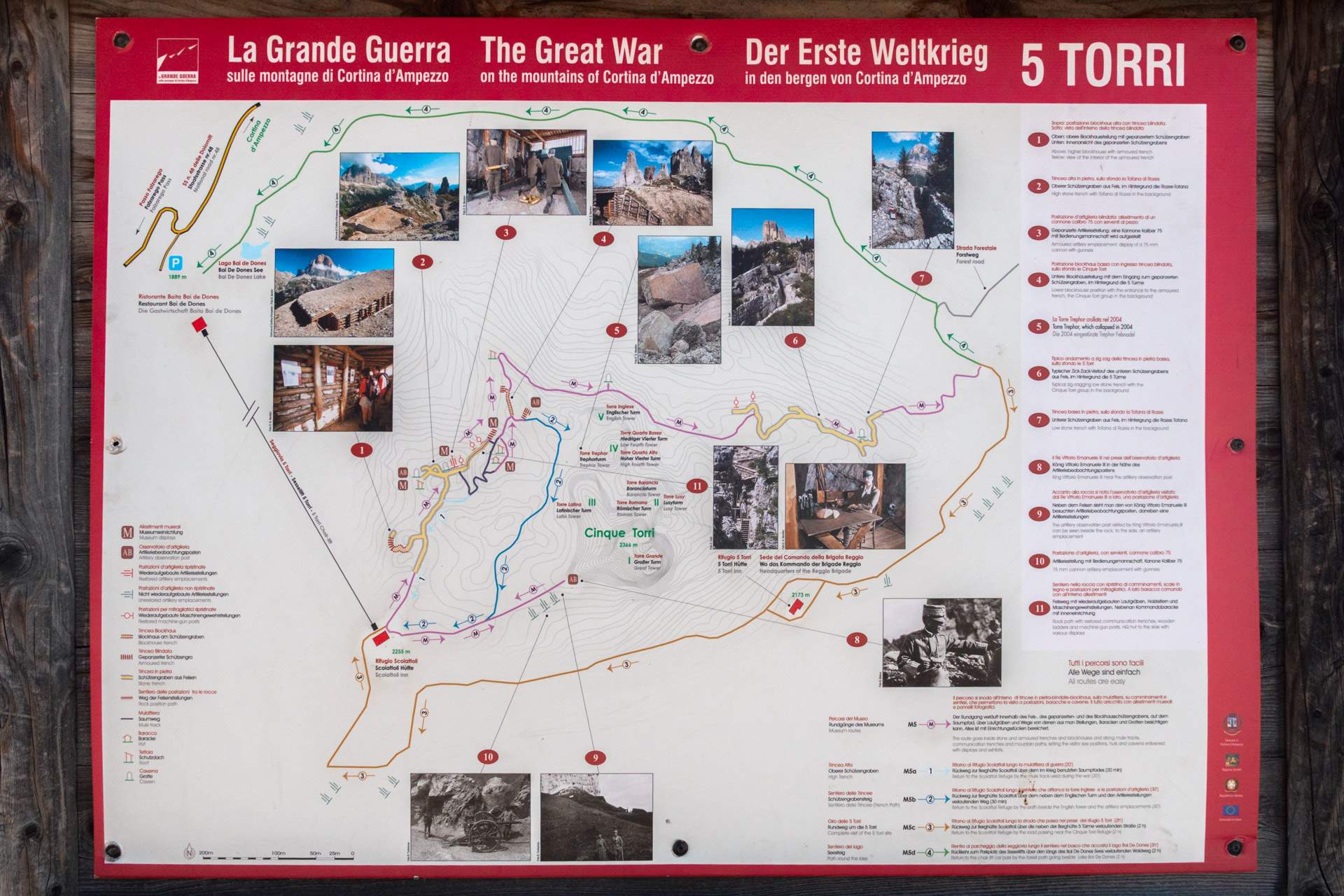
Alongside the striking rock formations and stunning views, you can explore a free open-air museum with information boards that explain how Austrian and Italian soldiers battled in this harsh landscape.
Today, you can wander through reconstructed trenches, tunnels and soldiers’ barracks scattered around the rocks – something we highly recommend. It’s easy to combine this with other walking routes at the summit.
The open-air museum isn’t large, but it offers a powerful insight into the extreme conditions under which soldiers lived and fought.

Cinque Torri hiking routes
Up at Cinque Torri, you’ll find several short and medium-length hiking routes with varying levels of difficulty.
Most of the trails are well-marked and combine dramatic rock formations, sweeping alpine views and historical remains from the First World War.
Next to Rifugio Scoiattoli (where many of the hikes begin), there’s an information board with route options and historical sites, so you can pick a walk that suits you. You’ll find another map inside the towers themselves.

Historical tour of Cinque Torri (Sentiero Storico)
If you only do one walk, we’d recommend the loop around the rock towers themselves, where you can explore the open-air museum with reconstructed trenches and military installations from the First World War.
This relatively easy circular route is about 2 kilometres long (~ 1.24 miles), takes roughly an hour, and involves around 100 metres of elevation gain.
The path also passes Rifugio Cinque Torri before looping back to Rifugio Scoiattoli.
It’s the most popular hike at Cinque Torri (and for good reason!), and it’s suitable for families, history enthusiasts and mountain lovers alike.


Walk to Rifugio Averau and Rifugio Nuvolau
Another wonderful hike takes you up to Rifugio Averau and Rifugio Nuvolau, both perched higher up on the same mountain as Cinque Torri.
Start your hike from Rifugio Scoiattoli towards Cinque Torri and follow path no. 439 to Rifugio Averau.
It takes around 30 minutes to reach the refuge, just over a kilometre with about 180 metres of elevation gain. The return trip is usually a little quicker.
From Rifugio Averau, you can add a short but steep detour to Rifugio Nuvolau, where you’ll be rewarded with a proper 360° panoramic view of the mountains.
The hike to Rifugio Nuvolau takes an extra half hour. The distance is shorter than the stretch between Rifugio Scoiattoli and Rifugio Averau, but the terrain is steeper and more demanding.
Once your camera roll is full of mountain shots, just retrace your steps back to Cinque Torri.
Tip: If you start your hike to Cinque Torri from Passo Giau (described below), you’ll naturally pass Rifugio Averau on the way.


How to get to Cinque Torri
Cinque Torri can be visited in both summer and winter.
In winter, the area is part of the Dolomiti Superski network and is best suited to skiing or snowshoeing.
In this guide, we’ve chosen to focus on the summer season.
During summer, you can reach Cinque Torri either by cable car or on foot from various starting points. We explain both options below.
1. Cable car to Cinque Torri
The easiest and most popular way to get to Cinque Torri is by taking the Seggiovia Cinque Torri chair lift.
It starts from Baita Bai de Dones, just off the SS48 road.
The lift runs during the summer season (from June to early October), and in just a few minutes, it takes you up to Rifugio Scoiattoli.
From there, it’s only a short walk to the Cinque Torri rock formations and the open-air museum.
As of 2026, a one-way ticket costs 20.5 euros (~ 24 USD), while a return ticket is 27.5 euros (~ 32 USD). Children under 18 get a discounted rate, and those under 8 ride for free.
You can check current prices and opening times for the cable car here.
Parking at the cable car
There’s a large, free car park at the base station in Bai de Dones.
In high season (especially July and August), it can fill up quickly, so it’s worth arriving early – ideally before 9:00 or 10:00.

2. The hiking route from the cable car (Baita Bai de Dones)
Instead of taking the cable car, you can also park your car in the free car park and walk up to Cinque Torri.
The hike begins at the car park by Baita Bai de Dones (1,889 metres/6,198 feet), where you follow trail no. 425.
It starts as a forest path and then joins a paved road that passes Rifugio Cinque Torri. From there, you continue along trail no. 439 (described below).
If you hike from Baita Bai de Dones, you’ll gain around 350-400 metres in elevation over about 4.4 kilometres (~ 2.7 miles).
It’s an easy to moderate walk, and most people reach Cinque Torri in 1 to 1.5 hours, depending on pace and breaks.
There’s also a steeper path that runs directly beneath the lift all the way up to Rifugio Scoiattoli.
The views along the way are limited, but it’s the most direct route from Baita Bai de Dones. It takes roughly an hour, and it’s relatively demanding.
Both routes are great free alternatives to the cable car – especially if you have the time and enjoy walking in nature.

3. The hiking route from Rifugio Cinque Torri
The hiking route from Rifugio Cinque Torri (2,137 metres/7,011 feet) to Rifugio Scoiattoli (2,255 metres/7,398 feet) follows trail no. 439 and is a relatively short and easy walk.
The route follows a dirt road, is about 1 kilometre (0.6 miles) long, and includes just over 120 metres (roughly 400 feet) of elevation gain.
It takes around 20 minutes to walk and is considered the quickest and easiest way to reach the top, where Rifugio Scoiattoli is located (close to the upper station of the cable car).
Parking at Rifugio Cinque Torri
Free parking is available outside the high season at Rifugio Cinque Torri, but the number of spaces is limited.
To be sure of a spot, it’s best to arrive early.
Note: The road up to the refuge is narrow and steep, and passing oncoming cars can be tricky. Drive carefully and take your time.
In summer, the only road leading up to Rifugio Cinque Torri is closed to private vehicles from 1 July to 15 September.
In August, however, a shuttle service runs from Cianzopè, near the road closure.
The shuttle operates between 9:00 and 17:30 and costs 12 euros per trip (around 14.2 USD).

4. The hiking route from Passo Giau
If you’re after a longer hike with fantastic views the whole way, you can start at Passo Giau (2,236 metres/7,336 feet). That’s what we did ourselves.
Walk past Berghotel Passo Giau and follow trail no. 452, which climbs towards Forcella Nuvolau and continues to Rifugio Averau (2,413 metres/7,917 feet). There are some steep sections, but the path is well marked.
From Rifugio Averau, you can either carry on towards Cinque Torri or take a short but steep detour to Rifugio Nuvolau (2,575 metres/8,448 feet), where you’ll be rewarded with a 360° view over the Dolomites.
From Rifugio Nuvolau, you can follow trail no. 439 down to Rifugio Scoiattoli, located right next to the Cinque Torri rock formations.
The hike from Passo Giau to Cinque Torri is moderately demanding.
It’s about 4.5 kilometres (~ 2.8 miles) each way, with an elevation gain of roughly 200-300 metres (656-984 feet).
Expect to spend around two hours walking up – and longer if you stop at the refuges for a meal or to take in the views.
Alternative: Instead of passing Rifugio Averau on the way from Passo Giau to Cinque Torri, you can follow trail no. 443 around the other side of the mountain. It’s a tougher route at first glance, but worth considering if you want to turn it into a loop.
Parking at Passo Giau
There’s free parking at Passo Giau (right next to Berghotel Passo Giau), but it fills up quickly in high season, so it’s well worth arriving early.


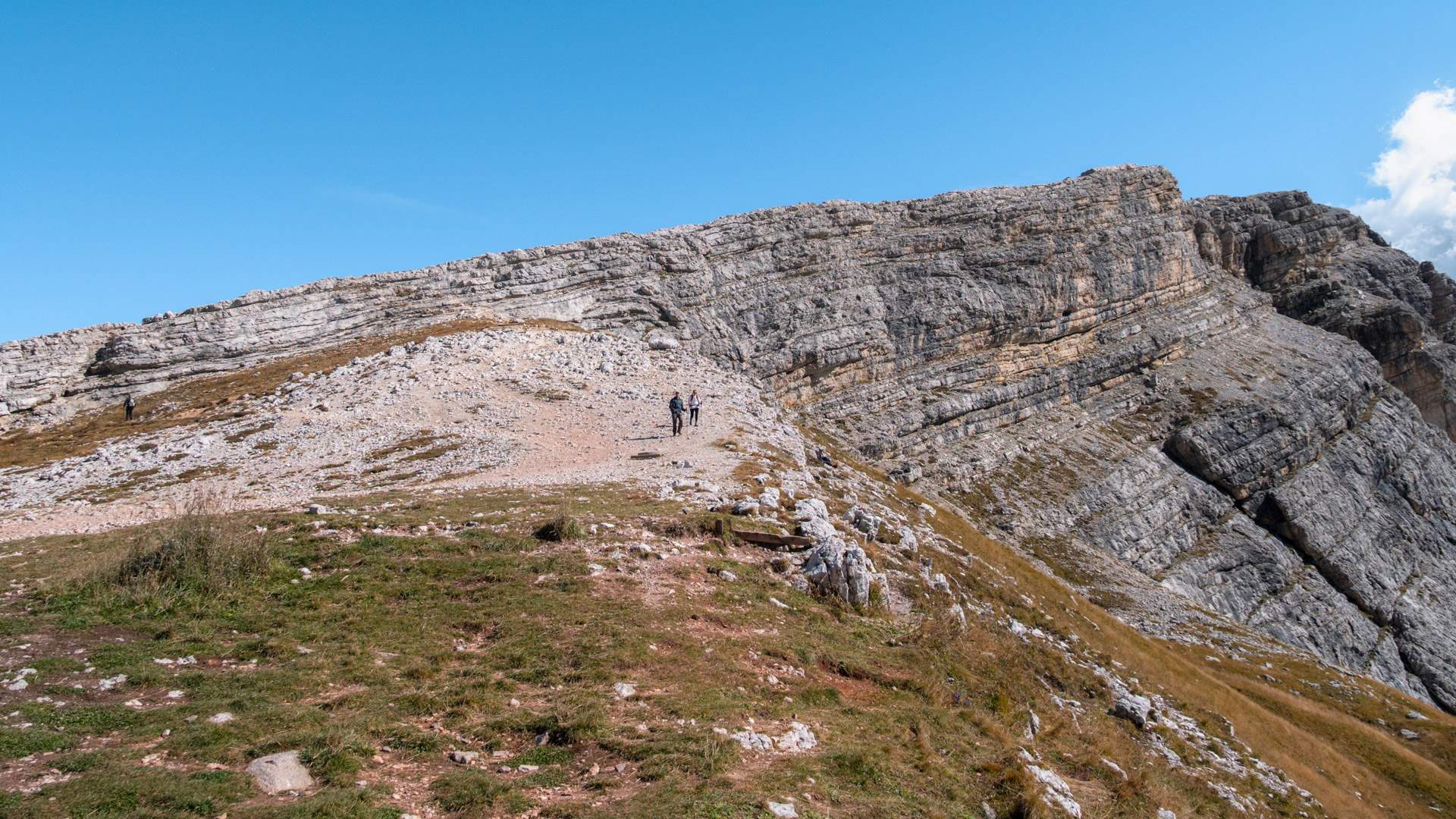

Public transport
If you want to take public transport to Cinque Torri during the summer season, there are bus services operated by Dolomiti Bus and Cortina Express.
These run between Cortina d’Ampezzo and the main starting points for the hiking routes and the cable car at Cinque Torri.

What to know before you go to Lago di Braies – including parking, the lake walk and our best tips
Read moreOur experience at Cinque Torri
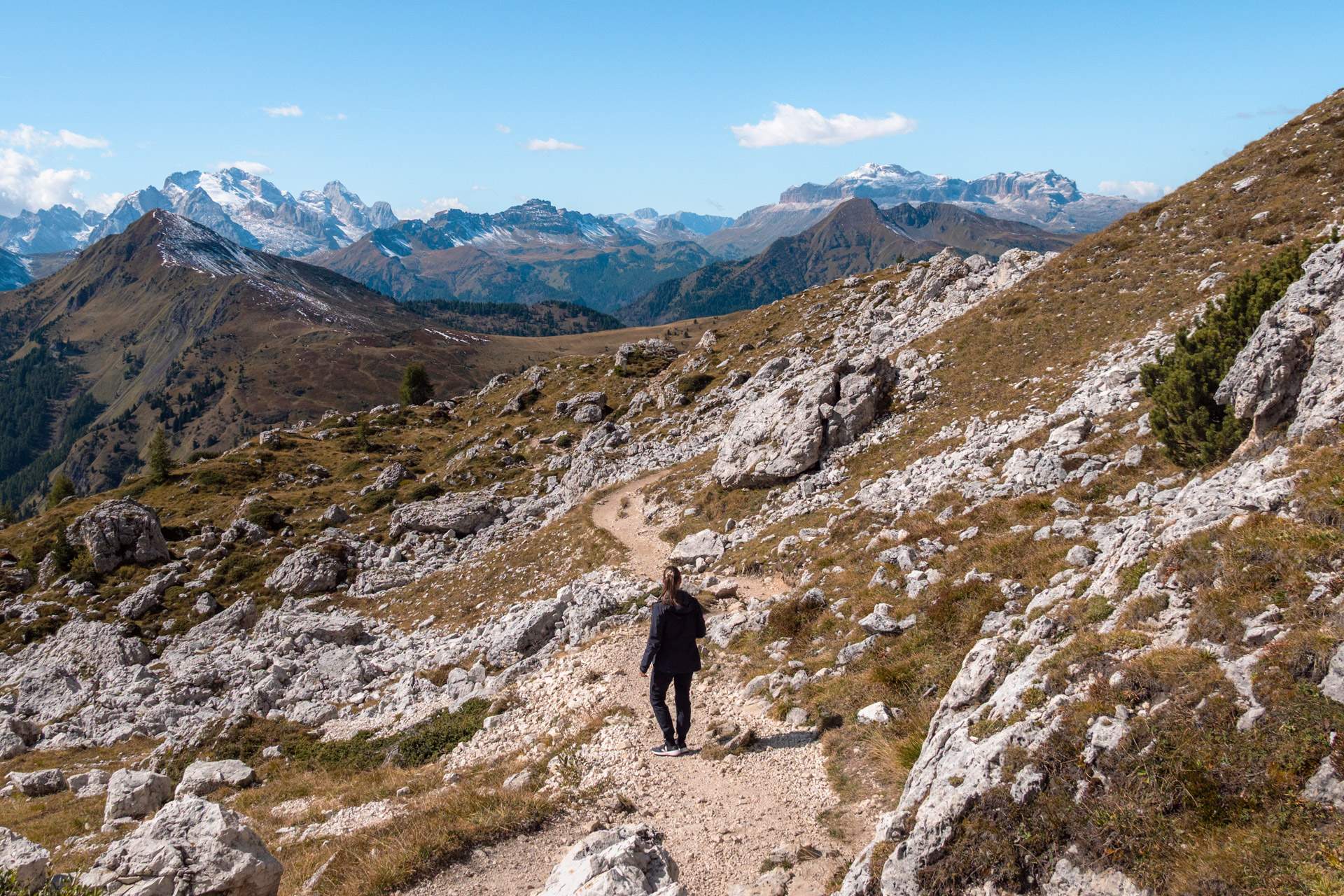
We chose to walk to Cinque Torri from Passo Giau – partly because the drive from Alleghe (adlink), where we were staying, was shorter, and partly because we wanted to experience Passo Giau itself, which is truly impressive.
This route isn’t the quickest or most accessible way up to Cinque Torri, but it offers varied terrain and some fantastic views.
There were a few tougher stretches along the way, so we were glad to have walking poles, plenty of water, and some snacks with us.
At Rifugio Averau, we took a well-deserved break on some sunbeds, soaking up the panoramic mountain views. Wow! It was a perfect reward after the climb.
The walk then continued down towards Cinque Torri, where we stopped at Rifugio Scoiattoli to enjoy a bowl of hot minestrone soup with yet another stunning view.
We made time to follow the historic trail around the area, getting up close to both the rock towers and the remains of trenches and soldiers’ barracks from the First World War.
It added a fascinating historical layer to an already beautiful natural experience.
We stayed until late afternoon, savouring the soft light over the mountains before hiking back to Passo Giau and our car.




How to reach the alpine plateau of the Dolomites, hiking trails, best hotels, our top tips and more
Read morePractical information about Cinque Torri
Opening hours
Cinque Torri has no official opening hours, so you can visit the rock formations at any time.
The mountain huts and the cable car, on the other hand, follow seasonal schedules, so it’s worth checking ahead.
Note that the road to Rifugio Cinque Torri is closed to private traffic from July to mid-September.
Price
Visiting Cinque Torri and the open-air museum is free of charge!
If you want to use the cable car, tickets are required. See prices here.
Hiking guide with everything you need to know about Monte Specie, including parking, route and our best tips
Read moreRestaurants
The closest hut to Cinque Torri is Rifugio Scoiattoli (2,255 metres/7,398 feet), which is also where the cable car arrives. We had a great minestrone soup there.
About 20 minutes away is Rifugio Cinque Torri (2,137 metres/7,011 feet).
A bit further up are Rifugio Averau (2,413 metres/7,917 feet) and Rifugio Nuvolau (2,575 metres/8,448 feet).
All huts serve food and drinks during their opening season.
You can also bring a small picnic to enjoy along the trail.
Rifugio Cinque Torri and Rifugio Nuvolau are open seasonally from June to September. Rifugio Scoiattoli and Rifugio Averau are open both in summer and during the winter ski season.
We recommend bringing cash as not all mountain huts accept card payment.

Toilets
Toilets are available at all the refuges and at the Seggiovia Cinque Torri cable car station, where the Baita Bai de Dones cabin is located.

Children and dogs
Cinque Torri is very family-friendly.
If you take the cable car and perhaps one of the easier walks around Cinque Torri, it’s very manageable, even with young children.
You can bring your dog on both the walks and the chairlift, but they must be kept on a lead, especially in areas where cattle roam freely.

Child-friendly hikes, viewpoints, playgrounds, climbing parks and lakes for the whole family
Read moreWhen to visit Cinque Torri
Cinque Torri is best visited from June to September, when the weather is usually warm and clear – ideal for hiking and climbing.
During this period, both the cable car and the refuges are open.
In the shoulder months of May and late October, there are fewer visitors and temperatures tend to be cooler. However, the cable car and refuges are closed then. If the weather is favourable, it can still be a good time for hiking.
We’ve outlined the differences between seasons and times of day below.
Seasons
Spring (May to June)
Spring marks the start of the hiking season, which begins relatively late in the mountains.
It’s important to check the weather forecast and current conditions before planning your trip.
Snow can linger at higher altitudes, especially in May, and some paths may still be covered.
On the plus side, there are fewer visitors, and on good days you can enjoy a peaceful, almost solitary experience.
The cable car and refuges usually don’t open until June, so in May you’ll need to hike all the way up.
Summer (July to August)
Summer is the obvious time to visit Cinque Torri.
The weather is typically warm and stable, and both the cable car and refuges are open.
It’s high season for hiking and climbing, so the area is bustling with activity.
In July and August, expect plenty of visitors on the trails and at the car parks – it’s wise to start early or arrive later in the afternoon.
Autumn (September and October)
We visited Cinque Torri at the end of September and can definitely recommend autumn if you prefer fewer crowds and a more tranquil atmosphere.
The landscape takes on warm golden hues, and cooler temperatures make hiking comfortable.
The cable car and refuges usually remain open until late September or early October, but it’s best to check opening times in advance.
Weather in October can change quickly, and snow at higher elevations is not uncommon.
Winter (November to April)
In winter, Cinque Torri is blanketed in snow and mainly attracts cross-country skiers, snowshoers, and downhill skiers.
The area is part of Dolomiti Superski, offering well-prepared routes and excellent conditions for winter sports amid stunning surroundings.
Hiking trails are generally closed in winter, and road access and cable car services differ from the summer months.
Rifugio Scoiattoli and Rifugio Averau remain open during winter, while the other refuges are usually closed.


When to travel to the Dolomites and what to expect – whether you’re into skiing or hiking
Read moreTime of day
No matter the season, the Cinque Torri is busiest during the daytime hours.
If you want to avoid the crowds and have a better chance of finding parking close to the cable car or trailheads, the best time to visit is early in the morning – ideally as early as possible.
You’ll also often get the best light in the morning or later in the afternoon.
We arrived late in the afternoon at the end of September and enjoyed a beautiful golden light over the area.
Be sure to check the weather forecast for the day, especially if you plan to hike. The cable car may close in poor weather.

Travel guide to the dramatic viewpoint near Tre Cime di Lavaredo
Read moreHow long to spend at Cinque Torri
You should set aside at least 1.5 to 2 hours at Cinque Torri to explore the area properly.
This gives you time to walk among the dramatic rock formations, take in the views of the Dolomites, and visit the historic First World War trenches.
If you want to stop at one of the refuges for a coffee or a bite to eat, you could easily spend three hours or more.
Don’t forget to allow extra time for the cable car or whichever hiking route you choose to reach the area.


Where to stay near Cinque Torri
There are several great places to stay when visiting Cinque Torri, depending on whether you prefer to be close to nature, in a cosy mountain town, or with easy access to more of the Dolomites’ attractions.
If you want to explore more hikes and viewpoints in the area, it might be wise to base yourself somewhere central or even change accommodation along the way to be closer to different experiences.
Cortina d’Ampezzo (adlink) is an obvious choice, just 20 minutes from the cable car at Bai de Dones.
Cortina is one of the liveliest and most popular towns in the Dolomites, perfectly located for a wide range of hikes and cable cars – including routes to Lago di Sorapis and Tre Cime di Lavaredo.
Below, we suggest a few other nearby towns worth considering.


Travel guide to one of the best hikes in the Dolomites – route, highlights, facilities and our top tips
Read moreBigger towns in the area
In addition to Cortina d’Ampezzo, consider these towns if you’re planning to visit Cinque Torri (and other spots in the Dolomites):
- San Vito di Cadore: A smaller, quieter town just south of Cortina. It’s a good choice if you want lower prices while staying close to many Dolomite highlights. About a 30-minute drive from Bai de Dones and the cable car.
- Alleghe: Located southwest of Cinque Torri (where we stayed during our visit), Alleghe is a great base if you want to explore the Civetta area and Lago di Coldai. Passo Giau is roughly 30 minutes away by car, and the cable car is about 40 minutes away.
- Misurina: A small town near the beautiful Lago di Misurina, approximately 45 minutes’ drive from Bai de Dones.
- Dobbiaco (Toblach): A slightly larger town with several hotels, about 50 minutes from the Cinque Torri starting point. It’s also close to Lago di Braies and within reasonable distance of the Lago di Sorapis hike and Tre Cime di Lavaredo.
- Auronzo: Less touristy and more affordable than Cortina, Auronzo is still a solid base for excursions to Cinque Torri (around an hour’s drive), Tre Cime, and Lago di Misurina.
Our recommendations for the best places to stay in the Dolomites, Italy
Read more


All you need to know about hiking to Lago di Sorapis, including parking, hiking route and our best tips
Read moreOur best tips for Cinque Torri
- Manage your expectations. Cinque Torri can get busy in high season and on weekends, so you won’t have the place to yourself.
- Think about the season. The cable cars close during the low season, and the weather varies greatly throughout the year.
- Check cable car times. The first and last trips vary by season, and you don’t want to be stuck at the top.
- Come early or late in the day if you’d like a quieter experience and softer light for photos.
- Follow the signs. Most trails are well marked with red and white flags (often with route numbers), though the time estimates can be a bit optimistic.
- Bring a good camera. Cinque Torri and the surrounding area are beautiful! Here is a guide to the gear we use.
- Be prepared for changing weather. Conditions can shift quickly and be very unreliable in the mountains. It often rains in the afternoon, but you never know in the Dolomites, so always check the forecast before setting off.
- Dress in layers. The weather at altitude can change quickly, and it often feels colder than expected.
- Wear proper footwear. Hiking shoes or sturdy sneakers with a good grip make the hike more enjoyable.
- Walking poles can be useful to relieve your legs – especially if you already have a pair.
- Bring food, drinks and snacks and enjoy them with a nice view, if you don’t plan to eat at one of the refuges (during opening hours).
- Use sunscreen and bring sun protection. The sun can be intense in the summer, even if the air feels cool.
- Remember to bring cash if you want to buy something at the refuges.


Practical tips + helpful advice to plan your Dolomites trip and enjoy every moment
Read moreSustainable travel tips
To travel as sustainably as possible, we recommend the following:
- Bring your own drinking water in a refillable bottle.
- Avoid disposable plastics.
- Dispose of waste properly and don’t leave anything behind.
- Take only photos and leave only footprints. Avoid picking flowers or taking anything from nature with you.
- Stick to the marked paths.
- Show consideration towards other visitors.
- Respect the local wildlife.

Thank you for reading along
Thank you for reading our guide to Cinque Torri. We hope you feel better prepared for the hikes and the cable car!
What’s your impression of the five towers in the Dolomites?
If you’ve already been to Cinque Torri, we’d love to hear your best tips and experiences.
If you haven’t been yet and have questions, feel free to drop them in the comments. We’re happy to help.

More from the Dolomites
We absolutely love the Dolomites. Here are all our guides to the stunning mountains in northeastern Italy, with our best tips for hiking, viewpoints, where to stay, transportation and more.
Overview:
Hiking guides:
Our favourite travel resources:
- Booking.com for hotels and apartments.
- Momondo for the best flight deals.
- AirHelp for flight delay compensation.
- GetYourGuide for great tours everywhere.
- Airalo for reliable eSIM.
- Discover Cars for transparent car hire.
- SafetyWing for travel insurance. We also like True Traveller. Compared here.

Where to Stay in the Dolomites with Children: Best Family Hotels & Areas
Our recommendations for the best family-friendly hotels and areas in the Dolomites, Italy
-
Where to Stay in the Dolomites: Best Hotels & Areas for Hiking and Skiing Holidays
Our recommendations for the best places to stay in the Dolomites, Italy
-
When to Visit the Dolomites? Weather, Seasons & Best Time to Go
When to travel to the Dolomites and what to expect – whether you're into skiing or hiking