The harbour city of Northern Corsica
Looking for the best things to do in Bastia? This guide has you covered.
We spent a day and a night in the city – just enough time to see the main sights without feeling rushed.
It turned out to be a lovely stop: friendly, charming and not too big to get around. We really loved the vibe.
Bastia stretches from the colourful old harbour to the hilltop citadel with the sea on one side and Corsica’s rugged mountains on the other.
It’s compact and full of character, easily explored on foot. The faded shutters, sunlit squares and lively cafés gave it an atmosphere that felt more Italian than anywhere else on the island.
In this travel guide, we’ll take you through what to do in Bastia, the best areas and hotels, how to get there and around, the best time to visit, as well as our top tips for making the most of your stay.
Where to stay in Bastia:
- Luxury: Hôtel Des Gouverneurs – 4-star boutique hotel in Bastia’s Citadel with sea views, spa and indoor pool.
- Value for money: Hotel Central Bastia – Charming rooms with vintage decor and a peaceful courtyard, right in the city centre.
- Budget: Hôtel Riviera – This is where we stayed. Simple, spacious rooms in a super central location next to Place Saint-Nicolas.
Search for the best hotels in Bastia here.
Table of contents


Why visit Bastia?
Bastia might not get the same attention as Corsica’s beach towns or hilltop villages, but it has a character all its own.
It’s Corsica’s second-largest city after the capital, Ajaccio, but it’s still small enough to explore on foot.
Set between the sea and the mountains, Bastia charms with its pastel facades, old harbour atmosphere and traces of Genoese history. It’s a place that’s genuinely enjoyable to wander.
Here, daily life continues alongside the flow of travellers. Bastia feels like a proper working city with a relaxed atmosphere.
You get a strong sense of local culture with lived-in neighbourhoods, traditional cafés, busy markets and old-school charm around the harbour and the old town. It also has more of an Italian feel than many other places on the island.
It’s easy to visit Bastia on a quick day trip, but the city also works well as a base for a few days or even a week.
You’ll be within easy reach of Cap Corse, lots of charming villages and the east coast beaches, all while having a good range of hotels, restaurants and transport connections right in the city.
Corte and Corsica’s even more mountainous interior are also only a relatively short drive away.
With both a ferry port and an international airport, Bastia is where many travellers start or end their Corsica trip – and we think you should give the city a proper look while you’re here!

Where is Bastia, Corsica?
Bastia is located on the northeastern coast of Corsica, a French island in the Mediterranean Sea.
Geographically, Corsica lies southeast of mainland France and directly north of the Italian island of Sardinia.
The city sits between the Tyrrhenian Sea and the foothills of Cap Corse, in the far north of the island.
Bastia is the second-largest urban area in Corsica after Ajaccio and serves as an important port. There’s also an international airport.


Everything you need to know about Ajaccio in Corsica, including what to do and when to visit
Read moreBest things to do in Bastia
Wondering what to do in Bastia?
From wandering the colourful old harbour to taking in the views from the citadel, there’s plenty to do in Bastia without feeling rushed.
The city is compact and walkable, making it easy to see the highlights over a relaxed day or two.
Here are the best things to do in Bastia:
- Old Harbour (Vieux Port) – Lively harbour with cafés and boats
- Romieu Garden (Jardin Romieu) – Quiet green space linking the citadel to the port
- Citadel (Terra Nova) – Hilltop district with historic ramparts and sea views
- Palace of the Governors (Palais des Gouverneurs) – History museum inside a palace
- Bastia Cathedral (Cathédrale Sainte-Marie) – The city’s Baroque cathedral
- Old Town (Terra Vecchia) – Atmospheric lanes, pastel facades and local life
- Place Saint-Nicolas – Main square of the city
- Saint John the Baptist Church (Église Saint-Jean-Baptiste) – Bastia’s largest church
- Market Square (Place du Marché) – Morning market with regional delicacies
- Local shopping – Small boutiques, Corsican specialities and family-run shops
- Biguglia Pond Nature Reserve – Birdwatching and nature trails just south of the city
- Cap Corse – A rugged peninsula north of Bastia
- Day trips from Bastia – Beaches, hilltop villages and coastal drives in northern Corsica
Map of the best things to do in Bastia.
1. Old Harbour (Vieux Port) – Lively harbour with cafés and boats
The old harbour in Bastia is a scenic spot framed by pastel-coloured buildings and lively cafés – perfect for a relaxed walk or a meal while watching fishing boats and yachts bobbing in the water.
When we visited, some renovation work was underway, but it didn’t take away from the charm. It’s exactly the kind of place where you want to linger.
We walked out to the red lighthouse at the southern tip (there’s a green one to the north, too) and from there, the views of the citadel and the city were fantastic.
The whole walk is stroller-friendly, and there’s even a lift that takes you up to the old town, making it easy to explore without too much effort.
Exploring this area is definitely one of the best things to do in Bastia, if you ask us.


2. Romieu Garden (Jardin Romieu) – Quiet green space linking the citadel to the port
Romieu Garden is a terraced green space that links the old harbour to the citadel, with shaded paths and lovely views over the city and the sea.
It doesn’t feel like a typical garden – more like a series of terraces connected by staircases, dotted with some nice trees and statues.
We found it to be a quiet, unique spot to pause and enjoy Bastia from a different perspective.


3. Citadel (Terra Nova) – Hilltop district with historic ramparts and sea views
The citadel is a peaceful, village-like area filled with narrow streets and colourful houses.
From up here, the views over the sea and Bastia’s old harbour are truly something special.
For us, wandering these quiet streets was one of the best things to do in Bastia.
The churches, both grand and small, are definitely worth a look, but it’s really the slow strolls – weaving up and down the lanes, pausing to take in the views and relaxing in the small squares near the Palace of the Governors – that make this area so memorable.


4. Palace of the Governors (Palais des Gouverneurs) – History museum inside a palace
We didn’t go inside, but we strolled by the Palace of the Governors while visiting the citadel.
If you’re researching what to do in Bastia beyond the harbour and old streets, this is one of the city’s most significant historical landmarks.
The building once served as the seat of Genoese power in Corsica. It now houses the Bastia Museum (Musée de Bastia), which traces over ten centuries of local history through various exhibits including urban planning, art, and the political, social and economic development of Bastia.
If you’re into history, especially Corsican heritage or Genoese influence, it looks like a rewarding stop.
And from what we’ve read, the museum’s garden terrace offers some great views too!
Read more about the Bastia Museum and opening hours on their website.


5. Bastia Cathedral (Cathédrale Sainte-Marie) – The city’s Baroque cathedral
We passed by Bastia Cathedral (Cathédrale Sainte-Marie de Bastia) while exploring the citadel, and even from the outside, it stood out with its impressive neoclassical facade.
Inside, the cathedral is decorated with marble, stucco, paintings and gold accents.
It’s dedicated to Saint Mary and notable features include a silver processional statue of the Virgin Mary as well as a large papier-mâché statue of the Assumption above the high altar.


Everything you need to know about Bonifacio in Corsica, including what to do, when to visit and where to stay
Read more6. Old Town (Terra Vecchia) – Atmospheric lanes, pastel facades and local life
Terra Vecchia, Bastia’s old town, is a cosy network of narrow lanes and colourful facades that have clearly seen plenty of history.
Walking through these streets feels like stepping back in time.
Around every corner, you’ll find lively squares, little cafés and small shops that add to the neighbourhood’s everyday charm.
It’s one of those areas where you can really soak up the vibe – a quiet mix of history and daily life that makes Bastia’s old town feel warm and inviting.


7. Place Saint-Nicolas – Main square of the city
One of France’s largest squares, Place Saint-Nicolas is a wide, open space lined with trees, cafés and shops.
It hosts regular markets and events, and it’s a great place to pause for a drink or some people-watching.
We parked right next to the square during our stay at Hôtel Riviera (adlink), so we passed through several times at different hours.
It always had a bit of a buzz, but thanks to its size, it never felt crowded.
Place Saint-Nicolas doesn’t have the same cosy feel as some of Bastia’s smaller squares, but the scale and layout give it a grand, open-air charm.

8. Saint John the Baptist Church (Église Saint-Jean-Baptiste) – Bastia’s largest church
The Baroque Saint John the Baptist Church (Église Saint-Jean-Baptiste) rises above Bastia’s old harbour and is one of the city’s most recognisable landmarks.
You get the best view of its twin bell towers from across the harbour.
Built in the 1600s, it’s the largest church in Corsica and still very much part of local life. Inside, it’s richly decorated with ornate altars, paintings and a grand organ loft.
If you’re already exploring Terra Vecchia, it’s worth stepping inside for a look or simply admiring the facade while enjoying the harbour atmosphere.


9. Market Square (Place du Marché) – Morning market with regional delicacies
Close to Saint John the Baptist Church and the old harbour, the market square (Place du Marché) is a tree-shaded square with a very local feel.
This is where Bastia’s morning market takes place, offering fresh fruit, vegetables, handmade goods and other regional treats.
The market had already ended when we visited, but we immediately liked the charming square with benches and cosy cafés.


10. Local shopping – Small boutiques, Corsican specialities and family-run shops
Shopping in Bastia is a mix of traditional Corsican crafts, local delicacies and everyday shops.
Rue Napoléon is the city’s main pedestrian shopping street lined with boutiques, fashion stores and cafés. You’ll come across a mix of local brands and familiar international names here.
Rue César Campinchi and Boulevard Paoli are two other pleasant streets to explore – both within walking distance of the old harbour.
Here, you’ll find artisan shops selling Corsican products along with a few larger stores and relaxed spots for a coffee break.
We also saw quite a few speciality sneaker shops.


11. Biguglia Pond Nature Reserve – Birdwatching and nature trails just south of the city
Just a short drive from Bastia, this is Corsica’s largest lagoon and an important protected area for birdlife.
Biguglia Pond Nature Reserve (Étang de Biguglia or Étang de Chjurlinu) is home to over 200 bird species throughout the year, including herons, flamingos and ducks, depending on the season.
There’s an eco-museum on site that explains the area’s natural history, though it was closed during our visit – and unfortunately also seems to remain closed indefinitely. We just mention this in case you find it recommended in other Bastia travel guides.
We parked nearby anyway for a short walk near the water. It was very peaceful and quiet.
While we didn’t spot anything rare, there were still plenty of birds around – much to our toddler’s delight.
It may not be the first place that comes to mind when planning what to do in Bastia, but it’s one of the area’s most important natural sites and a worthwhile stop if you’re heading in or out of Bastia by car – particularly for nature lovers or anyone looking for a bit of calm.


12. Cap Corse – A rugged peninsula north of Bastia
Cap Corse is a rugged, narrow peninsula stretching north from Bastia. It offers a different, wilder side of Corsica.
With its winding coastal roads, dramatic cliffs, hilltop villages and small fishing harbours, touring Cap Corse makes for a memorable day trip if you’re staying in Bastia.
The route around the cape is long (about 130-150 kilometres in total), and it takes a full day to drive the loop with several stops.
If you’re short on time, you can just focus on the eastern side and turn back at one of the villages.
Some of the most interesting stops:
- Erbalunga – A pretty harbour village with stone houses, narrow alleys and a relaxed vibe.
- Macinaggio – A small port town on the northeastern tip of Cap Corse, ideal for lunch or a boat trip.
- Barcaggio – A remote village at the northernmost point with a peaceful beach and views of the Finocchiarola islands.
- Centuri – On the western side, this tiny, picturesque fishing port is also known for its small stone houses and coastal views.
- Nonza – A dramatic village perched on a cliff with a black pebble beach and ruins of a Genoese tower.
There are also plenty of small, scenic beaches along the route if you’re looking for a quiet swim or a change of pace from the city.


13. Day trips from Bastia – Beaches, hilltop villages and coastal drives in northern Corsica
Besides the classic day trip to Cap Corse we mentioned before, there are several popular day trips from Bastia within a short drive.
Here are some ideas for half-day or day trips from Bastia.
Corte
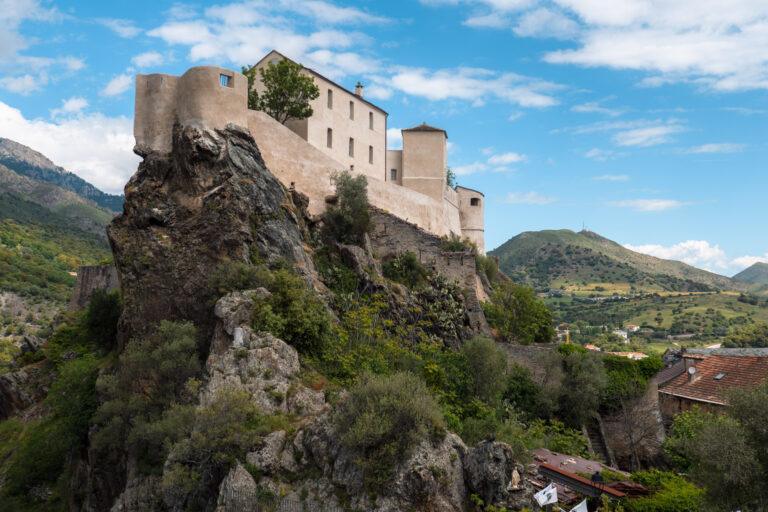
Around 1 hour by car, the university town of Corte in central Corsica has a striking citadel, good hiking in the nearby Restonica Valley and a more mountainous feel than the coast.
We loved visiting the historic fortress town and wrote a full travel guide to Corte.


Everything you need to know about Corte in Corsica, including what to do and when to visit
Read moreSaint-Florent
Often described as a smaller, Corsican version of Saint-Tropez, Saint-Florent has a chic old harbour, good restaurants and easy access to sandy beaches.
It’s about 40 minutes from Bastia, southwest of Cap Corse.

Désert des Agriates
From Saint-Florent, boat or 4×4 trips take you into this wild, protected area with remote beaches like Saleccia and Lotu – some of the most unspoilt stretches of sand in Corsica.

Murato
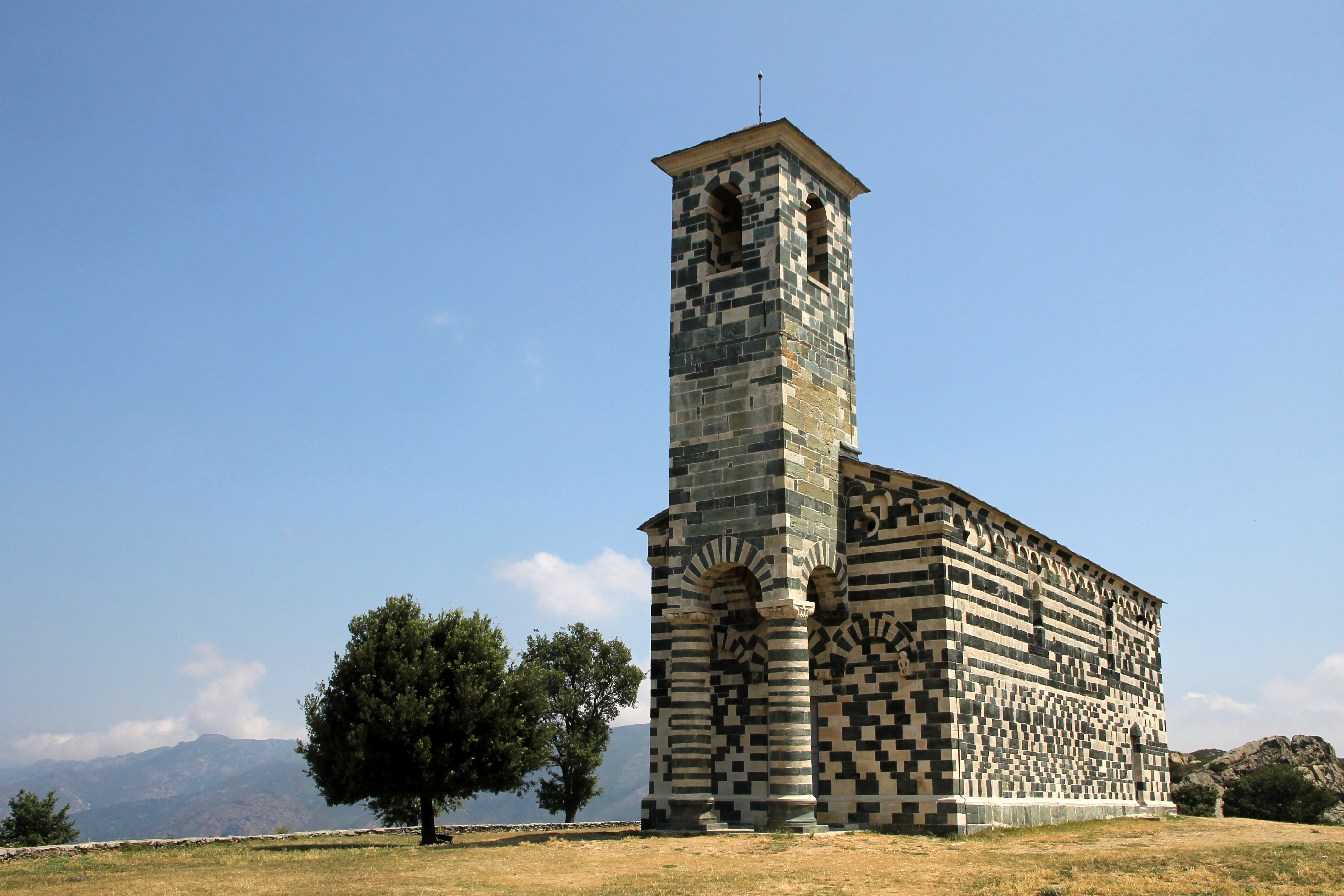
Around 40 minutes from Bastia, the small village of Murato is home to one of Corsica’s most distinctive churches: the Church of San Michele, a 12th-century structure built in green and white stone.
The drive there also offers great mountain views.

Mariana Archaeological Site
Located near Lucciana, about 25 minutes south of Bastia, the Mariana Archaeological Site (Cité Romaine de Mariana) includes ancient Roman ruins, the remains of an early Christian basilica and a small, modern museum.
Just south of the airport, it’s a quick but interesting stop for anyone curious about Corsica’s ancient past.
Read more about the museum and the archaeological site on their website.

Map of the best things to do in Bastia
Where to stay in Bastia
Bastia offers a few distinct areas to base yourself, and our quick overview should help anyone wondering where to stay in Bastia.
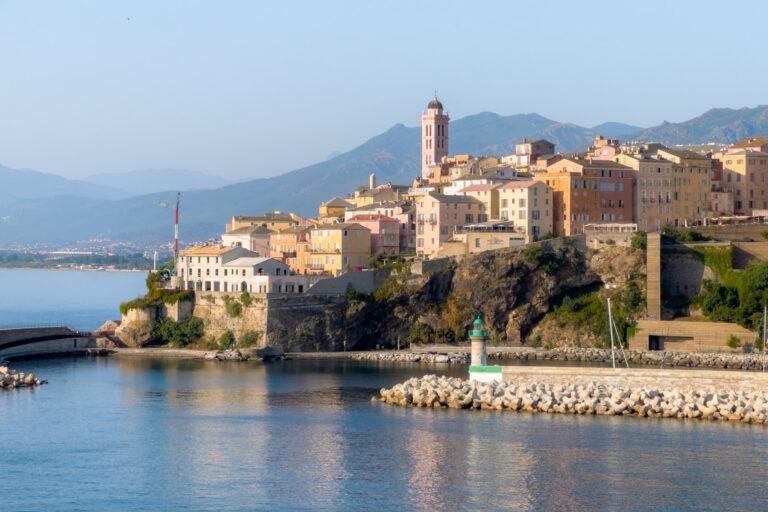
Staying near the old harbour (Vieux Port) is perfect if you want to be in the heart of the action – close to cafés, restaurants and the lively waterfront scene.
It’s vibrant and photogenic but can be busy in the evenings.
For a quieter, more historic feel, the old town (Terra Vecchia) is ideal.
Narrow streets, colourful buildings and a village-like atmosphere give you a more authentic experience, and it’s just a short walk from the harbour.
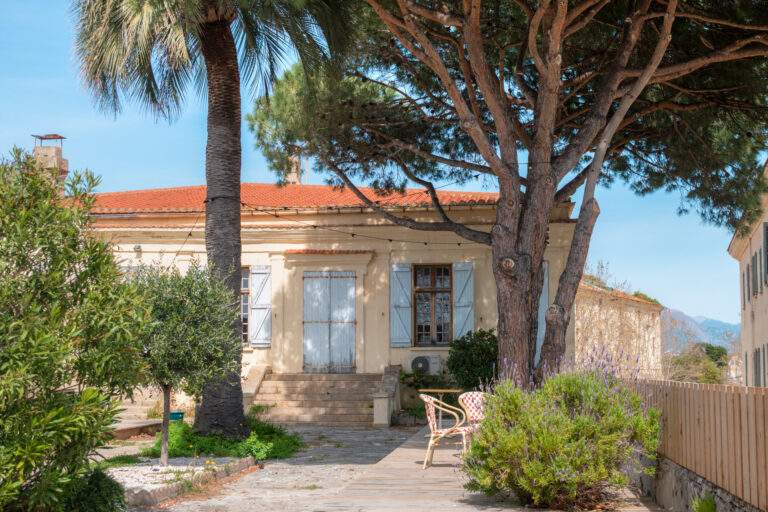
If you prefer something more modern and practical, the area around Place Saint-Nicolas offers larger hotels and easy access to shops and transport. This is where we stayed at the budget-friendly Hôtel Riviera (adlink).
Wherever you end up, Bastia’s compact size means most sights are within walking distance.
Read our full guide to where to stay in Bastia here.
Where to stay in Bastia?
- Luxury: Hôtel Des Gouverneurs – 4-star boutique hotel in Bastia’s Citadel with sea views, spa and indoor pool.
- Value for money: Hotel Central Bastia – Charming rooms with vintage decor and a peaceful courtyard, right in the city centre.
- Budget: Hôtel Riviera – This is where we stayed. Simple, spacious rooms in a super central location next to Place Saint-Nicolas.
Search for the cheapest and best hotels in Bastia here.


Our recommendations for the best places to stay, from the bustling Old Harbour to the peaceful citadel
Read moreHow to get around Bastia
Navigating Bastia is relatively straightforward due to the city’s modest size.
Here are the best ways to explore the harbour city.
Walking
Walking is arguably the most pleasant way to experience Bastia and it’s easy to navigate on foot.
The historic centre is compact and pedestrian-friendly, with most sights, shops, restaurants and the old harbour located within a short walk of each other.
While there are a few hills (especially heading up to the citadel), it’s all very manageable.

Public transport
Public transport in Bastia is primarily handled by the local bus network, which connects different parts of the city and nearby areas.
Buses can be a convenient way to get around, particularly if you’re not in a rush and plan ahead.
Just be aware that timetables may be more limited on weekends and public holidays.
You’ll find up-to-date routes, stops and ticket information on the official website.
Petit Train
The Petit Train Touristique de Bastia is an open-sided tourist train that offers a relaxed and easy way to take in the city’s historic sights – especially convenient for families or those with limited mobility.
Guided commentary is available in several languages, including English, French, German and Italian.
Departing from Place Saint-Nicolas (right in front of the Tourist Office), the 50-minute tour passes many of the best things to see in Bastia, such as the market square, the old harbour, a handful of churches and the citadel.
The train usually runs daily from April to October, with hourly departures, although there is a break around lunchtime.
Note that in July and August the schedule works differently – reservations are often required for groups, and there are fewer departure times available.
Tickets can be bought either at the Tourist Office or directly from the driver.
See the tour, prices and more at the official website.
By car
Though you won’t need a car much in central Bastia, renting your own vehicle offers the most flexibility for exploring the rest of Corsica.
We usually compare car rental deals on DiscoverCars (adlink), where the quoted price includes all mandatory fees, taxes and basic extras, so there are no surprises at pickup.
Just be aware that finding parking in Bastia can be challenging, especially during summer.
We used this paid parking lot right next to Place Saint-Nicolas.
Train
Bastia is the northern end of Corsica’s railway line.
You can take the train south to places like Corte or Ajaccio, passing scenic inland landscapes. Trains are slower than driving but quite charming.

When to visit Bastia
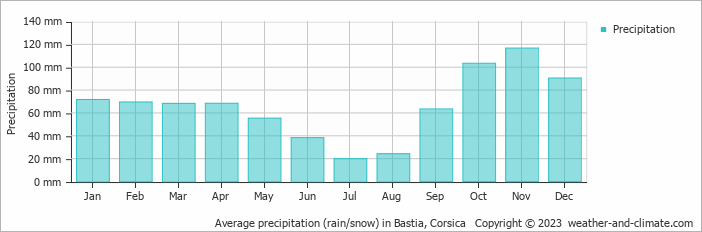
Bastia enjoys a Mediterranean climate with mild, wet winters and warm, dry summers.
Its coastal location means it’s often breezy, and the surrounding hills can bring occasional shifts in weather.
Here’s a breakdown of the weather and what to expect throughout the year.
Spring (March to May)
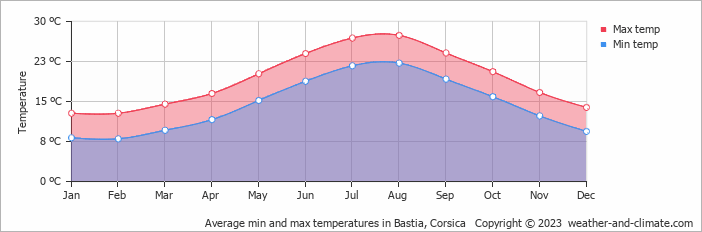
Spring is a great time to visit Bastia, with daytime temperatures typically ranging from 12-22°C (54-72°F) as the city begins to warm up.
March can still bring a bit of rain, but April and May are usually milder and sunnier.
The hills around Cap Corse and the coastline near Bastia come alive with wildflowers, and the cooler weather makes walking, sightseeing and photography very enjoyable.
It’s a quieter period, so you can explore the citadel, the old harbour and other spots without the summer crowds. Prices for accommodation and travel are often more reasonable, though Easter week can be a bit busier.
Some seasonal restaurants and shops may still be closed early in the season, and the sea usually stays cold until late May. However, spring is a good time for relaxed city breaks and coastal hikes.
Overall, spring is the best time to visit Bastia if you prefer a more laid-back atmosphere, mild temperatures and better value.
Everything you need to know about Porto-Vecchio in Corsica, including what to do, when to visit and where to stay
Read moreSummer (June to August)
Summer in Bastia is usually hot and dry.
Expect long, sunny days with daytime temperatures typically ranging from 20-30°C (68-86°F), sometimes higher during heatwaves.
Sea temperatures hover around 22-25°C (72-77°F), making it ideal for swimming, snorkelling and boat trips along the coast or around Cap Corse.
Everything is in full swing: cafés, shops and attractions stay open late and the old harbour takes on a festive atmosphere, particularly in the evenings.
The city hosts various summer events and concerts, giving it a lively feel – particularly in July and August.
This is peak travel season, so prices are higher and hotels (and popular restaurants) often book up in advance.
Beaches and key sights can get crowded, and parking in central Bastia can be challenging during the busiest weeks.
If you’re drawn to warm weather, long days and a buzzing atmosphere, summer is the best time to visit Bastia.
Autumn (September to November)
Autumn in Bastia begins much like summer, especially in September, with warm days and sea temperatures still pleasant for swimming.
As the season progresses, the air turns cooler and the city’s rhythm becomes more relaxed.
October and November bring more changeable weather, with increasing chances of rain later in the season, but they also offer a quieter, more laid-back atmosphere.
Temperatures typically range between 13-25°C (55-77°F), making it a good time for walking and sightseeing in a calmer setting.
The beaches are still enjoyable without the crowds and the surrounding nature is ideal for scenic drives or hikes.
Autumn is also a great time for seasonal food lovers with chestnuts, figs and wild mushrooms appearing on market stalls and menus.
Accommodation is usually easier to find and more affordable, though some tourist services and restaurants begin closing from mid-October.
Still, if you’re after a more peaceful experience with a focus on nature, food and culture, autumn might be the best time to visit Bastia.
Winter (December to February)
Winter in Bastia is calm and low-key with daytime temperatures typically between 8-15°C (46-59°F) and a more local, everyday rhythm.
Snow is rare in the city, but the surrounding mountains often get a light covering, offering beautiful views from the coast on clear days.
It’s the quietest and cheapest time to visit with lower hotel prices and very few tourists.
Bastia still feels lived-in, with cafés open for a sunny winter coffee and festive lights during December adding a bit of seasonal cheer.
Keep in mind that this is the off-season – many tourist-focused shops, restaurants and activities close and the weather is wetter, with a higher chance of rain.
While not ideal for beach days or a packed sightseeing agenda, winter in Bastia can be a peaceful and authentic experience.

Best time to visit Bastia
The best time to visit Bastia depends on what you’re looking for – whether it’s warm beach days, local culture or a quieter, more affordable trip.
- For beach lovers: Mid-June to mid-September.
- For outdoor activities: April to June and September to October.
- For budget travellers: November to March (excluding the Christmas/New Year period).
- For cultural exploration: April, May, September and October.
- For avoiding crowds: November, January and February.
Tip: The shoulder months of May, June, September and early October generally offer the best balance of pleasant weather, reasonable prices and manageable crowd levels in Bastia.
Our recommendations for the best places to stay, from the city centre to quieter beach escapes
Read moreBest tips for visiting Bastia
- Walk as much as possible. The old harbour and main sights are close together, and parking can be tricky, so it’s often easier to get around on foot.
- Visit the citadel early or late in the day. The citadel offers fantastic views over the old harbour and the sea. Mornings and late afternoons here are quieter and not as hot.
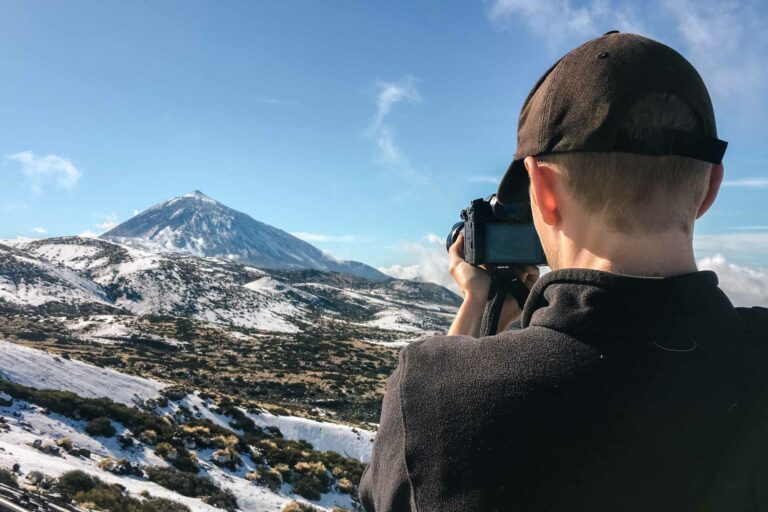
- Bring a quality camera. Bastia is picturesque! Here’s a guide to the gear we use.
- Mind the siesta. Many shops and smaller museums close for a few hours in the afternoon, especially outside the high season.
- Check opening times in advance. Some attractions and restaurants have seasonal hours or close one day a week (often Monday).
- Book ahead in summer. Hotels, car rentals, boat tours and restaurants can fill up quickly during peak season.
- Check ferry and bus schedules in advance. Whether you’re arriving by boat or planning day trips, transport can be limited in the off-season and on weekends.
- Use an eSIM for easy mobile data. If your phone supports eSIM and you don’t have data included, services like Airalo offer affordable options for France or all of Europe (adlinks). We’ve used it successfully on other trips.
- Wear sneakers or other types of shoes you can walk in comfortably on hikes and in the city.
- Remember travel insurance (adlink). Never travel without it!

What camera, drone and accessories we use to capture life on the road
Read moreThanks for reading our Bastia guide
Thank you for reading our travel guide to Bastia. We hope it has been helpful!
What do you think about the harbour city in Northern Corsica? Do you know more about what to do in Bastia now?
If you’ve been to Bastia, it would be awesome to hear your best tips and tricks.
If you haven’t been yet, please don’t hesitate to ask us anything in the comments below. We’re happy to help.

Our favourite travel resources:
- Booking.com for hotels and apartments.
- Momondo for the best flight deals.
- AirHelp for flight delay compensation.
- GetYourGuide for great tours everywhere.
- Airalo for reliable eSIM.
- Discover Cars for transparent car hire.
- SafetyWing for travel insurance. We also like True Traveller. Compared here.

Bonifacio Travel Guide: 15 Best Things to Do in the Cliffside Fortress Town
Everything you need to know about Bonifacio in Corsica, including what to do, when to visit and where to stay
-
Where to Stay in Bastia: The Best Hotels & Areas for All Budgets
Our recommendations for the best places to stay, from the bustling Old Harbour to the peaceful citadel
-
Where to Stay in Corte: The 3 Best Hotels for All Budgets
Our recommendations for the best places to stay in and outside of town